Monthly Archives: November 2011

Provincial

This is not a pleasant word for me.  It brings up inner challenges in the commitment to write one’s truth.  The prods and pokes of fear are pushing me towards keeping things small.  Safe.  Predictable.  I’m learning how easy it is to slip into a provincial–narrow-minded–state of mind  as I sit down every week to put these thoughts into W.O.R.D.S.   The provincial promises safety, but there is no reality in it.

“Keep the point of view narrow.”   But a narrow point of view is like going backwards.  Like so many provincial serving politicians today.  No thanks.

Dreams are a critical piece of my internal GPS system.  They direct me to places I need to explore, and, on several occasions, when the thick broth of memory drips into my sleep, I travel back to a time where we experienced joy in a solidly  provincial world on my grandfather’s farm in South Carolina.  In these dreams, I am wandering the landscape of the farm.  Over there are the pigs.  Here are the chickens.  Down that path are the grape vines.  There are the fig trees there, and over there are the fields of vegetables and fruit.  Sometimes I am standing on the back stoop or sitting on the front porch or looking out the window over my grandmother’s wood burning stove.  We would heat the irons to press our clothes on that stove.  Sometimes I am staring up in the inky black sky at the constellations and losing myself in their depth.  I know what the safety of provincial feels like.

I remember glorious mornings when we kids harvested corn, vegetables, and fruit in the mid-morning sun.  The corn husks and corn silk caused my skin to itch miserably, and although I complained, I knew that by dinner we’d be sucking on sweet, juicy kernels lathered with fresh butter.

Oh, darn. I forgot about the scary corn worms.  And that, my friends, is the problem with nostalgia—aka narrow thinking.  It’ll leave out those worrisome corn worms of life every time.

Our visits were fun because we did not have the burden of being trapped in the restrictively hard farm work like other kids and relatives. We would always go home to our own restrictions.  Theirs was a world of fiercely provincial ideas that kept them safe from the outside world, and while there, we fell in line with those restrictions.  Given the life-threatening politics of the time, I understand that provincialism was a positive force in saving lives.  So, it bothers me to hear:

“Things were better in the old days.  People were better when they followed tradition.”  Really?

I want to burn the bridges to these words, these proclamations that amount to painting ourselves into a corner of life with a teeny, tiny brush.  Rural provincialism had a life-saving purpose.  But that was then; this is now.

Everyone longs for a safety net of predictability, but aren’t narrow views weighted with constrictions and fears that keep us from seeing the bigger world up close and personal?  It seems to me that this yearning for a return to a simpler life is accompanied by fear.  Fear is accompanied by ignorance, and ignorance cheers the repression of civil liberties and a person’s right to make his or her own choices.

I met a woman who has lived in Philly her whole life and never once ventured outside the one or two miles where she lives, works, and prays.  She did not know anything about the lives of the other cultures with whom she worked.  She had never been to the Italian Market or Reading Terminal Market or visited Old City.  Yet, she had some very strong, narrow and wrong views of how to whip the 21st century world into shape.  Efforts to keep things small, predictable, and controlled always fail.  Look at Prohibition.

This evening I went to a local observatory to watch the waxing moon through high-powered binoculars.  I don’t have words (me who can rattle on) for the breathtaking beauty of the crescent and the clearly outlined shadowed side.  The sky was salted with stars, and the constellation Orion so huge and clear it felt as if it enveloped the earth.  Looking through the telescope, I was stunned by the sight of Jupiter with two bold stripes across its body (rings) and two of its moons.  The universe does not offer a provincial view.

There is so much to see, to do, to experience.  So much that can open our hearts to the beauty of being alive.  But we won’t know this if we keep looking backwards, yearning for a life that’s all Andy Griffith-y and Mayberry, without those worrisome, but necessary corn worms and beautiful, but itchy corn silk.

Can we, as a nation, afford it?  What do you think?
Immersion

Immersion.  The word has both positive and negative definitions:

To be completely submerged in liquid.  To become totally consumed by an issue, object or person. Or, (there is something to be gained from Wikipedia) a type of therapy where one overcomes one’s fears through face-to-face confrontation.  Umm, not so much my favorite definition.  I also like to think of immersion as:  to be completely drowned in a strong emotional attachment such as love or hate.

Welcome to the hour after my morning bath where I immerse myself in the myriad life issues that exist for me at any particular moment.  The word immersion holds incredible power.  I am an immersive personality, and I dare to argue that this is very different from obsessive.  But you can decide for yourself.

I’m a late bloomer and always have been.  When I was 40, a friend looked at me (or was it my sister?  Hmmm.) and commented, “Are your breasts larger?”  First of all, how rude!  Second of all, is there someone (cute guy?) who needs to know?  And third of all, no I didn’t get transplants.  I just matured – very slowly.  Now, where was I going with this?

In the same kind of way, I’ve had some time over the years to late-bloom into what it means to be immersed in something.  There are only two things in which I have had life-time immersion:  love and creativity.

They say that when you meet your soul’s true love time stands still, and you are immersed in the profundity of the heart.  This has happened twice in my life.  (Eh? You’re asking. Twice true love?)  Yes, twice.  The first time was in those precious moments immediately after my baptism.

I was ten or eleven when, in the tradition of the Baptist church, I was wrapped in white from head to toe and immersed in a pool of (not warm, I might add) water.  I was trying to maintain my child’s faith in the grace of God and the dexterity of a man of the cloth.  Between God and preacher, I was promised that I would not drown.  I did not, and my faith—in both—was sustained.

“In the name of the father…” I held my breath as the water covered my head and I was brought up again.

“The Son…”  I held my breath again as I was dipped once more and brought up.  Why I did not struggle is a question I have to this day.

“And the Holy Ghost…”  Was I imagining or did I have to hold my breath longer that last time?

On rising from the third submersion I came from the chilly water feeling warm—and time stood still.  For days afterward, I felt immersed in what I could only desribe as God’s love for the world and everyone and everything in it.  I don’t know what I expected, but this is what I received.

I said there were two experiences when time stood still.  The second was when I stood before the meditation master whose teachings have, ever since, guided my life and spiritual practices.

Immersion.  These two experiences serve as my reference and compass.  To be consciously immersed in the truth and experience of daily life is my forever-after goal.  To my suprise and delight, one day I wrote a poem.  Some of the lines are:

My Beloved has appeared and even the Lord of Time must surrender. With such golden Light, who can resist Him?  He illumines the walkway of my heart, and fears fall away.

Trying to explain it is foolish, and, as some folks (oh yes, the folks) have been prone to point out, it can sound a little weird, but ahhh…I finally see where this might be going.  Words. I have my own blog where I can be consciously and fearlessly immersed in the experience of time standing still through words.

I’ll celebrate.  Happy Thanksgiving everybody.

Moon

She Has Seen Us

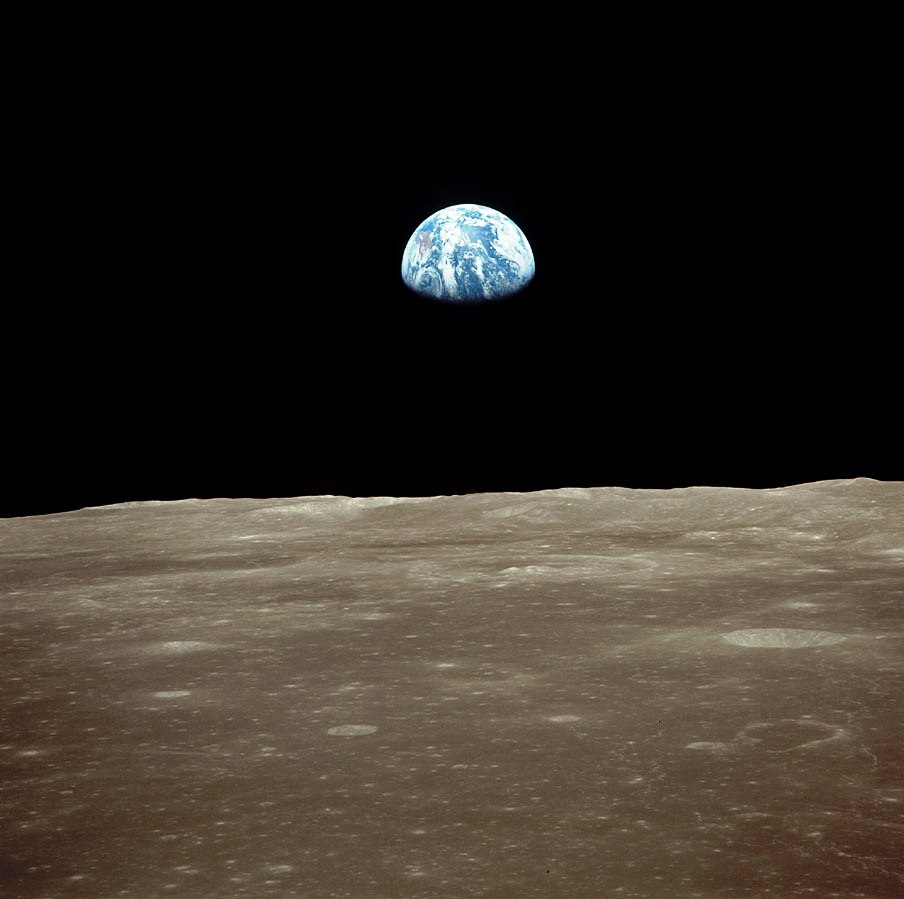
There is nothing new under the sun.  Or Moon.   I thought about this as I witnessed the moon in its glory—so large and full that I felt I could reach out and take a slice—on November 11, 2011—that auspicious date that was at the front of everyone’s consciousness.  That’s how close I felt to the moon that day.

If the moon could talk, She would stun us with a vast repository of human history and behavior.  She might laugh at our amazing ability to repeat the same mistakes over and over again.  Or she might pray for us with compassion.

The Moon might say to us “Lighten up. I saw that argument go down with the  Neanderthals.  All about territory.”

Or She might sigh and say “Oh, yeah.  Religious bigotry.”  She would cluck her tongue.  “Every time there’s a new prophet, people kill each other.  Such a sad repetition.”

Then the first child of the New Year is born and She would celebrate with laughter.  “Another baby!  Oh, there is hope yet for this old, old world below.  Perhaps this one will help smooth things out!”

Then a child dies.  “Oh,” She mourns.  “So many trillions of deaths.  Young and old.  Children and grown.  It doesn’t get any easier.”

“Ahhh.  Yet another war,”  and She might shake her head in wonder that we never figured it out.

I thought about these things as I watched the moon that day.  I thought about our current political landscape and the fear that rages within the hearts of people around the world.  But, I also thought about the love and the extraordinary kindness generated by so many.

“Look at that,” the Moon might say.  “She took those bags of food to her next door neighbor.”

“Oh, my.  That young girl collected all that money to build homes for the poor in another country!”

“Their 60th wedding anniversary!  Such committment.  Such love.”

We startle ourselves with news of the birth of the 7 billionth child, when so many billions have gone before.  Every note of music that’s ever been claimed by every composer who’s ever lived has been claimed before.   Every lover who’s ever made love was not the first to surrender to that warmth.

The thought that the Moon has witnessed it all, uncountable times before, gives me  solace.  We are not the first to struggle through difficult times.  We are not witnessing anything new.  There is nothing new under the Moon.  Or sun.

The question is:  What have we learned?

Thoughts on…Judgment

“Take it off.  Just take it off!”

I was about 20, walking the streets of Washington, D.C., feeling good, when an angry woman placed herself beside me and shouted those words in my face.  I was wearing a fall—an added pony tail—in my hair.  Women have been wearing them since the dawn of time…right? But for me it was the wrong time and place.  It was the 70s and we were moving heavy into a new phase with African-American hair — pride and all that.

Her anger was frightening, but what pierced more was her judgment.  She didn’t know anything about me.   Judgment is a word with extraordinary power.  When used amongst us ordinary folk, it is a poisonous, hard edged weapon.  As such, it is my view that judgment belongs only in courts of law.

I’ve thought about that woman off and on over the years.  In 2011, I see all forms of dark-brown girls and women sporting their blond, straight, pony-tailed and, otherwise colored and expensive, added hair.  She’s probably in her late 60s or early 70s by now — if she’s  alive.  Is she spending her time stopping folks and screaming at them still?  Or did she have children and change her perspective?  Perhaps her anger landed her in the justice system where judgment is ladled out like soup on a daily basis.  Perhaps—I am so frigging wicked—she herself is now a kinder, less judgmental blond.

“Judge not, less ye be judged.”  I’ve certainly done my share.

I was sitting in a restaurant-bar in Eugene, Oregon when a really good looking man began flirting with me.  I allowed myself to make some quick judgments:  “Hmm.  Good looking black man 30-something, single? Probably dates white…”

And that’s where things got interesting.  The universe picked up the thought and carried it to his brain.  I’m not kidding.  Anyway, at the word “white,” he blared out “There’s judgment in your eyes!” and put his beer on the bar.  I was speechless.  How did he get in my head?  Had I said something out loud?  Was there a ticker tape running the words across my irises?  I defended myself as best I could.  He explained.

“I can see it in your eyes.  You think you know me.”

So, he hadn’t really read my thoughts per se, but he had seen them.  The light of my interest had disappeared, and in its place…judgment; the eyes reveal it all.   Fortunately, we worked it out, finished our beers and became good friends.  But I learned something very important.  Even when our lips are smiling, if there’s judgment, it shows in the eyes.  I want to be judgment-free.

“I am a Christian,” she informed me.

This is why it was her duty to judge me harshly.  I had gone to school for a short time in West Virginia and during that time I was staying with her family.  I didn’t like looking into her eyes.   They were overflowing with judgment.  Everywhere I went, her judgment was beside me.  Her eyes revealed her distrust of blacks who did not talk like her (I was too “proper”); or dress like her; (I wore make-up and perfume); or pray like her. She spent a lot of time keeping her adopted children away from me, frightening them into following the word of God, lest they too smear their lips red.   I judged her very harshly back.  Now, I understand that hers was life commanded by fear.

I want to be judgment-free.

Some of life’s largest landmines of judgment lie in the fields of cultural expectations.  But we are not two-dimensional creatures.

I read a story about one of my s-heros, the late writer Zora Neale Hurston.  Hurston could easily set off a landmine by being herself and claiming her humanity.  In Alice Walker’s dedication to I Love Myself When I am Laughing… And Then Again When I am Looking Mean and Impressive, a Hurston reader she edited, Ms. Walker addresses the judgment around Hurston’s ability to righteously step outside of social expectations.   When Hurston’s play Color Struck won second prize in a literary contest, Hurston entered a party yelling  “COLOR…R. R  STRUCK..K. K!” with pride.  Two women that Ms. Walker knows told her they wouldn’t have liked Hurston had they known her.  Ms. Walker writes,  “Apparently it isn’t easy to like a person who is not humbled by second place.”

Some of life’s largest landmines of judgment lie in the fields of cultural expectations.  But we are not two-dimensional creatures.

Is it possible to be judgment-free?