Tag Archives: Values

Young Folks, You Are Doing Just Fine

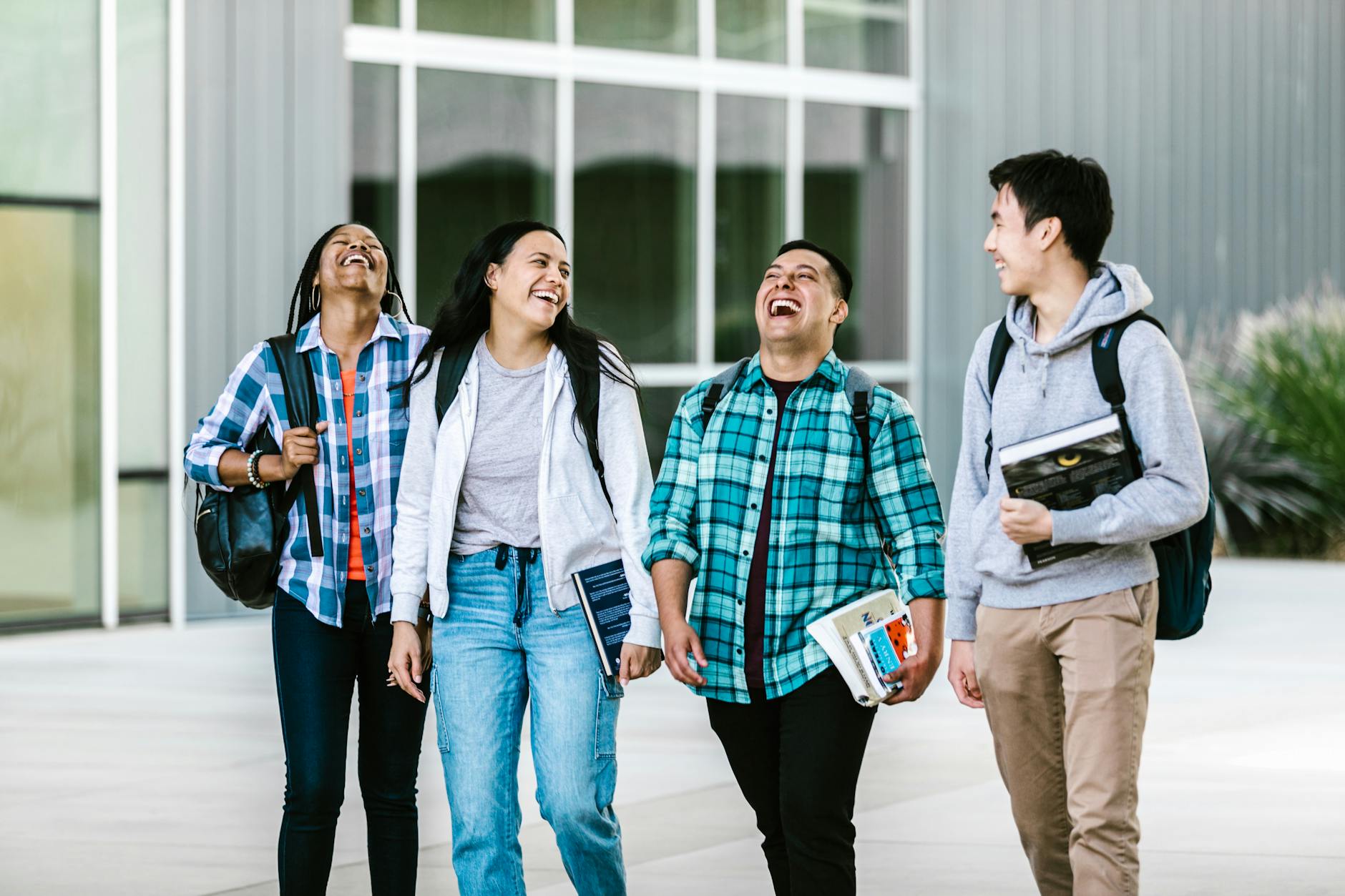
Photo by RDNE Stock project on Pexels.com

Yesterday I visited one of the colleges in the Philadelphia area. Most campuses are open to the public, and it seemed like a perfect Fall morning to find a bench and catch up on a knitting project. As I entered the parking lot, I slowed. The lot was nearly full. Wait, what?

It was move-in day.

Across the grounds, students and parents stood in lines of 20 or 30, anxious for introductions to people they were meeting for the first time. Boxes and furniture were hauled from cars and trucks and moved into dorms. Faculty members trotted in and out of buildings. Parents gingerly backed their vehicles into and out of parking spaces. “What an exciting day for them,” I thought. But not for me.

I spotted a space and rushed for it, pulled in. There were no signs forbidding parking. I bit my lip and sat for a moment, feeling a little guilty when a father, lugging a set of plastic containers, gave me an irritated glance. Heck.

I grabbed my knitting bag, exited the car, and walked towards an open bench just past the driveway. Whoa! Directly across from the bench was a line of animated students waiting for their campus welcome and tour. I stared, then turned back toward the car.

I was disappointed, but the truth is I was visiting their home. It was as if I had arrived uninvited to a generous feast of sweet treats, pizzas, and flowers. Resignation and courtesy were my only options.

I looked around again. The campus was renovated over the summer, and the bench I had always used was no longer there. However, about 75 feet away, there were two benches just across from the track. A couple of students (kids to me) occupied one of them. Lines? Nope. I use a cane and don’t like walking across grass, and I could feel a whine coming on. As I plopped down, a little tired from my trek, on the bench next to the students, they paused their conversation and greeted me.

I’ve begun a new morning habit of setting an intention for the day. My intention this morning was to listen. To birds. To cars. To the wind. So, that is what I did; I listened and learned that the young man and woman were seniors, excited about being on campus and catching up on summer news.

She: “Peter and Maggie had a baby.”

He: “What?! Wow! Did they finally get married?”

She: “Yup. Isn’t that a trip?”

Feigning attention to my needles to stretch out the time, I pulled threads, making six short rows into one.

She: “It’s so good to see you!”

He: “Can you believe it’s our last year?”

She: “No! (Pause) It’s going to go by too fast.”

My heart fluttered. Memories of my own college years — that went by too fast — surfaced. I never made friends like these two. I was often alone, the chronic introvert. After a semester, I left school and joined a theater company. The theater was where I met my buddies. The theater was where I belonged.  In the theater, we were bold, young, and unafraid. I imagined these seniors to be the same.

He: “I can’t wait to see everybody again.”

She: “Do you think Maggie will bring her baby?”

I listened. Here’s the thing: I will never see my first theater mates again. Almost all of them have passed away. Drugs. Cancer. Old age.

The sun was now fully on my face, and perspiration dripped into the corners of my eyes.

“It’s been so lovely listening to you guys,” I said. “But the sun is roasting me.”

I stood as they laughed and waved. I looked back toward the bench I had started for initially. It was empty, and there were no lines. I headed for it, looking forward to being in the shade of that marvelously large tree.

Opposite that bench was another where three young women sat. (There are lots of benches on this campus.) Once again, I listened. They were juniors or sophomores, cheerleaders, practicing old and new chants for the year. As I approached, a young woman with glorious dreadlocks looked up and greeted me. She wasn’t just being polite. Her smile held her heart.

A helicopter flew overhead.

“I’ve never seen a pink helicopter!” I said.

“It was yellow, I think,” she smiled.

I smiled back.

Thinking about it now, I feel teary-eyed. Any one of the students I met would have offered me and my cane a seat on the bus. Kindness and respect. After about 30 minutes, I put my knitting away. The young women were leaving to meet their friends. The young man I had seen earlier was passing by and gave a wave, a big smile, and a nod of his head to this grey-haired knitter.

As he made his way to some event or other, the thought came to me: I don’t need to worry about our future. Young Folks, you are doing just fine.

Musings On Being An Empath

I wander as I wonder…

My morning coffee brightens the day.

The brew is flavorful, and the hint of chocolate on the back of my tongue is a calming sensory experience for the many thoughts and feelings I have in this stream of consciousness.

After months of procrastination, I’m gaining clarity about this post. I’m not writing about food this time, although I’m sure that a large bag of chips will make its way to me as I write about kindness and ─ oddly enough ─ empaths, people who have a high sensitivity to stimuli, including other people’s emotions. I’m writing about being empathic ─ not empathetic.

While researching, I came across a definition about the difference between empathic and empathetic. In an article published by Stylist, an online magazine based in the UK, Lucy Fry writes the following:

Being an empath is developmental, whereas empathy can be learned.

Fry continues: Empaths easily lose themselves in feelings. For most people expressing empathy means making a concerted effort to see the world through someone else’s lens in a kind way. For an empath, however, it can get confusing. These types of people absorb others’ emotions so quickly and easily they’re sometimes unsure which lens is whose. The boundaries between the self and others can be thin, which means they are super sensitive to other people’s needs but can also entirely lose track of their own.

This is why it’s so important for empaths to learn how to take care of themselves (and their gift), so they can find ways to protect themselves from drowning in feelings that don’t belong to them. https://www.stylist.co.uk/health/mental-health/empath-empathic-person/641521

You’re too sensitive, Sala. Sigh. I’ve been told this numerous times.

You want to hear the heart in the voice. Alexa’s words landed like sparks in a dry field.

Yes.

Not too long ago, I was irritated by a conversation I was having. I felt that the person wouldn’t shut up until she had me submerged in the cesspool of anger she swims in all the time. All. The. Time.

I’m a human sponge. I soak up other people’s emotions like others suck up soda through a straw.  When I’ve gone to the movies, I’ve found that I feel almost physically pulled into any violent action on the screen. I feel overwhelmed.  So, I don’t go to the movies. I don’t read violent novels. I have an enduring crush on Stephen King and have slept with his book On Writing next to my pillow. But I have never seen, nor will I, a movie adaptation of his books. I was traumatized as a child by Hitchcock’s Psycho. I’ve never seen a Tarantino film, and I did not watch Game of Thrones ─ my sister advised me against it. Give me the Hallmark Channel, Notting Hill and Madea

Don’t. Judge. Me.

According to Dr. Judith Orloff, a board certified psychiatrist and expert on the subject of Highly Sensitive Persons (HSPs):  Empaths absorb other people’s emotions.

There it was: absorb. While others define themselves as extrovert or introvert, I’m defining myself as an empath. The Cleveland Clinic notes that you may also identify with being a highly sensitive person (HSP), a personality trait that was first used by psychologists in the 1990s to describe someone with a deep sensitivity to the physical, emotional, or social situations and information around them. https://health.clevelandclinic.org/highly-sensitive-person/

My parents, Bill and Libby, joined millions of American Blacks who moved to northern and western states during the Great Migration from the South. I will never know the depth of their disenchantment on discovering the same racial discrimination and limited economic opportunities in Washington, D.C. that they had left behind in South Carolina.

Exposed to Mom’s anger and disappointment at having had to leave her beloved career ─ teaching ─ to raise five children in poverty and her mood swings from having to witness my father’s humiliation and rage when private builders told him ─ a master brick mason ─ that “coloreds” weren’t being hired, I absorbed their every emotion. I cried a lot. When teachers sent us home from school the day President Kennedy was assassinated, I threw myself on my bed and sobbed. And despite my empathy for my family and our world, I became unkind and angry.

Mine or Yours?

A White neighbor called to vent about another devastating U.S. Supreme Court decision on Affirmative Action and the efforts to obstruct racial diversity in higher education. They’ve been busy taking rights away these days. She ranted, not taking a breath and not allowing me to speak. I listened.  When she was done, she thanked me for allowing her to “get it off my chest.” I responded, “Good. You need to know that I did not take it onto mine.” Her silence was brief but obvious. She had been hoping I would join her anger.

“I lived through those days,” I said. “How can you possibly be angrier than someone who experienced those times?”

I felt the wind go out of her sails. I was honest. I was direct. I felt powerful. It’s not that I don’t get angry. It’s that I have experienced self-protection and learned ways to know if it’s my anger, not someone else’s.

Childhood Educators Are Saints

During my ─ if-only-they-could-be-forgotten ─ adolescent years, the vice principal of our junior high school took me under her wing. A tall woman with dark chocolate skin and closely clipped hair, she was a no-bullshit, take-no-prisoners administrator. She offered a wide, memorable smile that, behind her back, prompted cowardly kids to call her “King Kong.” Fiercely principled, Mrs. G. was a potent advocate for young people. If, however, one was foolish enough to challenge her authority, you did so at your peril. I didn’t know too many kids who were willing to face their parents for being suspended or, even worse, expelled.

My grades were poor. Incidents of colorism – discrimination based on color within the race ─ fed my anger, and I was filled with anxiety about American culture. Additionally, adolescents are markedly known for meanness, and one day I found myself in a fight with a light-skinned girl who looked Caucasian. She was not. A ring of girls surrounded us and chanted “Fight! Fight!” This, not surprisingly, led to a sit-down in the principal’s office. Mrs. G. put her arms around my shoulders. “Walk with me.” We walked the halls. She didn’t use the word “colorism” or demean other students for their behavior. She spoke kindly and told me I was smart, that I could do better. Something inside me softened, if only for a little while.

My Ways of Empathic Protection

Therapy and Psychotherapists

During my twenties, I was led to a compassionate therapist who taught me something: Anger and repressed fear were my defaults. If I couldn’t identify or own my feelings, I could not respond to life circumstances authentically.

Prayer

I found a spiritual path that focused on the love of God ─ not “fear” ─ as the unseen guidance. I could no longer sing “saved a wretch” in the hymn Amazing Grace. I sang “saved a soul.”  Chanting became a daily practice, and service ─ volunteering, a lifelong practice for me ─ took on a golden hue. I was becoming softer, more vulnerable. When, after 30 years, I left California for the east coast, a friend told me gently that he had watched me transform over the years. “You’ve lost that explosive anger.” I was moved ─ my own feeling. I remember saying to someone during those years, “I like a lot of soft around me.” In the company of softness, I felt ─ and feel ─ good.

Food

Ahh, yes. I knew I’d come back to the plate. Beginning with family meals for the seven of us in our two-bedroom apartment and extended family gatherings to visits with my grandparents in the south and church picnics, food preparation and pure laughter became a major empathic lifeline.  Hugs were plentiful. Empathy was strengthened. I learned that in cooking, sharing, and eating good food, life could be joyful. But it’s been a rocky ride here. Sometimes my empathic protection revealed itself in weight gain. The soft protection of bulge around the belly. Other times, my love of sharing food and company with people I love has been the empathic lifeline.

Nature

I call my apartment a tree house. Outside my windows, the leaves of the trees serve as curtains in the summer. The southwestern sun keeps my apartment warm in the winter. I am heralded with birdsong, and I hope the circling hawks don’t see the rabbits occasionally nibbling by the side of the building.

Okay.

Now that I’ve finished my coffee and reflections for the morning, I’m on my way to juice apples and pears in the safety and comfort of my kitchen, a comforting place where I always experience the “soft around me.”

Till next time.