Author Archives: Sala

Words: In not letting racism overshadow the glory of spring  

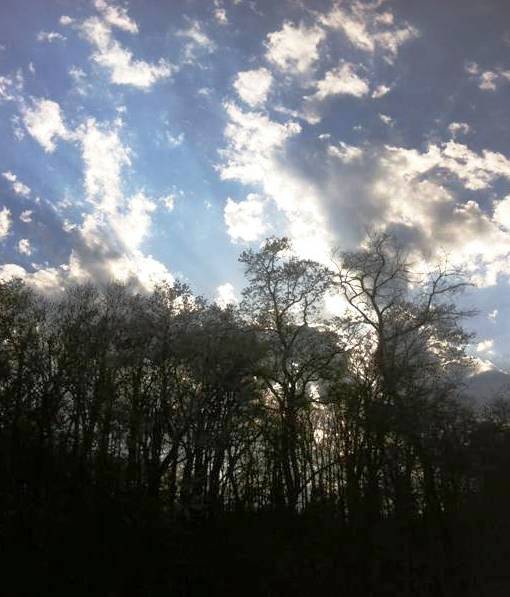
Spring 2014Call me corny. It’s a beautiful morning, cool and brilliant with sun. I’ve been enjoying the mornings and wondering how it is that I still insist on believing in love.

But, there are a couple of rigid voices outside and inside my head ranting and raving about the state of race relationships in America.

Given the history of our country’s beginnings, can there be any surprise that we are both dysfunctional and symbiotic? Race is the warp and weft of the fabric.

I live with racism every day. So do you. Overt or subtle, we either give or receive pain from racist perceptions about each other moment by moment. White about black. Black about white. Black about black. White about white. Red about black. Black about red. On and on and on. Sometimes I think that racism and classicism, having existed for hundreds and thousands of years, will be, like the poor referred to in the Bible, with us always.

I still believe in love. That’s all I really think about. That’s all I care about. Human kindness. Thankfully, I also believe that most people contribute, in one way or another, to solutions towards a loving, peaceful, just, and equal society.  I believe that we make these contributions because we believe in actualizing the best of ourselves towards and with each other. I believe that our contributions are the rent we pay in exchange for the privilege of enjoying our time on this Earth.

We humans are complex and unpredictable.  As we go back and forth with legislation, it is horrifying to see freedoms given and freedoms taken away. It is infuriating to see people manipulate the system to keep others in poverty, without the right to vote, and in ignorance of the power to control their own lives.

I still believe in love. I still believe in human kindness.

I don’t do well in political debate. But I know someone will ask about race again. And I will answer. Because this is part of the discourse, and we are both dysfunctional and symbiotic.

Now about this exquisite Spring.

I have been waiting through this long, bitter winter for the soft green, succulent rebirth of the earth. I can go outside now. And I am not about to let politics or criticism steal my opportunity to wrap my soul in the joy of seeing woodpeckers, hawks, finches, geese, and robins fly; deer chase each other; fox lurk; and, yes, people explore the nature trail—that includes the guy that thought nobody could see him relieving himself among the trees.

Spring is not just the harbinger of rebirth; spring is the majesty of magic. Year after year, spring and the holy days — today is Palm Sunday— anchor me in miracles. There was my childhood Easter miracle of shiny new black patent leather shoes, white ankle socks, a new dress, gloves, and, of course, a hat. My sister and I paraded. My brothers, in their bow ties and neat little jackets were resplendent. Spring defied the reality of “lack” by bringing us together in new clothes with a larger community that believed in the power of rebirth— a miracle, considering what we lived under during those times, and proof that life is magic.

So, these days I’m awakened at six with birdsong and light. I have accepted the reality that injustice is a part of living. I acknowledge the fact that contribution to transformation, celebration of the glory of spring, and expression of gratitude for the gift of spiritual rebirth is the rent I pay for enjoying Earth.

Happy Holy Days, whatever your faith. And stay posted for a new photo in the coming months!

Two in one month? No. Tow.

Praise the elements and the angels. Fresh air, sunshine, and a chance to get some outdoor exercise with my physical therapist…

Whoa! What’s this?

“I’m not going to jail!!!”

The short, stocky woman stood toe to toe with the young police officer. He looked confused. He had to do his job; he also had to be respectful. Had he threatened to arrest her?

“Ma’am, this is a handicapped zone.”

The truth be told, the woman screaming didn’t own the car. I don’t know how she got into this thing. But, by now, a crowd of senior and elderly citizens had gathered, and they were not happy.

I, on the other hand — and foot — was happy. I had been cooped up in my apartment for more than 40 days. This was the third day of sunlight and warm temperatures in a winter that almost had me believing in Armageddon. If I could have danced without falling — well, let me just say “I’m workin’ on it.”

“Please don’t tow my car!”

The woman in the (very comfortable looking I might add) pink robe was terrified.

“This is a handicapped zone.”

A young woman visiting her mother patiently repeated this fact to anyone who would listen. The tow truck line was attached to the car. It’s a cosmic fact. Once the line is attached, it’s a done deal. There were five — yes, I counted them — five police cars with the officers facing this angry group. It was a little dramatic.

“Please…”

I live in this lovely place because I, too, now qualify as a senior. You have no idea how much angst went into this revelation. But I suppose that with a serious illness comes the willingness to let go of façades. One after another the veils drop, and  secrets are left open for examination by anyone who chooses to peek. It doesn’t matter if people say my skin looks so smooth, my face so young, and my attitude youthful. Illness can bring, if one is willing, a new and glorious embrace of the present. I can now ride the commuter train for $1.

It’s a new place, barely eight years old. My apartment faces the woods of a college campus across the road. My first week here I saw a fox. And during this horrifically snowy season, I had the pleasure of watching cross-country skiers on the trail that will be hidden once the trees bloom in the spring.

Sometimes, in the quiet of night, I hear the cries of some small animal or bird that is meeting it’s fate as dinner. It’s eerie; that pitiful cry and then silence. But then the morning comes.

This dramatization around an illegally parked car seemed to play into the predator/prey story. Except that everyone felt they were prey. No one in the situation wanted to be there. The faces of those young officers, all white, revealed their discomfort. They wanted to be anywhere else on the planet: chasing drunk drivers, arresting bank robbers, responding to fire emergencies — anywhere but here with five cop cars for a handful of senior citizens. The young white tow truck driver looked fearful as he talked with his supervisor on his cell phone.

The seniors, with the exception of one, were all black. The situation was, I suppose for some, um, awkward.

I am more warped. Oh, the thrill of it! Not only was I outside; I was being entertained. And I suppose, on some level, I knew the situation would be resolved amicably. Why? Because it’s an amicable community, within and outside of the complex. And no one —  believe me, no one — wanted to be on the evening news.

I’ve been listening to people complain about cabin fever this winter. Yes, the temperatures have been in the single digits, the snow has been up to 10 inches deep — more in some places — and spring seems too far away. But after a year of living mostly indoors, I am finding it hard to have one ounce of pity. The extent of my travels has been the tedious act of using a wheelchair or walker to move from one room to another. For those with physical limitations, we’d give anything to walk into the frigid air or put our feet into the snow.

“Ma’am,” an exasperated, but patient, officer repeated. “This is a handicapped zone.”

My physical therapist and I had work to do and went about our business: my learning to use the walker as I stepped off a curb and walked on the pathway between the building and the parking lot.

Whoa. What’s this?

A miracle of the modern world occurred. The tow truck driver unhitched his line.

The young girl, as a gesture of kindness to the car owner, moved the car to its designated parking space. It seemed that everyone was going to have a happy ending. The woman in the pink robe came to each of us individually to thank us for praying for her (I admit that I was not owed this thanks). The police were so ready to go look for real trouble. The tow truck driver, having not been attacked by a bunch of old folks, climbed into his truck to leave.

I, fully exhilarated, returned to my apartment.

May your days be free of tow trucks. And—if you have an inclination to do it because you’ll only be there for a few minutes — DON’T. Don’t park in a handicapped zone. It’s rude. It’s inconsiderate. It will cost you up to $200. And it costs taxpayers money to send the police when you take a space that rightfully belongs to someone else.

Okay. I’m done. Peace out.

A year ago today

Three women gathered outside the door. One, almost 6 feet tall and broad, stood with two smaller women. One was petite with curly hair, and the other was thin with a drawn and angular face. I had seen them before. They were discussing a patient’s lunch and the fact that she hadn’t eaten. But it was not about the patient’s health.

“She didn’t eat it?” asked one.

“It’s still on the table,” said another. I was listening. I recognized the voice of the tall one.

“She ordered from outside,” said another.

They were “stage whispering.” My roommate had intestinal problems, and I had asked to have my lunch moved to another area. They had taken the tray too far away for me to retrieve it. Then, they became like “the disappeared.”

“She ordered from outside.”

Strange that I’m reflecting on those days this morning. I think it’s because I’m feeling luxuriously at ease within the sanctity of my bedroom. Maybe it’s because I’m indulging in nourishing, health giving food—green drinks, fresh fruit, foods I can enjoy now that I’m home. Perhaps it’s because I’m watching the snow melt and enjoying the morning sun at the top of the trees.

Recently, I did some minor research on skilled nursing facilities, also known as SNFs (sniffs). I was horrified to find a hideous historical link to workhouses for paupers. But, for me, it explained a strange fog of meanness that seemed to drift throughout some of these places. I’d heard stories of patients becoming ill after nursing assistants put bad medications into their food.  My attitude was like, “sleep with one eye open.”

Mean-spiritedness is a trickle-down reaction. It trickles down from families, communities, politics and religion. Remember that trickle-down theory of economics? I thought you might.

These women hated their jobs. Most were immigrants receiving the lowest wages for the funkiest work:  emptying bed pans, making beds, giving showers, and wiping up vomit or worse. I understood, but after waiting 3o minutes, I ordered pizza from a community restaurant and had it delivered to my stinky room.

Something occurs to me. The mean-spiritedness I experienced with the nursing assistants is the same and equal to the mean-spiritedness of religious extremists — of all faiths. Only the environments have changed.

Religious extremists fight – even crazily to the death — for control of our personal lives. Is it because these extremists’ lives are so rabidly out-of-control? Is it because they feel powerless in the face of their own human nature — just as the nursing assistants feel powerless in the face of their jobs?

Is it because they fear something within themselves that they advance racist fears, the persecution of homosexuals, and a hatred of women? Is it because their own human urgings are out of control?

I’m just asking.A year ago

When people can’t control their own lives, they try to control the lives of others.  When people aren’t happy, they try to make others even less happy.

We’ve heard that “if they knew better, they’d do better.” Hmm.

I’m watching the snow melt and enjoying the morning sun at the top of the trees. I’m so happy to be home.

F-Word

Photo by Melinda Zipin Copyright 2014

Photo by Melinda Zipin Copyright 2014

While you’re thinking about a word that can’t be used on television, I’m diving into an eloquent chocolate cake with butter cream frosting — and wondering how to Forgive myself for using food the way I do.

Forgiveness. The other F word.

About 12 years ago, my half-sister and I had a fight. I wanted more help supporting my mother who had some health issues. Asking a sibling to help with an elderly family member can stir up a lot of, well, shit. I was driving, on weekends, from upstate New York to Washington DC. She was in North Carolina. I had the expectation that since we had long distances to drive, we’d share responsibilities. Wrong.

After three minutes of her yelling about her finances and other limitations, I became frustrated and, yes, I dropped the F bomb — the one you can’t use on television. She has not communicated with me since. Has she forgiven me? I don’t know.

I‘ve found forgiveness to be vaporous in nature. All of the scriptural directives, scholarly studies, church sermons, and secular workshops that are intended to guide us, the unenlightened, don’t erase the pain that harsh words can create. Still and all, isn’t forgiving for the forgiver and not the forgiven? Forgiving lowers the blood pressure and opens the heart. I remember summers on the farm with my half-sister. All of my farm memories are blissful. So how is it that sometimes I feel like I’m walking blind along a beautiful beach and can’t see a thing? I will never know my half-sister’s pain, but I can forgive her behavior.

Where do I begin? With self.

I begin my self forgiveness with food because it is my most prominent vice. I forgive myself for indulging in chocolate or almond croissants, large bowls of egg salad, and ice cream laced with caramel. No,I cannot do it alone. After my CIDP diagnosis, support appeared from all around. Support made forgiving myself easy and is a part of the miracle of my not being obese. What did the song say? “Pick yourself up. Dust yourself off. Start all over again.”

Many years ago I had a dream. You know how dreams are sometimes. They’re so real that you wake up surprised. Why am I not what I experienced on the other plane? In this case, I was grateful that it was a dream. I was cold and shivering, standing in snow and ice and banging on a door. I pushed, it wouldn’t open. I pounded, no one came. I woke up completely unnerved, knowing— without doubt — that the door was a metaphor for my heart, and that if I wanted to be warm, I would have to open that door. Forgiveness is one of the keys.

But back to the beginning. I’m grateful for my relationship with food that leads me to the path of self forgiveness. Self forgiveness opens that door in my dreams and allows me to come into the warmth. If I don’t forgive myself, I won’t forgive others. If I don’t forgive others, I cannot be forgiven.

Forgiveness through food makes it easy. At sometime, probably in the near future, I’ll hear myself saying, “I’ll take fries with that.”

And that will give me a moment to forgive myself and create a moment to pay it forward.

Self Reflection. Self Dignity.

Thank you Melinda.

Thank you Melinda.

“I knew if I didn’t leave my bitterness and hatred behind I’d still be in prison” – – Nelson Mandela

.

In California, roses bloom in  January. Not here. Not here. Not here.

I sit with my hot chocolate and look at the drifting snow and 18° weather. I’m reflecting on the past year, my diagnosis of CIDP, and asking God what that means for my future. It’s a mysterious future with hours of submersion in cultural waters carrying unexploded bombs of bitterness.

It’s like finding a World War II land mine. Family stories never stop. After years of begging the universe to make my family normal, or at least in my next life give me a normal family, it occurs to me that my family is normal. For what it’s worth, it’s me who lives outside the culture, enjoying the explosion of hidden fireworks that somehow foster the courage to love even more.  

My brother and his wife have separated, and the children are the ones who suffer. I see myself in my 13-year-old niece; a child with a passion for art—food and ice-skating and writing. I see a child struggling between the promise of her passions and the chill of being blown into the winds of abandonment. In this case, it’s her dad who is the chill. And I love them both. It’s not right. Prodded by cultural misinterpretations based on religious fear, dogma, and wrong understanding there is a sect of craziness that is trying to make this separation normal.

Millions of children grow up with single parents. And while I really believe that my family put the “dys” in dysfunction, my parents were never missing in action. The child in me wants to believe that for better or for worse, folks can stick it out. My grown up self knows that sometimes it’s easier to walk away although somewhere, somehow there must be dignity.

I am lucky. I’m old enough to witness the rescinding tide of fitting in. I am bolder, happier, and becoming, yes, whole. But for a child, fitting in is everything. A 13-year-old girl wants her family to be normal.

It is not an easy climb in the struggle against cultural forces that create and defend narrow definitions of family, womanhood, race, or work choices. We are moving uphill against cultural norms that sanctify secrecy and codify hiding our feelings. These norms threaten us with collapsing the walls of love and personal dignity.

Well.

According to me, freedom exists only in sandblasting away cultural definitions that keep us bitterly imprisoned from our own truth. It’s not easy to choose authenticity. But in the end, if we want to be whole, authenticity is what we must choose. I pray that this is the realization my niece comes to.

Now… about the words I chose for this post:

Self reflection. Years ago, during a meditation, I heard these words inside myself: “Can you embrace your own heart? Can you bow to your own self? Can you love the essence of your own being?” I was deeply moved because at the time I bowed to everyone but me. Those words have fueled my journey ever since. I discovered the truth about anger and bitterness: Anger is exhausting. The Buddha said, “Holding onto anger is like drinking poison and expecting the other person to die.”

I constantly reflect on my choices in life, and I am happy to say that there are very few choices I regret thus far. I embrace the consequences of my choices, and this gives me more energy to be true to myself. It replenishes courage.

Have my choices made me happy? Do I treat my friends and family with kindness, openhearted listening, and respect? Do I live with and give compassion? If so, I have learned something. If not, I have learned something.

Can I enjoy the moments of simplicity before me?

A beautiful tray of chicken and roasted vegetables drenched in a sauce of cloves, garlic, and spices sits before me. I made this meal with hands that vibrate with nerve pain. But I made it, and I am happy. Yum.

I cannot hold anger and happiness in my heart at the same time. I cannot be married to cultural definitions and explore the depths of my own soul. I have tried; it hurts.

Self dignity.  Do I love myself? Am I committed to maintaining a world that is fair, just, and kind? Can I be honest and kind in my speech? Disciplined in my eating? Am I grateful for my own presence in the gifts I offer to my world? Whatever I do, do I do it out of love? If so, I can maintain my dignity no matter the circumstance.

Happy New Year. May 2014 be filled with joyous reflection and abundant dignity.

Show and Tell

“I love you.”

Spiritual texts tell us that love is all around. We must show it, not tell it.

Even as a child, I wanted to be told. But, love, in the pragmatic world of poverty, extreme racism, and fear revealed itself as a practical thing, woven into the daily life of meals, clothes, and housing. During the summers we experienced love in visits to the south where hot days in the fields, riding the backs of cows, and filling buckets of clean, tasty water from an underground spring left us tired and happy. Eating freshly slaughtered chicken and meats, farm grown veggies and fruit— figs, grapes, and peaches were my favorites — left us feeling supremely cared for and nourished.

Those things were evidence of love, and for the adults in the world around me this evidence was proof enough. My father would say “show me, don’t tell me” and he was no hypocrite. He lived his life showing through baseball games, circuses, and rides on his back after Thanksgiving dinner.

I embraced the apparent truth that love was show, not tell.  And yet, as I grew into womanhood, I began yearning for the words. Perhaps it was because some of the folks that came into my life did not know how to show. They did not come from families of evidence.

In this world where I pray to see a do-nothing Congress get past the extraordinary racism buried in attacks against the president so that they can show some compassion for those who are less fortunate, I think that many of those people do not come from families of evidence. I want to be shown that they have an ounce of feeling for those without insurance, without food, and who have placed their lives on the line to defend them and now need support. Show me; stop the flapping lips.

But I’m getting off track.

Evidence, of course, is mixed. I also experienced evidence that love was far from our door. My mother was not one to exhibit as much as one millionth of an inch of sentimentality. Except for anger, which was constant, she kept her feelings sacredly locked within her until women came together to can fruit and vegetables, cook holiday meals, and talk about their husbands. Only once do I remember her exhibiting sorrow — it is the only day in my memory — and that was when my father pushed her to the floor. Show, don’t tell. The day remains in my mind like a photograph that cannot be destroyed.

Why, sometimes, do I want to hear the words?

I am blessed with a view of the campus park across the street. The leaves have dropped from the trees, and I have a full view of the trail that winds through the college. Parents with toddlers, dog lovers, boys holding girls, and boys holding boys; future track stars in heavy coats force their tired legs uphill. The setting sun presses fat fingered rays through empty branches, covering the brown shrubbery and happy hikers like dripping paint. It’s like a drawing that revals my memories of past walks in forests where I was shown, not told, about love.  Show me, I would insist, don’t tell me.

Yet.

I’m open to thoughts…

Short and Sweet

It’s November. I’m going make this short and sweet. I’ve been home since October 10, and I am giving a grand hallelujah for leaving behind me eight months of rehab for CIDP. I’m still receiving physical and occupational therapy at home, but the important words here are: at home. Therefore, as I get settled and comfortable in my new space, I’m going to be brief.

Gone, for the time being anyway, is the cacophony of doctors, nurses, nursing assistants, medications, and the politics of teaching people to treat people like people. Today is golden.

A couple of weeks ago M came over for dinner.

“I’m not washing paper plates!” she laughed.

I wanted to use paper plates. But I also wanted to rinse them off before tossing them away. I know; weird. M pointed out —um — that the purpose of paper plates is to avoid washing dishes, therefore we would use real plates and wash those instead.  I’ll tell you that this was guaranteed the best laugh I’ve had in eight months.

Strangely enough, in the past week I’ve received two e-mails where the word “luminous” was used. There’s a lot to reflect and a lot to enjoy. As little things come together — plants, a closet full of my own clothes, my stereo, books; the bedroom so beautifully arranged by friends who moved me here without my presence, luminosity reigns. Health is luminous. Equality is luminous. Beginning the work of eliminating the veil of belief systems built on the rocks of myths, stereotypes, and lies is filled with the power of luminosity. CIDP — oddly — retains elements of the luminous. Luminosity is now.

Once again, I’m inspired by the late Erma Bombeck. I heard that she had something she wanted to say to God if she faced him in heaven and he asked her what she had brought for him. The story goes that she said she would tell him she had nothing to give. She had used every gift He had given her, and there was nothing in her pockets to return. I dare to say she did this through luminous living; through being at home in her own skin.

Hallelujah. Home.

On: Equalization and TMI

“Stop.”

There was no mistaking her voice. My sister’s pretty clear when she doesn’t want to hear something.

And there’s plenty to hear about. The chefs are amazing. Last night I had the best turkey Tetrazzini and cherry crisp for dinner. Then, there is my roommate who cried for three nights straight because she didn’t want to be here (here being one of the best physical rehab hospitals in the country). I also could’ve gone on and on about how excited I was that two (did you get that?) of my doctors are active musicians.

I could talk about my physical and occupational therapists who are so familiar with CIDP that they gave me information I had never heard anywhere else.

Even more, I could talk about the equalizing effect that disability rehab has on all of our particular biases. Racism? Gone in the equality of learning how to walk again. Sexism? Ceases to exist when you’re trying to stand up straight or speak your words clearly without drooling. Homophobia? Everyone’s working hard here, and no one — at least no one I’ve seen — has the time or inclination to care about anyone else’s sex life. Christian,  Muslim, Jew, Sikh, Hindu, etc.? All are learning to stand again.

“I’m learning to drive,” quipped the woman practicing in a power wheelchair.

“I’m learning to walk,” quipped the gentleman who passed her with a grin.

The focus here is: get the body working again. It takes total concentration, exercise, and effort. In my view, physical disability can be a great equalizer. All  one’s energy is put into healing and rehabilitation.

So I could have talked about that. But I didn’t. Instead I told her about another equalizer. Everyone in every room is concerned about the same thing because we hear it every day from every nurse.

“Did you have a bowel movement?”

My sister was not amused. She has a sensitive stomach.

The truth is, being in bed a lot of the time is a constipating experience. How much time can you spend hating the person next to you because of his or her race, sex, or other beingness when your bowels are backed up to your diaphragm? Not much I can tell you. One’s work is immediate.

This place is beautiful. Sprawling acres landscaped to perfection. Simple and attractive rooms that are cheerful and clean. Nurses and nursing aides that are respectful, kind, and willing to help. And excellent chefs — did I mention the excellent chefs?

“Stop!”

Too Much Information.  Please, no words about my consumption of copious quantities of Miralax and prunes. It doesn’t matter that what goes in must come out.

What is important is that here, everything points to equality. The rest is TMI.

On: Listening to Words From My Ancestors

“She was so proud of you. That’s what she told me. ‘Sala wrote this play. I’m so proud of her.’  Yes she was. She was very proud.”

Hearing these words was startling. So much so that for the next several nights I woke with a zillion questions. Among them:

Would I have made different choices had I known how she felt? Would those words have encouraged me to work harder, be more focused? Would I have had more faith in myself and continued to write plays?

The first question could have been about how long it took for me to get these words. But it wasn’t. It’s been almost three decades since my Grandmother Hattie’s death. It’s been probably longer since I talked with my cousin in New York. But does it really matter when I received the words? My grandparents — all four of them — would say, “God is on time, all the time.”

Still, when my cousin shared my grandmother’s words about my creative work, I was surprised. My grandparents were solid, God-fearing, Southern folk. It never occurred to me to share my work in the theater with them. And when I heard that this was her response to the first piece I had written and staged, I rejoiced. So what if it was decades later.

“I didn’t always agree with what your father did as a boy and young man,” my Grandfather Julius said about daddy. “But when you see what a child has grown up to be, you feel proud.”

It feels like it’s always been this way in my family. Pride in another’s accomplishments exists but is not always expressed.

Sigh.

I wish I could have heard her words back then. But if I had, would my rocky imperfections have resulted in the dollop of wisdom I see in myself today? “God is on time, all the time,” say my ancestors.

I try to remember this when I have challenging days. Well, this and the fact that words have color, power, and vision.

“He was very proud of you,” a friend told me after my father’s funeral. “He just couldn’t tell you himself.”

More encouragement.

These folks’ words bring  light to me. Brilliantly healing and erasing an overshadowing need for approval and periods of self-doubt. I sit here snacking on tortilla chips and thinking about meals to come. It’s one of the things I do when the nerves in my hands are ultra sensitive. And I’m hearing my own voice inside saying, “better late than never.”

I am not rueful. I still have words to write.

When I started blogging I had a concept about words. With a reluctant nod to Merriam-Webster, I would choose a single word and match it with a color. It was a brilliant idea, but too much work. Anyone who has tried to express her truth in writing knows that the craft is anchored in the practical. I am faced with the reality of the limitations in matching a galaxy of words to a small palette of colors.

And again, there is the reality of CIDP. Anchored down by my commitment to stay as positive as possible, I stay away from words that dwell on negative emotions. Words have color, power, and vision.

Perhaps this has never felt more true than when I hear words that come from folks whose physical light has gone out.

God is on time, all the time.

On: Tenderness

Dignity

What was it that Otis Redding said? Oh yes.

Try a little tenderness.

Tenderness.

Why is it so challenging to bask in the love that we all desire? I believe that it is everyone’s intention to surround themselves with the softness of life. By that I don’t mean the softness of material things, the silks and satins and cashmere of life. I mean the softness that comes with peace of being… Soft. Tenderness.

It’s a quiet summer afternoon. I’m looking out the window and watching butterflies circle the backyard. They seem completely at ease. Is it because, amazingly, the black cat with the strange green eyes is at ease? Is she practicing cat tenderness?  She doesn’t move from her perch as the butterflies and birds flit around her. Only the gray squirrel raises a racket. There is no threat. Softness abounds.

Sunlight fills crevices like liquid. My soul is filled with tenderness. And I, who thrive on seeing the world through rose-colored glasses, want to believe that every human being loves the sun.

The poets, romantics, musicians, spiritual teachers — even scientists — testify to the healing power of tenderness. Go ahead, say it isn’t so. But you’ll find yourself in some very isolated company.

I’m reminded of mornings on my grandparents’ farms. Both maternal and paternal grandparents knew the power of tenderness and peace. My own memories allow me to understand why my mother, in her dementia, retreats to a place of softness and safety.

Not too long ago, I was asked by a health practitioner to remember what that tenderness feels like in my body. I was happy to revisit that glorious childhood experience. Vacations were watercolor mornings, filled with strolls amid the corn, watermelon, and tomato fields with paternal and maternal grandfathers. For me, our small farms and communities played in my mind as barricades against treacherous white men whose daily bread filled them with the hatred required to circle the south looking for unarmed black men and boys.

“Remember what that tenderness felt like,” they say. It’s because currently my life requires the wondrous gift of tenderness: regular rest, naps, real food and more proteins (did I tell you I now eat poultry as well as fish? Gone, gone are those days of self-righteous food Puritanism!) I eat vigilantly, and monitor my emotions. “Get eight hours sleep,” said my dear physiatrist Dr. J.

For 40 years when I thought of South Carolina away from my grandparents’ homes, I thought of a place contaminated with murder and the blood and bones of enslaved black people. With my maternal grandparents gone, their home and land sold, and my estrangement from the conservative religious views of the South, there was no reason to return to that place. History suffocated tenderness.

Then I attended a family reunion in Myrtle Beach and the feelings flooded back. The signs on stores, restaurants, and bathrooms and drinking fountains — “colored” and “white, ” placed there to kill the human spirit while threatening the physical body — were gone.

Those signs had pitted my tender heart against my gentle maternal grandfather. When I was about 10 years old, he took us into the city of Sumter to run errands and buy sweets. As if in slow motion, I found myself bowing my head to drink from a fountain clearly marked “white only.” My grandfather did what he had to do to protect me.

He grabbed me by the collar with such force I thought I would choke. My lips never touched the water. Later on, sitting on the porch in his arms, surrounded by the night songs of frogs and crickets in a dark so black you could not see the outline of trees, and the smell of the forest so sweet I wanted to wrap it around my skin, I came to understand three things:

the incredible love and tenderness in the heart of the man forced to take such action;  the incredible love and tenderness in the heart of the man saddened by his own action and; the incredible love and tenderness in my own heart that allowed me to keep loving him.

Tenderness in its myriad forms — family, church, and community — ensured our survival. Tenderness has contributed, in spite of the traumas of living, to the person that I am.

It is a tender summer day and I wonder: If every person, politicians especially, accessed a single memory of tenderness, would the world be a very different place? I, who thrive on seeing the world through rose-colored glasses, would like to think it so.