Christmas morning, my 77th, I sat on the side of the bed feeling weighed down by a peculiar sadness. I say peculiar because I couldn’t define it. It wasn’t loneliness. I’ve been alone many Christmases. It was something else that I couldn’t place.
I’d spent musical Christmases singing to nursing home patients, school children, and incarcerated men and women. Their presence was sweet and satisfying, like a good wine on the back of the tongue. I’d spent Christmas in an ashram in India, enthralled with the magic of the people and the heat. Christmas in temples, churches, and spiritual retreats left me swooning in the magic of sacred music. In each place, there was light in the faces of the people, a brightness. I dare say, a tenderness.
I sipped my coffee, chewed on a waffle, and considered this.
As a child, I received splendid gifts on Christmas morning: a toy nurse kit that included a stethoscope, a miniature microscope, a dollhouse, and paper dolls with cut-out paper clothes. My brothers received model airplanes and warships. It feels like I can still smell the glue. My sister received a full-sized doll as large as a three-year-old. Candy canes and oranges came in Grandaddy’s bulky packages of fruit, nuts, and other goodies. Eating the contents of those packages never gave me a bellyache, which meant I was well enough to ride my first two-wheel bike with my father walking beside me. The gifts made me happy; they gave me pleasure. But the love gave me joy.
Defining joy,Merriam-Webster says, “…a feeling of great happiness or pleasure: delight,” and Cambridge Dictionary says, “Great happiness or pleasure.” But pleasure is not joy.
There is considerable discussion about the distinction between happiness and joy. From what I gather, happiness is dependent upon external realities: the food we eat, the places we go, the people we are with, or the material things we gather. Joy is an internal state of well-being, contentment, maybe even gladness. Gratitude produces a state of joy.
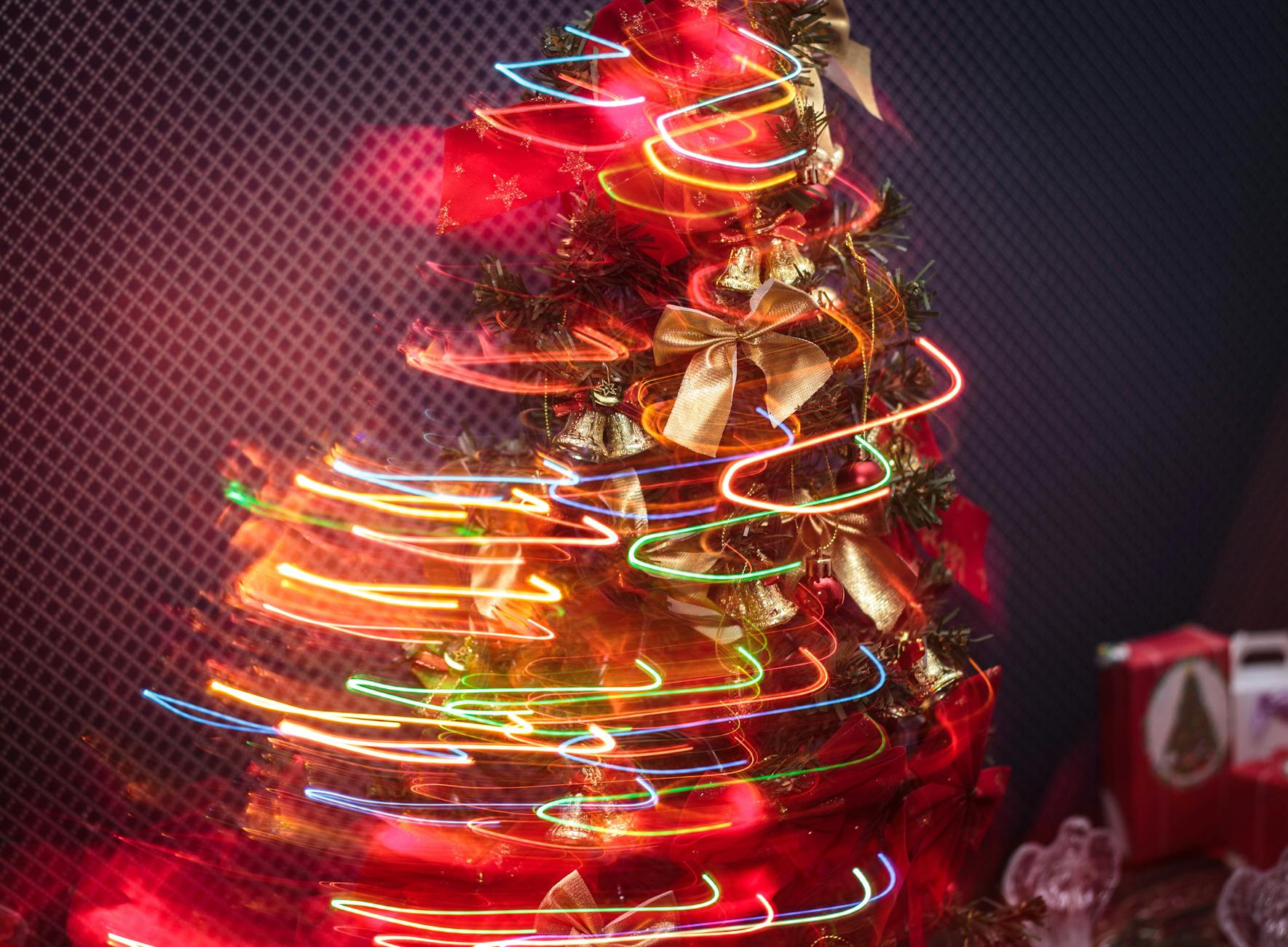
On my 65th Christmas, my holidays changed forever after a diagnosis of Guillain-Barré Syndrome, which became a chronic relapsing condition that left me blindsided. Six months of hospitals and rehab, medications with strange names, and IVs three to four times a week left me sad and fearful. My friends became heroes. One gave me an artificial tree with lights. Others came by and brought small gifts. These things and the company brought me happiness. The love behind the gifts brought me joy.
I was baptised at ten years old. As my body was lowered into the pool of water, I could hear the church members singing Take me to the water to be Baptised. I was underwater for only a moment, but it felt like an eternity. As Reverend Cole lifted me out of the water, I experienced a tranquility, contentment, and open-heartedness that I will never forget. I was filled with Joy.
So where was that joy now? Maybe it was waking up to the realization that I would soon be 78. No!
I have figured it out. On the morning of my 77th Christmas, I was missing joy. I also realized that, for me, in the background of every joyful experience is the hum of creation in the form of music. Christmas carols, Gregorian chants, traditional African-American hymns, or Eastern-based chanting. Whenever, wherever there is music, joy wells up within me. It reminds me of a verse from a rendition of a spiritual I love.
Over my head, I hear music in the air. There must be a God somewhere.
Christmas is gone, and my life in this village is filled with snow and ice. There are clouds and empty tree branches. But there is sunshine. There is contentment. There is sweet music. And there is joy.
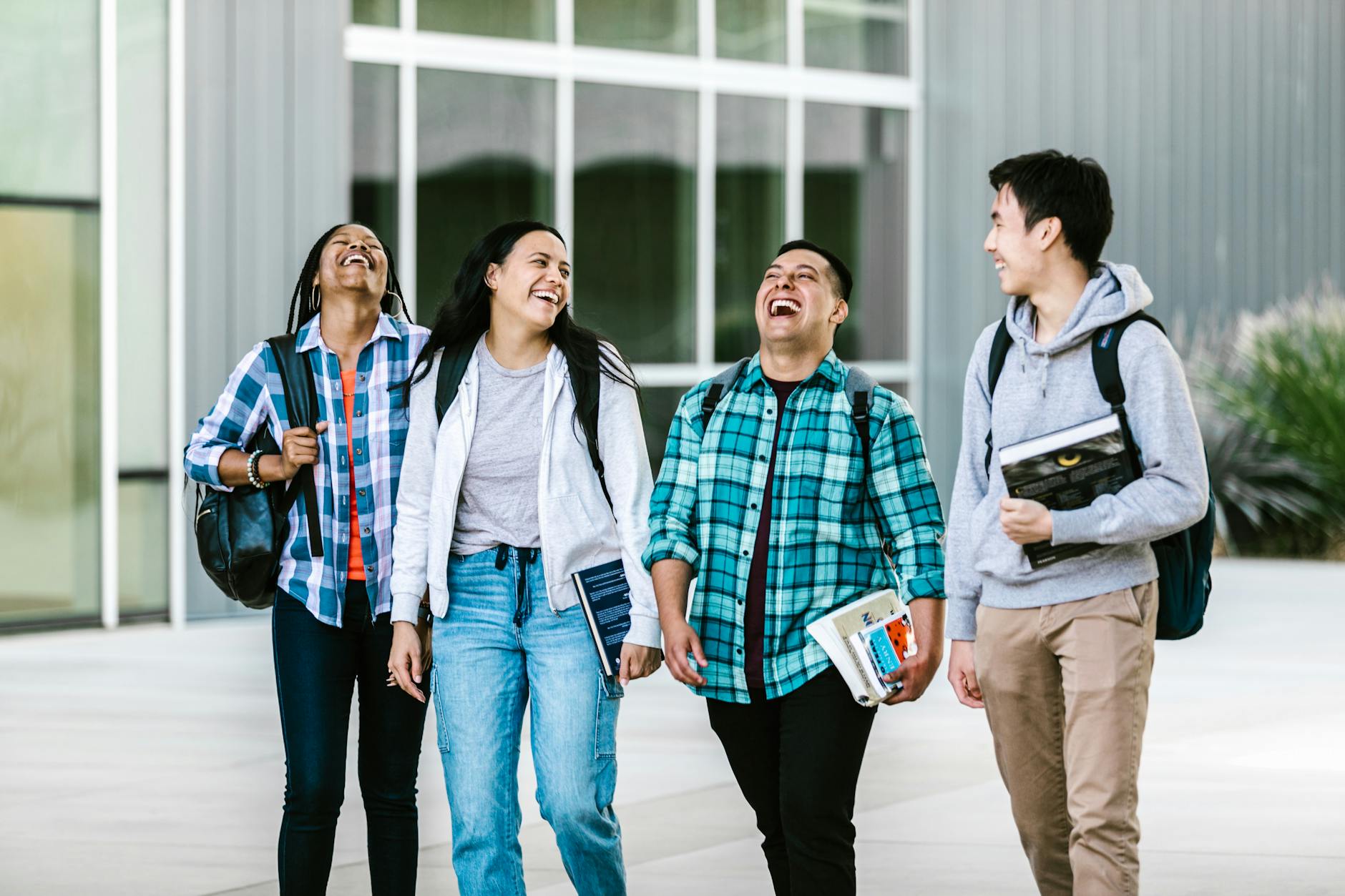
Yesterday I visited one of the colleges in the Philadelphia area. Most campuses are open to the public, and it seemed like a perfect Fall morning to find a bench and catch up on a knitting project. As I entered the parking lot, I slowed. The lot was nearly full. Wait, what?
It was move-in day.
Across the grounds, students and parents stood in lines of 20 or 30, anxious for introductions to people they were meeting for the first time. Boxes and furniture were hauled from cars and trucks and moved into dorms. Faculty members trotted in and out of buildings. Parents gingerly backed their vehicles into and out of parking spaces. “What an exciting day for them,” I thought. But not for me.
I spotted a space and rushed for it, pulled in. There were no signs forbidding parking. I bit my lip and sat for a moment, feeling a little guilty when a father, lugging a set of plastic containers, gave me an irritated glance. Heck.
I grabbed my knitting bag, exited the car, and walked towards an open bench just past the driveway. Whoa! Directly across from the bench was a line of animated students waiting for their campus welcome and tour. I stared, then turned back toward the car.
I was disappointed, but the truth is I was visiting their home. It was as if I had arrived uninvited to a generous feast of sweet treats, pizzas, and flowers. Resignation and courtesy were my only options.
I looked around again. The campus was renovated over the summer, and the bench I had always used was no longer there. However, about 75 feet away, there were two benches just across from the track. A couple of students (kids to me) occupied one of them. Lines? Nope. I use a cane and don’t like walking across grass, and I could feel a whine coming on. As I plopped down, a little tired from my trek, on the bench next to the students, they paused their conversation and greeted me.
I’ve begun a new morning habit of setting an intention for the day. My intention this morning was to listen. To birds. To cars. To the wind. So, that is what I did; I listened and learned that the young man and woman were seniors, excited about being on campus and catching up on summer news.
She: “Peter and Maggie had a baby.”
He: “What?! Wow! Did they finally get married?”
She: “Yup. Isn’t that a trip?”
Feigning attention to my needles to stretch out the time, I pulled threads, making six short rows into one.
She: “It’s so good to see you!”
He: “Can you believe it’s our last year?”
She: “No! (Pause) It’s going to go by too fast.”
My heart fluttered. Memories of my own college years — that went by too fast — surfaced. I never made friends like these two. I was often alone, the chronic introvert. After a semester, I left school and joined a theater company. The theater was where I met my buddies. The theater was where I belonged. In the theater, we were bold, young, and unafraid. I imagined these seniors to be the same.
He: “I can’t wait to see everybody again.”
She: “Do you think Maggie will bring her baby?”
I listened. Here’s the thing: I will never see my first theater mates again. Almost all of them have passed away. Drugs. Cancer. Old age.
The sun was now fully on my face, and perspiration dripped into the corners of my eyes.
“It’s been so lovely listening to you guys,” I said. “But the sun is roasting me.”
I stood as they laughed and waved. I looked back toward the bench I had started for initially. It was empty, and there were no lines. I headed for it, looking forward to being in the shade of that marvelously large tree.
Opposite that bench was another where three young women sat. (There are lots of benches on this campus.) Once again, I listened. They were juniors or sophomores, cheerleaders, practicing old and new chants for the year. As I approached, a young woman with glorious dreadlocks looked up and greeted me. She wasn’t just being polite. Her smile held her heart.
A helicopter flew overhead.
“I’ve never seen a pink helicopter!” I said.
“It was yellow, I think,” she smiled.
I smiled back.
Thinking about it now, I feel teary-eyed. Any one of the students I met would have offered me and my cane a seat on the bus. Kindness and respect. After about 30 minutes, I put my knitting away. The young women were leaving to meet their friends. The young man I had seen earlier was passing by and gave a wave, a big smile, and a nod of his head to this grey-haired knitter.
As he made his way to some event or other, the thought came to me: I don’t need to worry about our future. Young Folks, you are doing just fine.
A pope died. A new pope was chosen. A very dear old lover passed away. Some of my favorite artists, whom I have enjoyed for many years, have transitioned to perform, write, and dance on a heavenly plane. I’ve never liked change. Perhaps, been afraid of it even. Ironically, one of my favorite songs is “Everything Must Change” by the late Benard Ighner. I’m considered an elder now, and I’m finding impermanence increasingly disquieting.
But it’s summer, and I’m indulging in its beauty. The seasonal drift from spring to raging heat offers me a sense of liberation from political nightmares and brings with it an obstinate optimism. As authoritarianism plants its ghastly footsteps in too many places across the planet, we are divided. Yet, we are also connected. We hold before us an eternal optimism that protects us like an ancient knight’s armor. We have a battle cry: JOY IS RESISTANCE.
Growing up, I struggled with finding joy at home. At 11, I was weighed down by the constant fighting within my family and desperate for laughter. Most of the time joy felt as distant as an air balloon over the Atlantic. But then spring would arrive. Spring, with its sweet smells. Spring with its flowers and brilliant colors. The sky seemed bluer. The delicate green of spring grass was accented with purple crocuses and yellow tulips. The pussy willows along the streets assured me that everything would be just fine. Spring brought joy.
There were cocoons in trees lining the sidewalks where I walked home from school. Those white cottony things, almost transparent, had lumps inside that I didn’t understand would turn into butterflies. Boys, ever annoying little boys, threw rocks at them or batted them down with sticks. I usually ran beneath a tree to get away from those white lumps knocked loose because they landed on my neck or in my hair. But as spring wore on, the lumps inside became beautiful, magically colored things, liberating themselves from bondage. As I ease into elderhood, I reflect on this memory from my earlier years: the cocooning times.
Joy and An Abundance of Eggs
Eggs — The subject of economic dismay that’s led us into this year of low expectations and turning the American Dream into a nightmare for many.
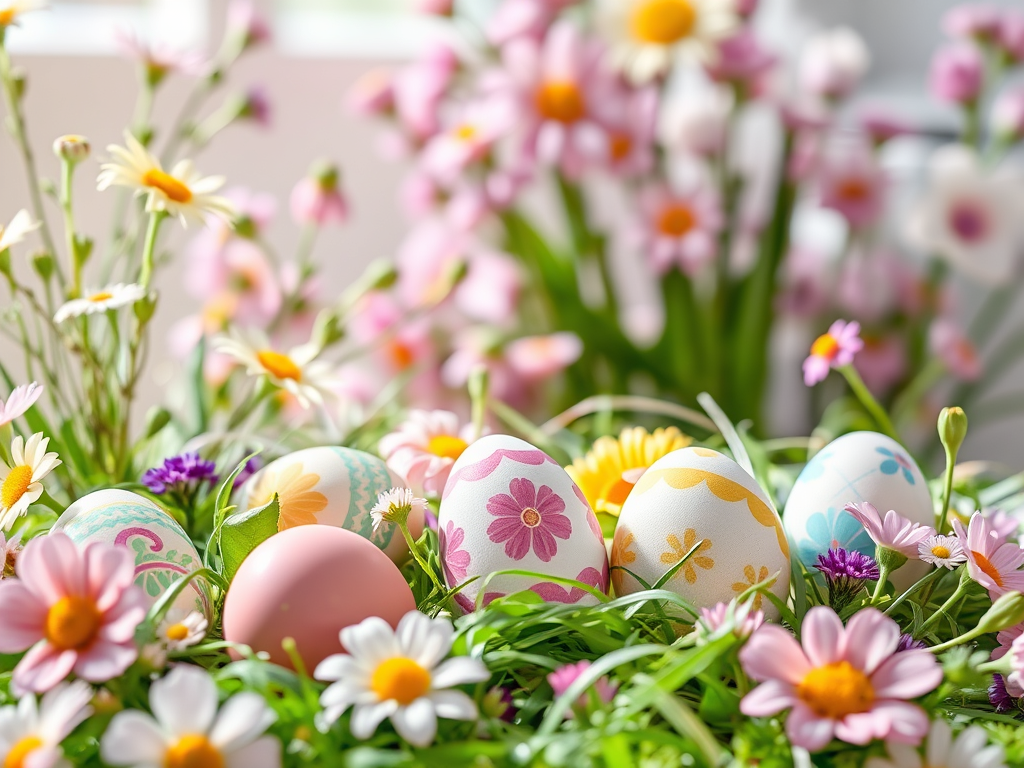
My father used to chastise me because, as he said about my mother and me, “Whenever I walk into this house, you two are going at each other!” This, even before I was 13. But the night before Easter Sunday, something magical happened. Joy fired up a powerful resistance to any family issues. All of us kids joined Mom as we gathered around dozens of eggs. There was a renewal, a resurrection, a rebirth, if you will, of the delight human beings are meant to experience.
We stayed up past eight o’clock, selecting stencils and food colors for our boiled eggs and filling Easter baskets for ourselves and cousins. Those nights were special. The evening routine of dinner, dishes, homework, and perhaps a harsh “I told you to finish your homework!” was abandoned for an experience of limitless childish joy. We did not whine — “but it’s still light out” — when we heard neighborhood children playing kickball in the streets. What we cared about was decorating eggs. What we experienced was joy.
Obstinate Optimism as Resistance
The spirit of the times requires — demands — that we maintain joy in our resistance. We are living through overwhelming changes in politics and culture. Dreams for peaceful coexistence can only survive and manifest in optimism.
Children are dying from measles – a disease we had eliminated from our country. People are being kidnapped, placed in prisons and concentration camps, or starved mercilessly by authoritarian governments. There are dictatorships throughout this world, and we, in this country, are as politically divided as we’ve ever been — some say since the Civil War. “Divide and conquer” is as old as humanity itself, and we fight against this abomination. And still, people are bursting with obstinate optimism.
We have been through tragedies before, and we have come through them to celebrate the return of the Light. Optimism, Joy as Resistance, is the best of the human spirit. Claiming our joy is necessary nourishment if we are to survive — and thrive.
The brew is flavorful, and the hint of chocolate on the back of my tongue is a calming sensory experience for the many thoughts and feelings I have in this stream of consciousness.
After months of procrastination, I’m gaining clarity about this post. I’m not writing about food this time, although I’m sure that a large bag of chips will make its way to me as I write about kindness and ─ oddly enough ─ empaths, people who have a high sensitivity to stimuli, including other people’s emotions. I’m writing about being empathic ─ not empathetic.
While researching, I came across a definition about the difference between empathic and empathetic. In an article published by Stylist, an online magazine based in the UK, Lucy Fry writes the following:
Being an empath is developmental, whereas empathy can be learned.
Fry continues: Empaths easily lose themselves in feelings. For most people expressing empathy means making a concerted effort to see the world through someone else’s lens in a kind way. For an empath, however, it can get confusing. These types of people absorb others’ emotions so quickly and easily they’re sometimes unsure which lens is whose. The boundaries between the self and others can be thin, which means they are super sensitive to other people’s needs but can also entirely lose track of their own.
You’re too sensitive, Sala. Sigh. I’ve been told this numerous times.
You want to hear the heart in the voice. Alexa’s words landed like sparks in a dry field.
Yes.
Not too long ago, I was irritated by a conversation I was having. I felt that the person wouldn’t shut up until she had me submerged in the cesspool of anger she swims in all the time. All. The. Time.
I’m a human sponge. I soak up other people’s emotions like others suck up soda through a straw. When I’ve gone to the movies, I’ve found that I feel almost physically pulled into any violent action on the screen. I feel overwhelmed. So, I don’t go to the movies. I don’t read violent novels. I have an enduring crush on Stephen King and have slept with his book On Writing next to my pillow. But I have never seen, nor will I, a movie adaptation of his books. I was traumatized as a child by Hitchcock’s Psycho. I’ve never seen a Tarantino film, and I did not watch Game of Thrones ─ my sister advised me against it. Give me the Hallmark Channel, Notting Hill and Madea.
Don’t. Judge. Me.
According to Dr. Judith Orloff, a board certified psychiatrist and expert on the subject of Highly Sensitive Persons (HSPs): Empaths absorb other people’s emotions.
There it was: absorb. While others define themselves as extrovert or introvert, I’m defining myself as an empath. The Cleveland Clinic notes that you may also identify with being a highly sensitive person (HSP), a personality trait that was first used by psychologists in the 1990s to describe someone with a deep sensitivity to the physical, emotional, or social situations and information around them. https://health.clevelandclinic.org/highly-sensitive-person/
My parents, Bill and Libby, joined millions of American Blacks who moved to northern and western states during the Great Migration from the South. I will never know the depth of their disenchantment on discovering the same racial discrimination and limited economic opportunities in Washington, D.C. that they had left behind in South Carolina.
Exposed to Mom’s anger and disappointment at having had to leave her beloved career ─ teaching ─ to raise five children in poverty and her mood swings from having to witness my father’s humiliation and rage when private builders told him ─ a master brick mason ─ that “coloreds” weren’t being hired, I absorbed their every emotion. I cried a lot. When teachers sent us home from school the day President Kennedy was assassinated, I threw myself on my bed and sobbed. And despite my empathy for my family and our world, I became unkind and angry.
Mine or Yours?
A White neighbor called to vent about another devastating U.S. Supreme Court decision on Affirmative Action and the efforts to obstruct racial diversity in higher education. They’ve been busy taking rights away these days. She ranted, not taking a breath and not allowing me to speak. I listened. When she was done, she thanked me for allowing her to “get it off my chest.” I responded, “Good. You need to know that I did not take it onto mine.” Her silence was brief but obvious. She had been hoping I would join her anger.
“I lived through those days,” I said. “How can you possibly be angrier than someone who experienced those times?”
I felt the wind go out of her sails. I was honest. I was direct. I felt powerful. It’s not that I don’t get angry. It’s that I have experienced self-protection and learned ways to know if it’s my anger, not someone else’s.
Childhood Educators Are Saints
During my ─ if-only-they-could-be-forgotten ─ adolescent years, the vice principal of our junior high school took me under her wing. A tall woman with dark chocolate skin and closely clipped hair, she was a no-bullshit, take-no-prisoners administrator. She offered a wide, memorable smile that, behind her back, prompted cowardly kids to call her “King Kong.” Fiercely principled, Mrs. G. was a potent advocate for young people. If, however, one was foolish enough to challenge her authority, you did so at your peril. I didn’t know too many kids who were willing to face their parents for being suspended or, even worse, expelled.
My grades were poor. Incidents of colorism – discrimination based on color within the race ─ fed my anger, and I was filled with anxiety about American culture. Additionally, adolescents are markedly known for meanness, and one day I found myself in a fight with a light-skinned girl who looked Caucasian. She was not. A ring of girls surrounded us and chanted “Fight! Fight!” This, not surprisingly, led to a sit-down in the principal’s office. Mrs. G. put her arms around my shoulders. “Walk with me.” We walked the halls. She didn’t use the word “colorism” or demean other students for their behavior. She spoke kindly and told me I was smart, that I could do better. Something inside me softened, if only for a little while.
My Ways of Empathic Protection
Therapy and Psychotherapists
During my twenties, I was led to a compassionate therapist who taught me something: Anger and repressed fear were my defaults. If I couldn’t identify or own my feelings, I could not respond to life circumstances authentically.
Prayer
I found a spiritual path that focused on the love of God ─ not “fear” ─ as the unseen guidance. I could no longer sing “saved a wretch” in the hymn Amazing Grace. I sang “saved a soul.” Chanting became a daily practice, and service ─ volunteering, a lifelong practice for me ─ took on a golden hue. I was becoming softer, more vulnerable. When, after 30 years, I left California for the east coast, a friend told me gently that he had watched me transform over the years. “You’ve lost that explosive anger.” I was moved ─ my own feeling. I remember saying to someone during those years, “I like a lot of soft around me.” In the company of softness, I felt ─ and feel ─ good.
Food
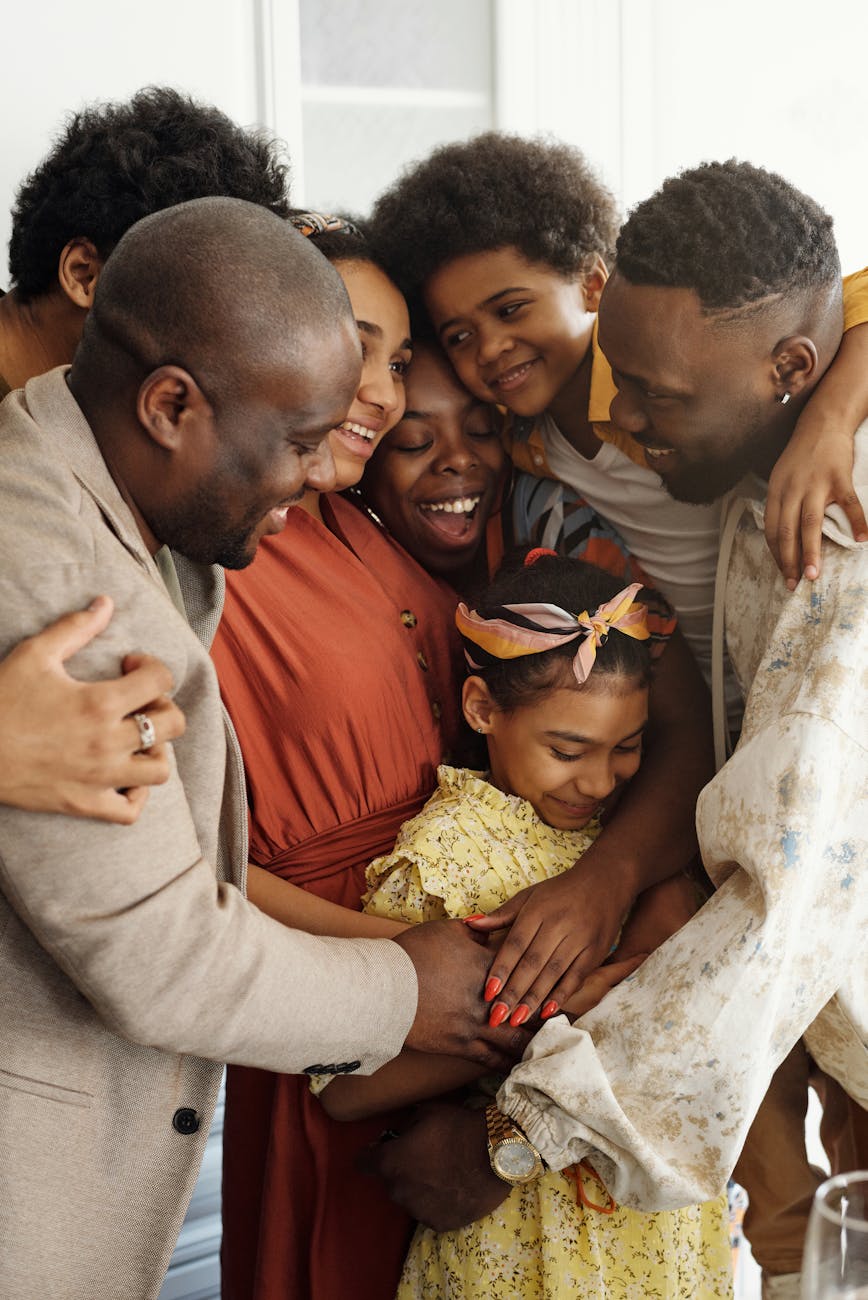
Ahh, yes. I knew I’d come back to the plate. Beginning with family meals for the seven of us in our two-bedroom apartment and extended family gatherings to visits with my grandparents in the south and church picnics, food preparation and pure laughter became a major empathic lifeline. Hugs were plentiful. Empathy was strengthened. I learned that in cooking, sharing, and eating good food, life could be joyful. But it’s been a rocky ride here. Sometimes my empathic protection revealed itself in weight gain. The soft protection of bulge around the belly. Other times, my love of sharing food and company with people I love has been the empathic lifeline.
Nature
I call my apartment a tree house. Outside my windows, the leaves of the trees serve as curtains in the summer. The southwestern sun keeps my apartment warm in the winter. I am heralded with birdsong, and I hope the circling hawks don’t see the rabbits occasionally nibbling by the side of the building.
Okay.
Now that I’ve finished my coffee and reflections for the morning, I’m on my way to juice apples and pears in the safety and comfort of my kitchen, a comforting place where I always experience the “soft around me.”
Before we aged, my mother and I, cream rose to the top of glass milk bottles, and eggs, large and brown, were sold in neighborhood grocery stores by storekeepers who bought from local sources. I was a nine-year-old girl hanging out at the table watching my mother make banana pudding. I never dreamed of growing older. Mommy would always be as she was right then, frozen in time, never changing, sending us away when we were bothersome and making us work when we were bored. A belt near one hand and a spoon in the other, it seemed the way it would be. Forever. With my nose too close to the bowl of food for her comfort, I never thought about age.
Focused and careful, with respect for ingredients, she slowly layered the baking dish with vanilla wafers, custard, and bananas until it was filled to the brim. Then she topped it off with meringue and baked it. She was a good cook, having learned her way around the kitchen after she married. Then her fingers began to curl, and the mixing bowl became too heavy.
Wavering between veganism and vegetarianism for decades, I just plain forgot about something as simple and delicious as banana pudding. I forgot about licking the bowl. I forgot about the sweet stuff.
My relationship with my mother was not an easy one. Daddy, after a hard day of brick laying, would walk into the apartment and ask, “Are you two at it again?”
She was not easy to please. But her banana pudding was royal. God bless her. She is no longer here to argue with. Still, I savor the memory of hanging over the side of her bowl, and the tenderness that manifested itself in a meringue that peaked just right.
It’s never been said that this bowl-licking life is easy. But when we get to lick the bowl, it’s sweet.
In 2011, I started a blog as a sort of writing practice. How hard could it be? Choose a word. Write some stuff. Post.
A friend in my writing group generously offered to create the banner with my title for the blog and splashed bright, colorful, bold letters across the top of the page: W.O.R.D.S. Have color. Have vision. Have power. I gave it a subtitle: Stories about life and sometimes food. I forged ahead.
Photographs of my father and grandmother were awful, but I didn’t think they’d be offended. Both had long since passed on. A story about making pizza at home with my nieces netted me a lucrative writing contract.
It’s been said that if you want to make God laugh, tell Him your plans.
In November 2012, I was blindsided by a diagnosis of Guillain-Barré Syndrome. I quit my music performance group and, in 2013, as a result of complications, spent six months in hospitals and rehab. For a short time, I was completely incapacitated without use of my arms or hands. I could not walk and was confined to a wheelchair. But I had my laptop and dictation software. I kept posting.
As much as I tried to avoid the excrement of politics ─ the racism, classism, sexism, and religious nationalism ─ there were days when the poop landed square on my pages. Circumstances, of course, will compel me to step into the mess again. Still, honor, generosity, and love — genuine goodness and human kindness — are real. Inner conflicts are powerful. But here’s the reality. When I focus on the good, I write from joy.
Focus on living a food inspired life.
I clung to this like a mantra, a talisman, a life raft. Sometimes I wrote about what I ate or what I cooked.
I promised myself to write about contemporary Black chefs and their approaches to food. Feeling overwhelmed with my body mass index, I joined Weight Watchers. I explored new recipes, and I started feeling at ease. I realized that mine was already a food inspired life.
Lockdown
“Doggone it! There’s always something,” my mother used to say.
In March 2020, as the lockdown began, my monthly intravenous immune suppressing infusions were put on hold for the first time in nine years.
“It’s unsafe,” said the nurse coming to my apartment, “to continue to administer in your home.” She worked in a hospital flooded with COVID. My neurologist said, “Let’s see how you get on. If necessary, you can go to the hospital.”
“Um. Aren’t people in hospitals dying of COVID? No thanks.”
On the bright side, it seemed that the whole world was returning to the joy of cooking and eating at home. The stillness of roads without tires slapping cement and the silence of streets without human chatter filled me with pleasure. Across the street on the college grounds and nature walk, I saw a fox. Deer, unmolested by our human presence, returned to nibble plants. Scores of butterflies and moths fluttered in the trees across the road and in the trees outside my window.
The Canal Grande, in Venice, Italy, became so clear that you could see dolphins, octopus, and crabs in the waters. This had me whooping for joy.
“Keep the visitors away,” I said. “Keep the big cruisers out of the canals!” For me, the lockdown presented an image of paradise. I relaxed in the fluctuating winds, rain, snow, and sunny days. Contemplating food prep, I watched cooking shows, read food memoirs, and researched food writers. It was a sloooow-down time, making way for delights like the writings of Gullah culinary anthropologist Verta Mae Grosvenor and the food adventures of Peter Mayle.
I put aside concerns about the pandemic as my food inspired life consumed me.
Hydroponics
If I may say so myself ─ and I do ─ my tiny kitchen is a chef-worthy kitchen. Two heavy duty juicers cram against each other and line up near the microwave where spiralizer and electric kettle are squished near the edge of the counter. A large food processor nestles near a high-powered blender (one that converts grains to flour) and an air fryer. The pressure cooker/instant pot, rice cooker, and bread machine are jammed into remaining space. And still, I desire more…a standing mixer perhaps?
My wonderful friend Rae, an amazing artist, writer, and food enthusiast, sent me a gift: a hydroponic planter. Now, I thought, I can fancy myself a “farm to table” cook. There was no space for the 6″ x 14″ planter in the kitchen, so I tucked it on a side table between the sofa and the living room wall.
For starters, I put basil, Bibb lettuce, cherry tomatoes, and spinach into the germination sponges.
In just a short time, I had two very large lettuce plants, enough for salad.
Magical! I pinched a leaf and placed it on my tongue. It was tender, delicate in flavor and almost weightless. The basil grew like a wild thing, while the spinach took its sweet time. The tomatoes? This was something really special. In almost no time, I had to re-pot the basil and the tomatoes.
Farm to table? Perhaps not. But it’s settled. Mine is already a food inspired life.
Pluralism. I like the sound of the word. The syllables coat my tongue like chocolate. Sweet and easy. But pluralism is not so easy to understand. America boasts a pluralistic society, so gloriously diverse in race, religion, culture, and ethnicity and yet, we continue to divide ourselves in ways destructive and heartbreaking. For me, one of the great human mysteries is how we can look about, see so much beautiful diversity and continue to treat each other so very badly. No one, as far as I know, has come up with a conclusive answer. It’s been suggested that I read the Pulitzer Prize winning book Guns, Germs, and Steel: The Fates of Human Societies by Jared Diamond for context on the subject.
I have been experiencing anxiety about the backlash to the expanding multicultural population in the United States, and I talked with my therapist about it. She questioned me about my use of the word pluralism.
“What do you mean by the term pluralism? What do you mean by a successful pluralistic society?”
My idealistic vision of a peaceful, love-each-other society is something I’ve been struggling with for decades. Her question encouraged me to delve deeper into a concept that I believe I had misunderstood.
Merriam-Webster lists several definitions of pluralism. Among them: “a state of society in which members of diverse ethnic, racial, religious, or social groups maintain and develop their traditional culture or special interest within the confines of a common civilization”
Right. Our common civilization is one that exists under the commitment to equal rights and justice for every individual under the Constitution of the United States.
The book
In 1955, a book of photos from an exhibition at the Museum of Modern Art, New York, was published. The book, created by Edward Steichen, contained 503 pictures from 58 countries and was titled, The Family of Man.
A friend gave me a copy of the book shortly after I had returned from a year in San Francisco. I had fallen in love with the Bay Area, its people and the progressive politics of the time. This was in the late 1960s during that era’s Civil Rights movement, the Vietnam War, and the Nixon administration and its involvement in the overthrow of democratically elected Latin American leaders.
My friend knew of my dreams for a multiracial, multifaith, multicultural society where people treated each other with respect and tolerance. I was 22 at the time, and I often wondered, like so many young people, “What is wrong with humanity?”
The Family of Man became one of my favorites and graced my bookshelf for years. I would flip through the pages leisurely, marveling at the diversity and beauty of humanity. Also during this time, Tony Bennett’s I Left My Heart In San Francisco became a louder and louder siren song. So loud that in 1973, I packed my things and moved back to the West Coast. I never looked back. But I lost the book. I didn’t even think about The Family of Man until I returned to the East Coast decades later.
A fragile dream of multiculturalism
This morning, disgruntled by the disheartening political discourse and the corrosive Big Lie, I resorted to one of my two faithful companions ─ food. The other is prayer. I devoured an unhealthful breakfast of syrupy sweet coffee and a hunk of overly cheesy macaroni and cheese. I had added cream cheese to the other three kinds of cheese I used ─ sharp cheddar, provolone, and Monterey jack. I had used coconut cream instead of regular milk and went heavy on the butter. No eggs. One hunk became two, then three until the pan was almost empty. It was delicious. It was soothing. I felt ─ calm. Then I felt drawn inward. That would be the other companion. Prayer.
I considered pluralistic societies and how successful these societies could or could not be. There’s more to be studied on this, but for now…
In the midst of the media focus on those sowing the hatred and division we are experiencing, I have come to consider that my personal vision of pluralism has been based on unrealistic idealism. My understanding of our particular pluralistic society has changed as we struggle to create a more tolerant and peaceful one. We are not the vaunted “melting pot,” but more like a “tossed salad.”
I found a quote the other day while researching that seemed to state my vision beautifully. (Dear fellow Democrats, let me accept the message if not the messenger!) In his farewell speech, President Ronald Reagan said “…I’ve spoken of the Shining City all my political life. … a tall, proud city built on rocks stronger than oceans, windswept, God-blessed, and teeming with people of all kinds living in harmony and peace…”
Right.
Reagan didn’t actualize his ideals with his failed trickle-down economic policies, union-busting, and incendiary racial rhetoric. Things got worse. But this phrase haunts me because it is a part of my vision of the United States, “teeming with people of all kinds living in harmony and peace.”
A return to where I ran from
In 2001 I moved to upstate New York, and in 2003, because of my mother’s illness, I moved to Philadelphia. There, I was referred for an informational interview where the interviewer, a woman, looked at my resume and scowled. Then she said:
You spent a lot of time out west. I don’t like it there. All the cultures mixing and whatnot. I like it right here where I am in West Philly. I don’t want to be around people who are not like me.”
So much for brotherly [or sisterly] love. That’s what she said, and my enthusiasm evaporated. All I could think about was what a horrible human being she was.
Any solutions?
Shortly after that meeting, I was “garage sailing,” the term I used for sidewalk sales in those days. At one of those sidewalk sales, I found a water-damaged copy of — you guessed it — The Family of Man. I was delighted, re-inspired, and rejuvenated. In my heart, I knew I was right about multiculturalism. The Universe had spoken! The woman at the interview was irreversibly wrong.
So here we are again. Living our lives like a scratch on a broken record. We are stuck. We move forward a little and then we hit that damned scratch. We eat Asian cuisine. We salivate for Mexican and Latinx food. We like Russian, Italian, Indian, and African foods. We are exploring the health benefits of Native American cuisine. Our eating habits, for most of us, reflect our acceptance of a pluralistic society. We also get treated by physicians, taught by professors, and interact with people during business and leisure with people from various countries, cultures, ethnicities, and religions.
Curious.
Many continue to balk at accepting a reality of a vast and diverse population, spewing hatred and division among us. Fact: we are becoming a more and more beautifully diverse society every day. The latest census report revealed that 57.8% of Americans identify as White, a decrease from 63.7% in 2010. The rest of us are everything else.
Today, as I was listening to an interview with the U.S. Poet Laureate Joy Harjo, I was moved by her depth of empathy for people of all colors and cultures. As a Native American and, in my view a social warrior, she uses the poet’s platform to tirelessly bless and protect the native peoples by bringing their stories and history to the front of American consciousness. She’s doing the work to bring tolerance and cultural acceptance. She is encouraging.
We have the potential to become that shining example of peaceful pluralism.
Guanyin of the Southern Sea [Nelson – Atkins Museum of Art]
The pepper buds in the photo I snapped look so much larger than they are in reality. Since then, more have bloomed. Still no peppers.
I am waiting. For the tomatoes to bloom and the peppers to flower. For the sweet fruit of community peace. I don’t say world peace; that feels too big in the moment. World peace? It’s all I can do to garner peace on my windowsill; to keep the herbs growing. To keep them alive.
ln the beginning, there were seven teensy basil seeds. Meticulously, I put all of them in a pot of soil. I had doubts that the basil seeds would take root. Like I have doubts that I’ll wake one morning to find that the world has righted itself and the emboldened fascists in all countries have vanished. The basil grew and erased my doubts. My doubts about the world remain.
Within 14 days, the tiniest of leaves, so tiny I could barely see them, had sprouted. Thus (yes, I used the word “thus.”) began a cycle of magic. I received planted gifts from neighbors and friends: two cilantro plants, a mature basil plant, potted rosemary, two cherry tomato plants, and the pepper. Will I ever see fruit from the pepper or tomatoes? I want to think that where there are buds, there is hope. My other plants, the spider plant, dracaena, jade, and lucky bamboo seem to welcome the herbs with joy. They grow as if on steroids.
I watch these plants, talk to them like I talk to the trees. I have read that talking to plants lets them know we love them. One thing’s for sure. When I’m focused on my herbs, I’m not focused on chronically angry liars. This leads me to my rant of the week.
One has the power to choose tenderness over anger. Respect over disrespect. To choose the truth over a lie. Sadly, in countries throughout the world including the United States, folks have chosen the lie. In the U.S., it’s The Big Lie. It’s a very, very rough time for humanity.
Chronic anger terrorizes. Chronic anger hijacks the truth. Hearing the shouts of chronically angry people has taken my gaze from the pepper plant. For a moment. The chronically angry have done unbearable damage to our democratic structure. We know who they are. Some are friends. Some are family. They are people who get pissed off about everything, particularly anything that seems to make another person’s life easier, better; particularly things that show compassion and respect for their fellow human beings. Like masks.
They lie about the earth’s catastrophic climate change. People are dying from the heat. They lie about the fires in California and Greece. They lie about and spread conspiracy theories about life-saving vaccines and about COVID infections. They lie about the January 6th insurrection at the United States Capitol. They die in hospitals insisting they have pneumonia and not COVID. They lie.
In my wanderings throughout the United States, I’ve learned some things. Contrary to the angry screaming of fundamentalists about a punishing God, all of this dis-ease, physical and mental suffering, is a sign of ingratitude and disrespect for the life around us: Animals. Vegetation. The air we breathe. Disrespect for human beings who inhabit every corner of this earth peacefully going about their day-to-day business and loving each other.
God is not angry with his/her creation. I don’t believe, not for one holy second, that we live under the auspices of an angry God. Amid our terrors, trials, and obstacles, people of all identities ─ spiritual, gender, racial, even political ─ are falling in love. Babies are being born. The kind-hearted and empathetic are feeding the hungry. Many Christians are following the teachings of Christ. Families are being sustained. Art is being made. Chefs are creating cuisine. Peppers are growing on a windowsill.
We do find our way, don’t we?
For the past few minutes, I’ve watched as a red spider builds her web outside on my window screen. I squirted water on her web and she scooted away. I didn’t want to kill her, I didn’t spray water out of anger. I just let her know that she needed to find another place to build her web.
“I’m so sorry,” I said. “You cannot live here.”
She returned, just as the love of God always returns when we become aware of ourselves falling into the black hole of anger. She came back to start over. The stillness of the morning and the focus with which she does her work tells me there is no angry God.
I want to be able to clearly define the anxiety, muck, and division I feel whenever I use the word “hate.” The word itself is exhausting. I wonder, sometimes, if the paralysis I experienced with the onset of Guillain Barre Syndrome so many years ago was a connection to my anger and the rigidity in the body. Anger: fists clenched, torso stiffened, jaw tightened, and breath held. Anger. Do I know I am breathing? What does the word hate even mean? Merriam -Webster defines it as “intense hostility and aversion usually deriving from fear, anger, or sense of injury.” (Italics are mine.) Who injured the chronically angry one? What does she fear? As a child of the Baptist church, I know about choosing Holy words to instill fear. And yet, the waters of my Baptism at age ten changed my experience of the Bible. I would open the pages and find words of love. There is no angry God.
Xenophobia. Conspiracies and misinformation about COVID. Lies against the vaccines. The backlash against the facts of science. The unbelievably unhinged revisions to the truths about slavery and the formation of American capitalism. The denial of the genocide of Native citizens. We are facing a huge humanitarian crisis. Still, one has the power to choose tenderness over anger, truth over falsehood, justice over injustice.
My maternal grandparents were farmers. They grew fields of vegetables, tended grapevines, picked peaches from their trees, and prayed at four and five o’clock in the morning. My mother once told me what my grandfather said about pesticides: “If you put that in the dirt, the plants soak it up and then you eat it.” Science. And the tenderness of God.
I wave my hands to the Great Invisible. And the Great Invisible answers. “Your pepper plant needs watering.”
There was a time when original songs flew out of my mouth like candy from a broken pinata. Not so much anymore. I’ve projected that energy into my kitchen. I put the rhythms into my knives. I put the results on my hips.
Chop, chop, chop. Breathe.
The collard greens disintegrate under the blade. They become two-inch, then one, then quarter-inch strips. The strips are almost mashed as they reach the size of popcorn kernels.
What do I plan to do with these greens? Part of the mound will be put in a salad. I’m supposed to be eating more raw food. Part of them will be juiced or blended into a green smoothie with pineapple, banana, blueberries, and flaxseed. That smoothie is one of the best parts of my day. I’ll throw the remainder into a pot with spices so expertly added that no one on the planet would miss the ham hocks or turkey wings. That’s how good I am.
But no one except me will taste these collards. The last fifteen months of COVID restrictions and lockdowns put a harness on the joy of sharing food with my friends. Of all things, this lack of sharing has been a particular sadness for me. However, the isolation has been an easy and welcome ride. So much so that I’m going to continue to isolate even as restrictions are loosened.
I spent many years with an ashram, engaging in spiritual practices like silence, practices that left me feeling comfortable being alone. And I was alone during the lockdown. With no family in the area, without visits from friends, and unable to have neighbors drop-in, I had no one to whom I could feed the homemade sushi rolls and blueberry muffins.
So what did I do during this long, quiet time? I watched food shows on Netflix. I became the online ordering maven, increasing my share of sheets, shoes, and groceries. I read food memoirs. I saved a lot of money not having to put gas in my car because there was nowhere to go. I’ve been writing, working on a book, a meandering path but one that keeps me uplifted. I discovered Zoom.
And, last but not least, I’ve had time to think about all the things my younger me wanted. I had time to do this, right? She wanted to learn how to dance ballet. (To this day, I literally get goosebumps at the sight, feel, and smell of leotards and tights.)
She thought she wanted to marry and have (whoa, Nellie!!!) eight children.
That young girl thought she would live on a farm. Is there anything more magical than watching life springing from life over and over again?
As an empathic child, I struggled ─ too much ─ to repress my nature. Obstacles of poverty and racism pulled me away from the things I loved: music, poetry, dance. Making the world a better place.
The family holiday gatherings and church picnics, generous with the best of our gardens, farms, and cooking intelligence, only increased my feelings of love for humanity and allowed my empathy to surge. We sang. We fed each other.
Over the years, and all the things and worlds I’ve dabbled in, I’ve come to realize that cooking is a great love. This was never made more clear than during the past year and one half of my COVID safety lifestyle.
The farming thing? Well, I created that in a different form. I have an indoor hydroponic garden for herbs and small vegetables like cherry tomatoes.
I don’t feel alone.
If a camera had been placed on the cubicles above my microwave, it might have caught me dancing. It might have heard me singing a jazz tune by Sarah Vaughn or a folk song by Joni Mitchell. It certainly would have caught me shaking my behind to Sly and the Family Stone (outing my age) or old-fashioned rock ‘n’ roll while chopping those collards. It might have found me listening to hymns of Annapurna, the Hindu goddess of food. With tens of millions going without food, I am grateful to the bone for these greens.
Chop. Breathe. Shake my behind. Sing. Living a version of my younger self’s dreams.
My writing has been lagging, my blog posts few. I just could not get back to the page. I’ve been weepy. Enraged. Demanding answers about our political controversies and wondering, “How did we get here?”
One afternoon, I was listening to Joan Baez sing “Brothers in Arms,” an antiwar song. I became distraught again as I remembered my days as a young political activist. How did we get here? The following is one of the recent experiences that has motivated me to write again─ with respect and an open heart.
The woman comes into the church social hall, dressed like she always does. She wears a dark brown coat pulled tightly around her. Is it wool? I’m not sure. She’s been wearing it since the early fall, and it matches the dark brown, unkempt wig she wears. The wig’s ends are stiff and push out from under the brown hat pulled over her head for warmth. She walks timidly as if she’s ashamed to be with us ─ all of us, volunteers and pantry guests alike. Some of us are both.
For more than a year I’ve volunteered at this church food pantry where some sort of alchemy takes place in the social hall. I’ve put my frustration about increased partisan politics aside as I help arrange the tables with vegetables, fruit, baked goods, meat and eggs, and I find myself smiling. Thanks to the generosity of local grocery vendors in our area, this particular food pantry is transformed into a glorious market. There are bouquets of flowers. Loaves of bread. Bread and Roses. When we are done arranging and sorting, the social hall looks amazing.
I watch the brown coat woman grab a cup of coffee. She almost never talks and sits with her eyes directed toward her coffee and snacks. She surprises me by asking, “Is there more sugar and cream?” Of course, there is. The minister makes sure there’s plenty of everything: coffee and tea, sometimes orange juice. A kitchen volunteer assembles platters of cake, cookies, and small fruit as a breakfast snack for the guests.
As I measure coffee and tea into food storage bags, I repeat a prayer for comfort to myself. Coffee, tea and the snacks help some of the guests start their day on a high note and, perhaps, will pull them out of the sadness of their situations.
It’s hard for me to stay angry about American politics in the presence of sacred work. I watch the minister who directs a steady gaze to the eyes of every person she speaks with. She comforts. I am moved by her dedication. To my knowledge, she has never closed the pantry for any reason. Twenty-four inches of snow? There will be food and the pantry will be open. She may be challenged but not daunted. Her mission is to comfort and serve.
There is magic in this community of humanity. Service is a healing balm and a saving grace. For three hours each week, the heartless politicians in Washington who have sought to undermine and destroy the tenets of the United States Constitution become background noise, the least of my worries.
Still, I wonder, “How did we get here?”
As the summer wanes and October brings chillier weather, gold leaves, and rain, I take refuge in the cascade of apples brought to the church. There are enough apples for 100 people to each fill a small bag if he or she wanted. And I feel something. The motivation to write again.
I feel something else, too. Love.
Wherever two or more of us are gathered in the sacred name, serving each other and receiving, I know we’ll be okay. The woman in the brown coat smiles into her cup. We will be okay.




 Sala
Sala

 wordshavecolor.com
plu•ral•ism
Pluralism. I like the sound of the word. The syllables coat my tongue like chocolate. Sweet and easy. But pluralism is not so easy to understand. America boasts a pluralistic society, so gloriously diverse in race, religion, culture, and ethnicity and yet, we continue to divide ourselves in ways destructive and heartbreaking. For me, one of the great human mysteries is how we can look about, see so much beautiful diversity and continue to treat each other so very badly. No one, as far as I know, has come up with a conclusive answer. It’s been suggested that I read the Pulitzer Prize winning book Guns, Germs, and Steel: The Fates of Human Societies by Jared Diamond for context on the subject.
I have been experiencing anxiety about the backlash to the expanding multicultural population in the United States, and I talked with my therapist about it. She questioned me about my use of the word pluralism.
“What do you mean by the term pluralism? What do you mean by a successful pluralistic society?”
My idealistic vision of a peaceful, love-each-other society is something I’ve been struggling with for decades. Her question encouraged me to delve deeper into a concept that I believe I had misunderstood.
Merriam-Webster lists several definitions of pluralism. Among them: “a state of society in which members of diverse ethnic, racial, religious, or social groups maintain and develop their traditional culture or special interest within the confines of a common civilization”
Right. Our common civilization is one that exists under the commitment to equal rights and justice for every individual under the Constitution of the United States.
The book
In 1955, a book of photos from an exhibition at the Museum of Modern Art, New York, was published. The book, created by Edward Steichen, contained 503 pictures from 58 countries and was titled, The Family of Man.
A friend gave me a copy of the book shortly after I had returned from a year in San Francisco. I had fallen in love with the Bay Area, its people and the progressive politics of the time. This was in the late 1960s during that era’s Civil Rights movement, the Vietnam War, and the Nixon administration and its involvement in the overthrow of democratically elected Latin American leaders.
My friend knew of my dreams for a multiracial, multifaith, multicultural society where people treated each other with respect and tolerance. I was 22 at the time, and I often wondered, like so many young people, “What is wrong with humanity?”
The Family of Man became one of my favorites and graced my bookshelf for years. I would flip through the pages leisurely, marveling at the diversity and beauty of humanity. Also during this time, Tony Bennett’s I Left My Heart In San Francisco became a louder and louder siren song. So loud that in 1973, I packed my things and moved back to the West Coast. I never looked back. But I lost the book. I didn’t even think about The Family of Man until I returned to the East Coast decades later.
A fragile dream of multiculturalism
This morning, disgruntled by the disheartening political discourse and the corrosive Big Lie, I resorted to one of my two faithful companions ─ food. The other is prayer. I devoured an unhealthful breakfast of syrupy sweet coffee and a hunk of overly cheesy macaroni and cheese. I had added cream cheese to the other three kinds of cheese I used ─ sharp cheddar, provolone, and Monterey jack. I had used coconut cream instead of regular milk and went heavy on the butter. No eggs. One hunk became two, then three until the pan was almost empty. It was delicious. It was soothing. I felt ─ calm. Then I felt drawn inward. That would be the other companion. Prayer.
I considered pluralistic societies and how successful these societies could or could not be. There’s more to be studied on this, but for now…
In the midst of the media focus on those sowing the hatred and division we are experiencing, I have come to consider that my personal vision of pluralism has been based on unrealistic idealism. My understanding of our particular pluralistic society has changed as we struggle to create a more tolerant and peaceful one. We are not the vaunted “melting pot,” but more like a “tossed salad.”
I found a quote the other day while researching that seemed to state my vision beautifully. (Dear fellow Democrats, let me accept the message if not the messenger!) In his farewell speech, President Ronald Reagan said “…I’ve spoken of the Shining City all my political life. … a tall, proud city built on rocks stronger than oceans, windswept, God-blessed, and teeming with people of all kinds living in harmony and peace…”
Right.
Reagan didn’t actualize his ideals with his failed trickle-down economic policies, union-busting, and incendiary racial rhetoric. Things got worse. But this phrase haunts me because it is a part of my vision of the United States, “teeming with people of all kinds living in harmony and peace.”
A return to where I ran from
In 2001 I moved to upstate New York, and in 2003, because of my mother’s illness, I moved to Philadelphia. There, I was referred for an informational interview where the interviewer, a woman, looked at my resume and scowled. Then she said:
You spent a lot of time out west. I don’t like it there. All the cultures mixing and whatnot. I like it right here where I am in West Philly. I don’t want to be around people who are not like me.”
So much for brotherly [or sisterly] love. That’s what she said, and my enthusiasm evaporated. All I could think about was what a horrible human being she was.
Any solutions?
Shortly after that meeting, I was “garage sailing,” the term I used for sidewalk sales in those days. At one of those sidewalk sales, I found a water-damaged copy of — you guessed it — The Family of Man. I was delighted, re-inspired, and rejuvenated. In my heart, I knew I was right about multiculturalism. The Universe had spoken! The woman at the interview was irreversibly wrong.
So here we are again. Living our lives like a scratch on a broken record. We are stuck. We move forward a little and then we hit that damned scratch. We eat Asian cuisine. We salivate for Mexican and Latinx food. We like Russian, Italian, Indian, and African foods. We are exploring the health benefits of Native American cuisine. Our eating habits, for most of us, reflect our acceptance of a pluralistic society. We also get treated by physicians, taught by professors, and interact with people during business and leisure with people from various countries, cultures, ethnicities, and religions.
Curious.
Many continue to balk at accepting a reality of a vast and diverse population, spewing hatred and division among us. Fact: we are becoming a more and more beautifully diverse society every day. The latest census report revealed that 57.8% of Americans identify as White, a decrease from 63.7% in 2010. The rest of us are everything else.
Today, as I was listening to an interview with the U.S. Poet Laureate Joy Harjo, I was moved by her depth of empathy for people of all colors and cultures. As a Native American and, in my view a social warrior, she uses the poet’s platform to tirelessly bless and protect the native peoples by bringing their stories and history to the front of American consciousness. She’s doing the work to bring tolerance and cultural acceptance. She is encouraging.
We have the potential to become that shining example of peaceful pluralism.
7 Comments
Posted in Commentary, Essay, Political reflection, Writing from the heart
Tagged Commentary, creative nonfiction, essay, Humanity, Kindness, Reflections, values and spirituality, world view