Tag Archives: Life Stories

On kindness and coastal healing

So now it’s done. I’ve had the surgeries on both hands, and I’m tired. I go back and forth with the focus and energy it takes to heal. I’ve ranted and raved like Job: “What’s the lesson here? You say there’s a reason for all things. Can I have a clue?”

When I moved back to the East and to the Philadelphia area specifically, I felt I was doing the right thing. After all, New York is the publishing capital of the world, and my mother was ill. In 2001, all the right reasons seemed to be in place. I spent two years in an ashram in upstate New York surrounded by love.  But when I moved to the Philadelphia area in 2003, love was replaced by another four letter word — the worst of all four letter words — hate. I hated it here.

All of the reasons and memories of why I had fled the East Coast and anything remotely connected to it (including the southeast) came flooding back. I only saw the busyness and inflexibility of the culture. I did not feel the warmth in human spirit that seemed to flourish in the rains of the Northwest and the sun of California. Oh. And did I mention the cold and snow? I do not like cold and snow and could not imagine ever finding friends here.

I pegged everyone (especially you former manager from Hades), as a scavenger for money, sex, and devious ways to perpetuate racism, sexism, class prejudice and all the other prejudices one could think of.  I called a monk (priest) and cried. This place was a new low.

It takes time to heal. The severity of my carpal tunnel and the energy to deal with insurance and other issues threatens to take my full attention.  One of the most frustrating experiences has been the delay in posting to my blog as often as I would like. And I had other expectations: I’d be slicing carrots a couple of days after surgery, driving to Trader Joe’s, boiling pots of water for tea or veggies, and back at rehearsal. (I’m coming guys.) But the body has its own ideas.

It also takes time to heal old wounds, and I have plenty of emotional baggage when it comes to the eastern seaboard. But all these considerations have been offset in recent days by the old four letter word — love.

Love brought me home from surgery and stayed for four days cooking meals, washing dishes and sharing hours of conversation. Love referred me to resources that I need.

Love came by to chop the carrots, make the tea, drive me to appointments, and keep my apartment clean. Love stood next to me as I vomited pain medication and recovered from anesthesia. Love went shopping for me, and called me (with different voices) about 10 times a day. Love pulled me out of the apartment to go watch a school football game and sit in the sun rather than stay inside and feel sorry for myself. Love warmed my heart and healed a place that was becoming as chilly as the Pennsylvania winters.

Love, in the form of so many folks, surprised me and talked me through my fear. I didn’t have to do it alone, and that was one of the biggest fears I had when I moved to this place.

Great souls; great hearts. Grace has a way of reminding me that the kindness of others can melt a frozen heart, even here, where I thought no hearts remained. Perhaps that’s the lesson after all.
On touch — and other sense matters

Is it hot? Is it cold? Is it sharp? Is it dull? These are the simple questions.

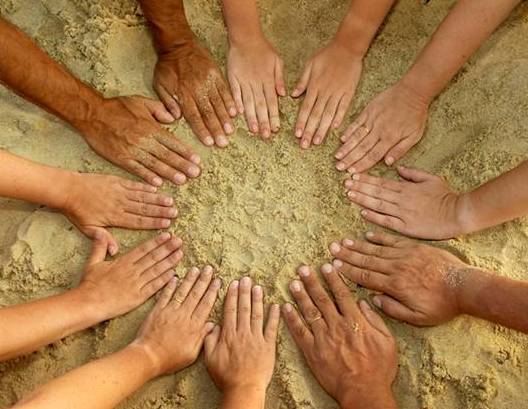
I was not fully conscious of how finely sensitive my finger tips are — until my sense of touch was compromised by carpal tunnel. And although surgery for CTS is common, I’ve been a holdout. That’s changed. I’m going to have surgery. Because in the process of holding out, I learned what it means to have everything I touch feel like a bowl of sand.

The texture of bread dough? Sand. The round, firm skin of a grape? Sand. The silky smooth flesh of salmon? Sand.  As I comb and brush my hair — that’s right — sand. Paper?  I won’t say it again.

There is the sad fact that I have lost bragging rights to my asbestos hands. I could pick up a veggie burger from a pan and it would not burn my fingers. This is not the case right now, and I don’t like the experience. Touch is an iridescent spoke on the wheel of my world. Touch is why I love to cook. Touch is why I love to hug and cuddle. Touch makes me happy.

A friend of mine charged me with being “touchy-feely.” I embrace that label with love. When I think of my childhood, I go back to the place where I was not raised. I go back to the summers I spent with grandparents in South Carolina. It was there where I connected with the silk of corn, the taste of well water, and the sunny warmth of fresh-cut watermelon on my tongue. It was there where I experienced soundless nights and pink cloud mornings. If I could live to be a thousand years old, I would forever embrace the sense experiences I received from my grandparents’ lands.

When I remember touch in the city, it is not a soft memory — except in the context of food. With food, touch drives memory: squeezing an orange, fluting a pie crust, slicing a melon, or rubbing a roast. When I think of touch in the city, I think of standing in summer rain to cool off from the heat of a small apartment that seven people called home. When I think of touch in the city, it comes with art—the thin press of violin strings, the satiny fit of a leotard.

And when I think of sand, in its own nature, I think of the sea. There is no sea in my kitchen; no sea in my hair.

Yesterday, for the sake of feeling the smoothness of dough, I made a pizza. I like the touch of food:  (haven’t you noticed?) kneading dough, slicing carrots, tearing lettuce, dicing onions or potatoes. But yesterday, I had a spiritual bonding with my food processor as it made the dough, and when I poured it out onto parchment to give it a brief knead…it felt like sand.

I know that this is temporary. But it’s given me pause to reflect on the importance of touch and how much I love the purity of the senses.

I guess there is truth in the saying after all. “In everything is a gift.”

On Experience

Experience:   fosters wisdom and paves the path to self-awareness.

There.  I said it, and that is probably why I am so committed to learning from my experiences, not from other people’s theories.  It doesn’t necessarily make for an easy way, but it makes for an interesting life.  And if I’ve learned anything about writing my experiences, it’s that no one can change what I know to be true of-about-for me.  A few have tried.  Save the planet, I say.  Stop wasting oxygen.  My experiences keep me grounded in my truth.  My experiences are the petri dish where I test out life’s theories.  And until tested, theories are all that exist.

Oh Lordy, what started this rant?

Well.  A few weeks ago, a friend and I were having dinner and talking about life.  You know.  Life.  I shared how many years ago I was up to my eyeballs in credit card debt.  Another friend at the time, who was a financial counselor, put me in touch with a debt consolidation agency that helped me pay off the debt in five years.  No small feat and a lot of beans and rice I can tell you.

Soooo…my friend and I were talking, and I said,  “I don’t know how I racked up so much debt.  I didn’t have a lot of fancy clothes or new furniture or a fancy car or any of that stuff.”

She listened to what I said for a while and got quiet. Then she asked what I used the card for.  I told her:  college tuition, books, travel, music.

Quietly, she said, “You have experiences. They’re so much more valuable than stuff.”

I thought for a moment.  “You’re right,” I said.  “I would not trade a one of my experiences for all the stuff in the world.”

Everything in these pages comes from one place:  My own experience.  I do not talk about what I do not know about.  I use my own stories to reflect on my life and the choices I’ve made.  I gather what pearls of wisdom I can from my own mistakes and successes.  And by my own standards, based on my own experience, I have more successes than failures.

Life is so full of riches, and experiences teach me what it means to continually go for authenticity. The more I stay in and with my own experience, the more authentic, the richer I become.

If I don’t know about it, I don’t talk about it.  For me, experience trumps theory every time.  If I have a political view, it’s based on experience.  Religious attitudes?  Experience.  Economics, relationships, or people?  You got it; experience.  I’m not saying that I don’t study.  I do.  Then I weigh what I’ve read-heard against what is real—for me.

Experience keeps me from taking someone else’s opinion of another person as my own.

Experience keeps me out of the cesspool of preachy, proselytizing fear mongering.  Because everyone’s experience is different—just look at how my siblings and I remember a single moment differently—owning my experience allows me to practice being non-judgmental.

I trust my experience much more than I trust another’s “ideas” about how the world operates.  And based on my experience, I try to remember:

Most people want to do the right thing. More people are committed to protecting the planet than harming it.  Youth is a state of mind and heart. Physical beauty manifests first in the spirit.

It is my experience that a sense of generosity, compassion, open-mindedness, and faith must come from one or both parents.

It is my experience that a mean young person without significant life experiences will become a mean and wisdom-less old person (hapless and hopeless at best).

It is my experience that mean, wisdom-less old people are not happy.

It is my experience, and my belief, that deep down, the heart, by nature, is forgiving.

It is my experience that knowing one’s own personal values is more important than anything else on the planet.  And that’s the work.

(Okay, and a bit preachy…)

Experience this beautiful day, wherever you are.

Words On Art, Pizza, and a Joyful Life

People like to use the term “fire in the belly” to define that insatiable passion in pursuit of a dream.  I like to think of the term in its relationship to the pursuit of pure joy.

Artists are messengers of pure joy.  They inspire folks to view the world in radically different ways.  They encourage us to be curious and to take risks.   They encourage us to be joyful.  As in…”make a joyful noise unto the Lord..”  Not threatening.  Not fearful.  Joyful.

Even when an artist’s work is something I’m not particularly fond of, I find that I am turned away from that experience only to be propelled toward a more joyful one. For this reason alone, if I had a million or a billion or a trillion dollars, I would give it to artists.

I recently heard a story about how Erma Bombeck said she would greet God if she met him face to face after death.  The story goes (and I am paraphrasing here) that she imagined God asking her what she had brought back for Him.  She said she would tell Him she had nothing to give; that she had used every gift He had given her, and there was nothing in her pockets to return.

I could only sit in amazed silence.  To live like that, one must live joyfully.

The other day, my sister-in-law, nieces, a couple of other girls, and my cousins were over for a pizza making party.  The children are all talented girls, five to eleven years old and sassy with creativity.  Their interests are diverse.  One loves music, one loves to ice skate, and one–I’m betting on it–will be a famous television chef.

The girls immersed themselves in the project immediately, and my small kitchen crackled with joy as each girl rolled out her dough in her own way and used toppings to suit her imagination.  Every pie was a work of art.  I was inspired by their boldness and generosity.   They even made “take outs” for their siblings who were not there to cook with us.

There were no rules, just a lazy afternoon,  ingredients, and joy in the process.  I had done the prep work the day before.  I had made yeasted dough from scratch and filled bowls and containers with toppings that I thought they would enjoy.  To be honest, I had a pretty joyful experience prepping.  I home roasted and sliced red bell peppers, sliced and sautéed mushrooms, chopped roma tomatoes, and sliced black olives.  I diced pepperoni slices into quarter chunks and made a fruit salad.  As I washed and chopped  strawberries,  pears, and oranges, then sliced bananas and added  blueberries and raspberries, I was in the zone.  I could have purchased any number of the ingredients I used–the mushrooms, the roasted red peppers, and sliced olives–but I was painting my picture of children joyously making pizza from scratch.  I couldn’t have stopped prepping if I wanted to.  I was quite happy.

In 1968, I was in San Francisco for the first time.  It was a dynamic time, filled with the presence of flower children and the so-called love generation.  I remember being amazed that I could walk the entire city from one end to another in a day.  There was no BART (Bay Area Rapid Transit), no subways.  It was quite a different city then.

One day while walking–and brooding on how difficult life was, a pastime I thought necessary if I wanted to live as an artist–a beautiful man came up to me.  He was African and so beautiful that I will never forget his face.  In those days, I had no suspicion of strangers.

“Why do you look so sad?”  he asked.

I was taken aback, but before I could open my mouth to respond, he was almost singing.  “You should be happy!  Be Happy!”   He patted me on the shoulder and cheerfully walked off.

It seems that this has been a spiritual theme–a command from the Universe, if you will–wherever I go.  Live joyfully. Empty the pockets. That’s the ticket I’m supposed to buy.

Creativity is mysterious medicine, generating in us the desire to live with a fire in the belly for joy.  We’re inspired by interpretations of life–stories, choreography, theater, music, photographs, paintings, and poetry — that reveal the stages and emotional paths bringing us to the joy that we yearn to experience.

Artists inspire us to get up and do something.  Dance something. Write something.  Sing something.  Cook something new and fabulous—maybe a pizza.

Yes indeed.  It is a very good Friday.

Sagacious

“Before you say there is no love, stand at the mirror and face yourself.”

Where did I find those words?  A tea bag?  Fortune cookie?  A friend?  Maybe it was in a story I wrote?  Something I read?  I don’t know that it matters.  In my heart, I’ve connected the phrase with this week’s word:  Sagacious.  The word reminds me of the amber color and stickiness of honey;  the syllables coat the tongue while crackling with intention.  “Sagacious” just sounds like something I want to be!

The word speaks to the power of discernment.  Good judgment.  Hmm.  Wisdom.  Um, right. Common sense and being able to see “what is.”   Whew.  Carefully observing before acting.

According to Merriam-Webster and other sources, a sagacious person is associated with many lofty attributes:  far-sightedness; acute insight; wise decision-making, good judgment.  A sagacious person is adept in managing the winds of change because he or she is an expert in reading the social, familial, or political signs of the road.

I still have on my travelin’ shoes.

I was looking for someone to throw down the gauntlet in my name, and the leaves did not or could not point out my poor judgment.

I am passionate about tea.  A visiting friend once brought me a box of tea.  The round container with delicate pastel drawings was filled with one of my favorite mixtures, hibiscus and rosehips.  The tea bled red as blood into hot water.  The heat from the cup was like the love I felt for the man I was seeing. The taste was as healing as the feeling of protection I had in his presence.

I once looked for discernment in tea leaves.  The magic of tea is seductive.  Tea warms the body on a cold day, sweetens the mouth, brightens the eye, and feeds the soul.  Oh.  Like being in love?

I was entranced by the Canadian reader’s graceful, tiny wrists as she twirled the
cup of jasmine flavored liquid this way and that.  Finally, the swirling leaves settled in the bottom of the vessel.  She set the cup before me.

“You have a loving heart.” (Okay.)

“You will travel a lot.”  (I love meeting new people.)

“You will have three children.”  (Music, books, and loving people!)

“You have a great love in your life.” (I thought so.)

“Learn to see everything clearly.”

The leaves did not tell me the man was deceptive.  The leaves warned of, but did not point out, my poor judge of character.

The man could not throw down the gauntlet on my behalf, and I was forced to draw on something inside: wisdom and trust in the future—part of the recipe for becoming a sagacious person.

One does not become sagacious by reading about it.  Some of the learning comes from parents; some from great educators or great spiritual masters.  But truly, doesn’t becoming sagacious come from walking and listening, observing, and seeing what is?   Darn.  Some people seem to get it right every time.

I’ve still got on my travelin’ shoes.

Warrior

So, who is a warrior?

My last post generated some one on one discussion.  In ancient times, it was easy to recognize a warrior.  Skill and courage were the identifiers.  Armor and weapons were the reward.  A real warrior was honored for having the heart to do battle.  I was reminded of this while talking to a friend about bullies, of all things.  The root term of courage is cuer, a 14th century Latin term for heart.  This means that in order to be a true warrior in one’s life, a person must approach each circumstance with heart.  Recently, I’ve been studying a beautiful text on this very thing with a group of friends, and wouldn’t you know?  It was about the courage to live from the heart.   Fighting alone doesn’t take heart.  Any angry animal can fight.  But heart, yeah, that makes a warrior. Then, why does this seem easier said than done?

In continuing this conversation, my friend and I ventured into what it means to be a compassionate warrior and how that applies to how we treat ourselves.  So, then, (of course) we found ourselves discussing bullies.  They come in all types.  There are intellectual, school yard, and employer bullies. There are lawyers, robo-call marketers, and anonymous phone call bullies.   There are certainly political and religious bullies.  The planet is full of  them.

We were trying to determine what makes a person a bully, and we decided that intention is what makes a person a bully.  The intent to dis-empower another person by fostering feelings of fear, weakness, shame, and unworthiness or to undermine another’s self-confidence and foster feelings of hopelessness and powerlessness makes a person a bully.

We continued to talk (it was long conversation), and I saw that we were barking up the wrong tree.  The real question is not about bullies. The real question is: who is a warrior?  And then my friend said something to give me pause:  She said  “A bully cannot bully without our permission.”  By extension, this means that a warrior does not give her permission to be bullied.  Eleanor Roosevelt once said, “No one can make you feel inferior without your consent.”

So, who is a warrior?

When I hung up the phone, I thought about this.  I thought, “I am the compassionate warrior I’ve been  waiting for.”  Years ago, I received a “gift” in the form of a blessing written on a slip of paper. It was from someone I respected highly, and the word on the slip of paper was “warrior.”  Later on, I  received a gift from someone else that was a necklace made of Amazonite.  This is a stone that is said to bolster self-confidence and self-worth.   I was beginning to sense a strong message.  While my teenage confrontation (see last post) was a beginning in being a compassionate warrior for myself, learning to live as a warrior is a life-long commitment.

In today’s world, the fighting turf has changed.  Bullies are  sophisticated, waving scriptural texts, law books, flags, and even job lay-offs as threats.  All are designed to do one thing:  foster feelings of fear, hopelessness, and unworthiness.   We can take heart and treat ourselves compassionately; become compassionate warriors on our own behalf, shift with the turf, and fight with new rules.  Rule number one:  a bully cannot bully without our permission.

Take heart.  Size ‘em up; take ‘em on.

I invite you to join the conversation.  Stay well.

More on Compassion

Compassion.  I think of blue-violet for spiritual strength and pink for the heart.  Online dictionaries use more than 40 words to define compassion.  My father used 12:  never judge another man until you’ve walked  a mile in his shoes.

This phrase has hovered over me like an invisible angel, urging me toward the critical balance between understanding someone else’s pain and teetering into co-dependence or fear.  The trick—so tricky indeed—is in understanding compassion’s first mandate: thou shall not judge.  The second mandate is to understand that the long arms of empathy can reach around me when I need them.

I was a twelve-year-old girl, and spent time watching adults and trying to live from behind their eyes.  On my bus rides to school, I would pick a  person and imagine that I could see through her eyes, hear through her ears, and feel the sun on her skin.  It was my small way of learning to “walk in another’s shoes.”

But by 1963, when I was fifteen, my belief in compassion was shattered as America struggled to find the compassion in its own national heart.  There were assassinations—Medgar Evers and President Kennedy—the bombing of the 16th Street Baptist Church in Birmingham and murder of four girls; televised scenes of fire hoses and German Shepherds as Southern bigots attacked civil rights protestors; and George Wallace’s cry of “segregation forever,” as he blocked the door to the University of Alabama.  This was the year of the great March on Washington with Dr. King.  But the politics of the times, not unlike those of today, belittled compassion.  Empathy, it seemed, had gone with the wind.

Then there was Evelyne (not her real name).

As a high school sophomore, Evelyne was more than six feet tall, almost a full 12 inches above me.  She played hockey and had muscular arms like my father who, by the way, was a brick mason. Her almond colored face had pock marks and lumps that looked as if she’d been beaten many times by fist or stick; but her eyes were large and deep brown, and, on a good day, she would smile and her face looked soft and welcoming.  Evelyne was also a bully, and the day she confronted me was not one of her good days.

To say that the prospect of fighting her scared me to my very core is no exaggeration.  It was all rather ridiculous; a clear case of the fox and the hen; David and Goliath; Bambi and Godzilla.  I remember those brown eyes widening with disbelief as she towered over me, lowering her face into mine, as my mouth issued the challenge, “Come on!”  Everyone around us laughed, but I never broke eye contact; not once.

I think I learned in that challenge that compassion was not just for others, but for my own self.  It would be easy to run, or allow myself to  be beaten.  But really, in addition to learning to live behind others’ eyes, I had to learn to live behind my own.  I had to accept my own strength, acknowledge my own right to self-protection and safety.  This was the compassionate thing to do.  It is a life-long lesson.

In a move that surprised us both, Evelyne laughed (well, it was more like this wheezing-growl thing as she showed her teeth), turned to her friends and said something to the effect of “It would be mean to beat up a crazy person.”  Then she and her buddies walked away.

Over the years, I have been advised that empathy is our natural instinct.  Perhaps Evelyne just thought I was the most ridiculous thing she had ever seen.  But perhaps she, the sad victim of who knows  how much abuse herself, had a moment of compassion.  I will never know.

What I do know is that we are at another critical moment nationally.  If  we can just keep at it, just keep at it; tone down our judgments, pull back the rhetoric, stop the polarized threatening and the bullying; walk a mile in each other’s shoes.  Walk a mile in each other’s  shoes.  Walk a mile in each other’s shoes.  We may just find compassion  again.

Compromise. Compassion.

Compromise.  I think of the color blue when I think of compromise.

Blue.  It represents peace and serenity like the peace I find in still, blue waters.  With all the haggling going on in Congress, I have spent a lot of time thinking about compromise and its place in my life.  I wondered:   Is there a relationship between compromise and compassion?   What is the difference  between real compromise and just giving in?

Well. It seems to me that real compromise, in its essence, requires listening to and accepting another’s point of view.  Listening punctures the balloon of pride and arrogance.  Acceptance generates empathy and compassion.  Empathy fractures the rigid spine of self-righteousness.  This makes the experience of compromise a win-win for everyone involved.  No one — and no group — gets everything they want all of the time without slip-sliding into despotism.

For me, the lessons in compromise are up front and personal.

I compromise whenever I agree to stay with my aging mother so that my brother and his family can take a few days together.  It is a compromise because of the hair-on-fire relationship I’ve had with my mother for at least 50 of my 63 years.  Being with her for long periods of time has never been easy, and now that she is living with dementia I find the time I spend with her even more challenging.  I compromise and spend the time because everyone needs a break.

My sister calls it “time travel”  when Mom forgets that I am her daughter and thinks I am her dead sister.  After saying three times that “I’m Sala, Mom”  and seeing the look of confusion — or is it fear? — in her face, I drop it.  I compromise.   I don’t say who I am anymore and she becomes peaceful.  In an eerie kind of way, it’s the way it’s always been.  She wants me to be someone other than who I am.  When she gathers leftovers and goes to the porch to call the dogs that were a part of her childhood on the farm…my heart breaks.  I have always wanted her to be happy.  Caring for an aging parent with dementia requires compromise.

Many years ago, I asked my mother, “Don’t you think God put us here to
be happy?”  She replied firmly, “No.”  Seeing her unhappiness now, I know how true this is for her, and it triggers my compassion.

I compromise when Mom forgets that she ate dinner an hour ago and  complains that she hasn’t eaten all day.  I  have made the assumption that she is trying to bury her life’s sorrow with food, when I try to remind her that she’s already had three meals.  She becomes agitated and angry as if I am intentionally trying to hold food from her.  My cousin, who knows about these things,  says she is eating like the diabetic that she is and I should stop trying to convince her that she’s already eaten.  Which, for God’s sake, is more important:  her being at ease or my being right?  Caring for an aging parent with dementia requires compromise.

Standing silent in the face of abuse is not compromise.  Accepting shaming, blaming, demeaning or contemptuous  behavior from a spouse, family member or employer is not compromise.  Holding one’s thoughts inside out of fear of retribution is not compromise.  It’s fear.  Compromise in its essence also requires one to speak one’s mind; to share one’s truth of things.  Standing silent is not compromise.

Compromise is the right thing to do because, damn it, we live in community with others — whether we want it or not; whether we like it or not.  Compromise is what makes a  democracy different from communism or a theocracy;  from a monarchy or a dictatorship.  Compromise is what keeps any particular group or person from becoming a despot in the United States.  Compromise is what makes democracy work.  No one will ever have it all his or her way in a democracy.  So what’s all the fighting about?

Compromise brings serenity, and in a deeper way compassion generates compromise.  And deep, deep down inside, aren’t both what we’re all about?