Category Archives: Aging

Young Folks, You Are Doing Just Fine

Photo by RDNE Stock project on Pexels.com

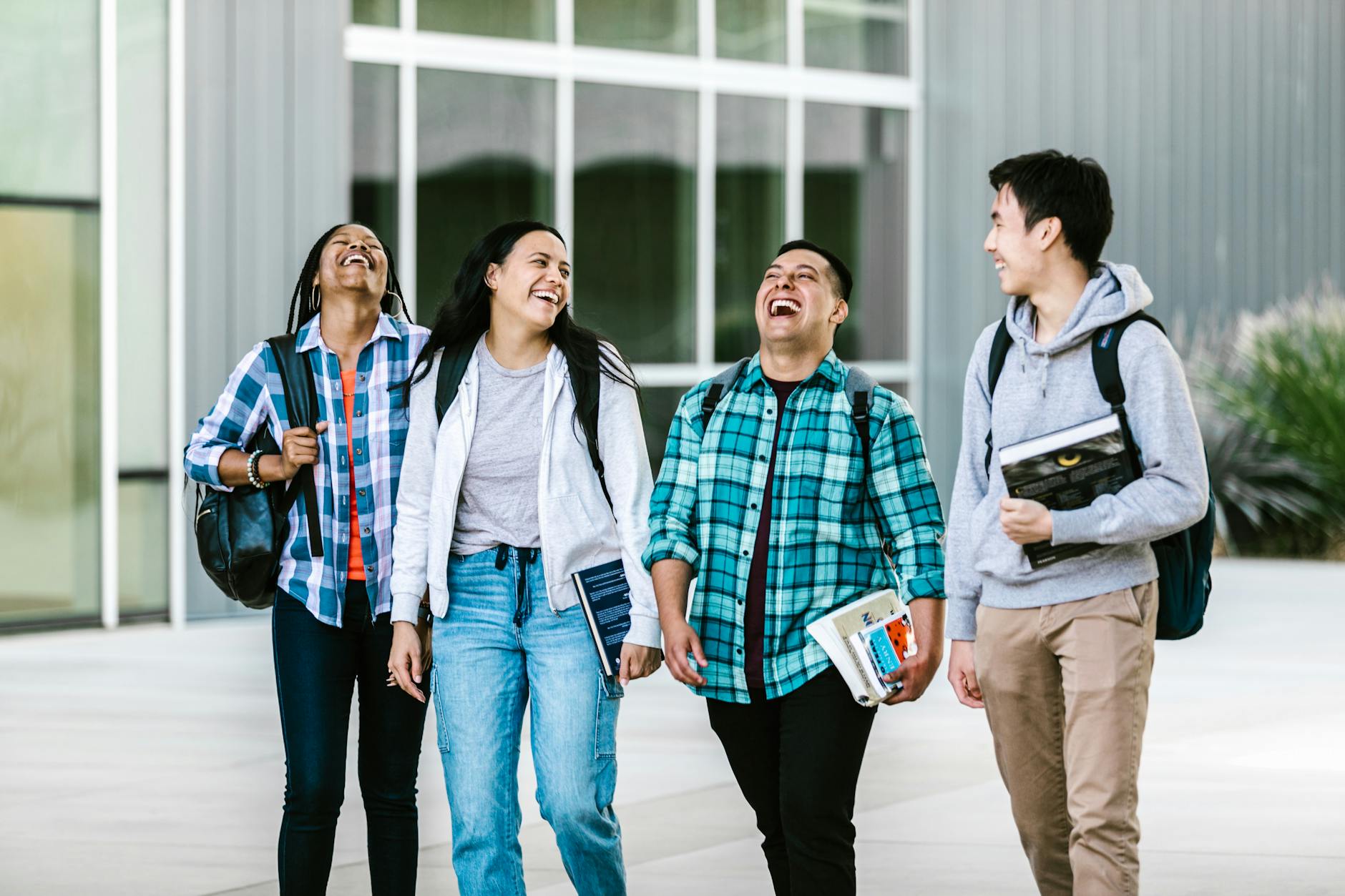
Yesterday I visited one of the colleges in the Philadelphia area. Most campuses are open to the public, and it seemed like a perfect Fall morning to find a bench and catch up on a knitting project. As I entered the parking lot, I slowed. The lot was nearly full. Wait, what?

It was move-in day.

Across the grounds, students and parents stood in lines of 20 or 30, anxious for introductions to people they were meeting for the first time. Boxes and furniture were hauled from cars and trucks and moved into dorms. Faculty members trotted in and out of buildings. Parents gingerly backed their vehicles into and out of parking spaces. “What an exciting day for them,” I thought. But not for me.

I spotted a space and rushed for it, pulled in. There were no signs forbidding parking. I bit my lip and sat for a moment, feeling a little guilty when a father, lugging a set of plastic containers, gave me an irritated glance. Heck.

I grabbed my knitting bag, exited the car, and walked towards an open bench just past the driveway. Whoa! Directly across from the bench was a line of animated students waiting for their campus welcome and tour. I stared, then turned back toward the car.

I was disappointed, but the truth is I was visiting their home. It was as if I had arrived uninvited to a generous feast of sweet treats, pizzas, and flowers. Resignation and courtesy were my only options.

I looked around again. The campus was renovated over the summer, and the bench I had always used was no longer there. However, about 75 feet away, there were two benches just across from the track. A couple of students (kids to me) occupied one of them. Lines? Nope. I use a cane and don’t like walking across grass, and I could feel a whine coming on. As I plopped down, a little tired from my trek, on the bench next to the students, they paused their conversation and greeted me.

I’ve begun a new morning habit of setting an intention for the day. My intention this morning was to listen. To birds. To cars. To the wind. So, that is what I did; I listened and learned that the young man and woman were seniors, excited about being on campus and catching up on summer news.

She: “Peter and Maggie had a baby.”

He: “What?! Wow! Did they finally get married?”

She: “Yup. Isn’t that a trip?”

Feigning attention to my needles to stretch out the time, I pulled threads, making six short rows into one.

She: “It’s so good to see you!”

He: “Can you believe it’s our last year?”

She: “No! (Pause) It’s going to go by too fast.”

My heart fluttered. Memories of my own college years — that went by too fast — surfaced. I never made friends like these two. I was often alone, the chronic introvert. After a semester, I left school and joined a theater company. The theater was where I met my buddies. The theater was where I belonged.  In the theater, we were bold, young, and unafraid. I imagined these seniors to be the same.

He: “I can’t wait to see everybody again.”

She: “Do you think Maggie will bring her baby?”

I listened. Here’s the thing: I will never see my first theater mates again. Almost all of them have passed away. Drugs. Cancer. Old age.

The sun was now fully on my face, and perspiration dripped into the corners of my eyes.

“It’s been so lovely listening to you guys,” I said. “But the sun is roasting me.”

I stood as they laughed and waved. I looked back toward the bench I had started for initially. It was empty, and there were no lines. I headed for it, looking forward to being in the shade of that marvelously large tree.

Opposite that bench was another where three young women sat. (There are lots of benches on this campus.) Once again, I listened. They were juniors or sophomores, cheerleaders, practicing old and new chants for the year. As I approached, a young woman with glorious dreadlocks looked up and greeted me. She wasn’t just being polite. Her smile held her heart.

A helicopter flew overhead.

“I’ve never seen a pink helicopter!” I said.

“It was yellow, I think,” she smiled.

I smiled back.

Thinking about it now, I feel teary-eyed. Any one of the students I met would have offered me and my cane a seat on the bus. Kindness and respect. After about 30 minutes, I put my knitting away. The young women were leaving to meet their friends. The young man I had seen earlier was passing by and gave a wave, a big smile, and a nod of his head to this grey-haired knitter.

As he made his way to some event or other, the thought came to me: I don’t need to worry about our future. Young Folks, you are doing just fine.

Joy Is Resistance

A pope died. A new pope was chosen. A very dear old lover passed away. Some of my favorite artists, whom I have enjoyed for many years, have transitioned to perform, write, and dance on a heavenly plane. I’ve never liked change. Perhaps, been afraid of it even. Ironically, one of my favorite songs is “Everything Must Change” by the late Benard Ighner. I’m considered an elder now, and I’m finding impermanence increasingly disquieting.

Photo by August de Richelieu on Pexels.com

Finding Joy in Disquiet

But it’s summer, and I’m indulging in its beauty. The seasonal drift from spring to raging heat offers me a sense of liberation from political nightmares and brings with it an obstinate optimism. As authoritarianism plants its ghastly footsteps in too many places across the planet, we are divided. Yet, we are also connected. We hold before us an eternal optimism that protects us like an ancient knight’s armor.  We have a battle cry: JOY IS RESISTANCE.

Growing up, I struggled with finding joy at home. At 11, I was weighed down by the constant fighting within my family and desperate for laughter. Most of the time joy felt as distant as an air balloon over the Atlantic. But then spring would arrive. Spring, with its sweet smells. Spring with its flowers and brilliant colors. The sky seemed bluer. The delicate green of spring grass was accented with purple crocuses and yellow tulips. The pussy willows along the streets assured me that everything would be just fine. Spring brought joy.

There were cocoons in trees lining the sidewalks where I walked home from school. Those white cottony things, almost transparent, had lumps inside that I didn’t understand would turn into butterflies. Boys, ever annoying little boys, threw rocks at them or batted them down with sticks. I usually ran beneath a tree to get away from those white lumps knocked loose because they landed on my neck or in my hair. But as spring wore on, the lumps inside became beautiful, magically colored things, liberating themselves from bondage. As I ease into elderhood, I reflect on this memory from my earlier years: the cocooning times.

Joy and An Abundance of Eggs

Eggs — The subject of economic dismay that’s led us into this year of low expectations and turning the American Dream into a nightmare for many.

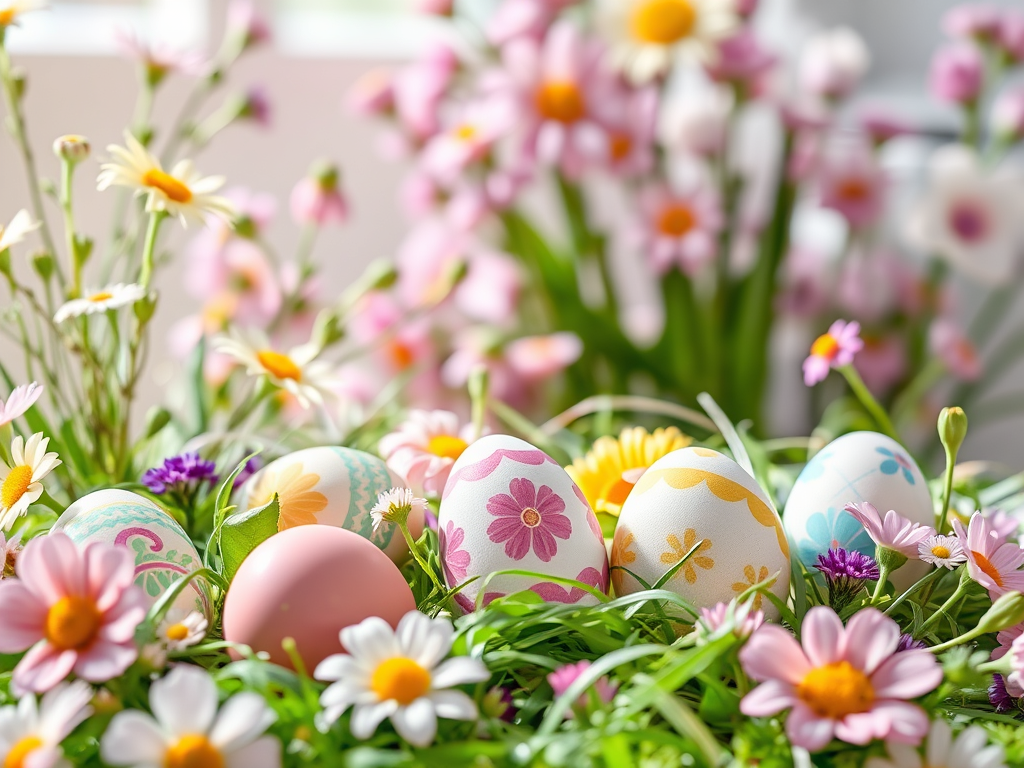
My father used to chastise me because, as he said about my mother and me, “Whenever I walk into this house, you two are going at each other!” This, even before I was 13. But the night before Easter Sunday, something magical happened. Joy fired up a powerful resistance to any family issues. All of us kids joined Mom as we gathered around dozens of eggs. There was a renewal, a resurrection, a rebirth, if you will, of the delight human beings are meant to experience.

We stayed up past eight o’clock, selecting stencils and food colors for our boiled eggs and filling Easter baskets for ourselves and cousins. Those nights were special. The evening routine of dinner, dishes, homework, and perhaps a harsh “I told you to finish your homework!” was abandoned for an experience of limitless childish joy. We did not whine — “but it’s still light out” — when we heard neighborhood children playing kickball in the streets.  What we cared about was decorating eggs. What we experienced was joy.

Obstinate Optimism as Resistance

The spirit of the times requires — demands — that we maintain joy in our resistance. We are living through overwhelming changes in politics and culture. Dreams for peaceful coexistence can only survive and manifest in optimism.

Children are dying from measles – a disease we had eliminated from our country. People are being kidnapped, placed in prisons and concentration camps, or starved mercilessly by authoritarian governments. There are dictatorships throughout this world, and we, in this country, are as politically divided as we’ve ever been — some say since the Civil War. “Divide and conquer” is as old as humanity itself, and we fight against this abomination.  And still, people are bursting with obstinate optimism.

We have been through tragedies before, and we have come through them to celebrate the return of the Light. Optimism, Joy as Resistance, is the best of the human spirit. Claiming our joy is necessary nourishment if we are to survive — and thrive.

Banana Pudding – A Memory

By Italo Melo on Pexels.com

Before we aged, my mother and I, cream rose to the top of glass milk bottles, and eggs, large and brown, were sold in neighborhood grocery stores by storekeepers who bought from local sources. I was a nine-year-old girl hanging out at the table watching my mother make banana pudding. I never dreamed of growing older. Mommy would always be as she was right then, frozen in time, never changing, sending us away when we were bothersome and making us work when we were bored. A belt near one hand and a spoon in the other, it seemed the way it would be. Forever. With my nose too close to the bowl of food for her comfort, I never thought about age.

Focused and careful, with respect for ingredients, she slowly layered the baking dish with vanilla wafers, custard, and bananas until it was filled to the brim. Then she topped it off with meringue and baked it. She was a good cook, having learned her way around the kitchen after she married. Then her fingers began to curl, and the mixing bowl became too heavy.

Wavering between veganism and vegetarianism for decades, I just plain forgot about something as simple and delicious as banana pudding. I forgot about licking the bowl. I forgot about the sweet stuff.

My relationship with my mother was not an easy one. Daddy, after a hard day of brick laying, would walk into the apartment and ask, “Are you two at it again?”

She was not easy to please. But her banana pudding was royal. God bless her. She is no longer here to argue with. Still, I savor the memory of hanging over the side of her bowl, and the tenderness that manifested itself in a meringue that peaked just right.

It’s never been said that this bowl-licking life is easy. But when we get to lick the bowl, it’s sweet.

January 2020 to January 2021. Yes, We Will Find Joy.

It’s a snowy day in February 2021. I am complaining. January 2020 was the beginning of a year that I could never have imagined.

At the end of that month, I was sharing a home-baked, red velvet birthday cake with friends. I had just turned 72, and the celebration deserved one of my friend Bob’s elegant cakes.

“Oh my God!”

Vinny checked his cell phone and put his beverage down. The helicopter carrying Kobe Bryant, his daughter, and their friends, had fallen out of the sky. Bryant had been a beloved local personality, and it felt like the air was sucked out of the room. As we pivoted from celebration to sorrow, I could hardly believe that, once again, we were looking at the sudden death of a vibrant man known for his devoted support of young people, while some of the meanest, vilest politicians in our country seemed impervious to death.

Bryant’s death began a traumatizing year, one that would test the heartiest among us. A month later, as the stories about a new virus began to dominate the media, people hunched their shoulders and started wearing masks. My friends and I were asking, “How can we elect a new president?” because we were sure he’d caused the problem in the States. To answer this question, I participated in activities to get people out to vote.

I released my home health aide after she told me I was “overthinking” the virus, and fretted for a bit about all the tasks I would have to take on. Now alone, with no one visiting my home, I did what it made sense to do when humanity seems out of control: I turned to nature, to the trees in the forest across the road.

While the television droned in the background and I chopped celery and onions into cubes, maybe for a salad, or mashed potatoes, or perhaps, a lentil shepherd’s pie, I wondered out loud to the trees: Is it self-indulgent to write food stories?

Colorful bowls overflowing with fruit were testimony to the beauty of living in a global world: oranges from South Africa. Apples from New Zealand. Avocados from Mexico. Blueberries from Peru. And tomatoes…ahhh. Beautiful Canada.

I prayed that my anger would not affect the food. You see, I believe this to be the truth: whatever my mood, that energy goes directly from my mind and heart to my arms to my hands and into the food. I did not want to eat these negative vibrations.

Oh, the trees. My relationship with trees is mysterious. I watch them as if they are my children. From the first buds of spring to the death of their leaves when they are bombarded by sleet and buffeted by the wind, they are my constant companions. I “feel” them speak to me. Before you shake your head in pity, listen.

Several years ago, I lived next to a city park, which gave my second-floor apartment the feeling of being in a treehouse. Many years before that, I lived in an apartment along the Willamette River in Oregon. Trees surrounded the apartment. There have always been the trees.

One morning, during meditation in my “treehouse” apartment, I heard a message inside my heart.

“Don’t worry. We are your protection.”

I believed then, and I do now, that the spirit of the trees spoke to me.  

The year rolled on, and on May 25, I watched as a reptile in human skin – sworn to protect the public – put his knee on a man’s neck and stared into the camera for eight minutes and 46 seconds. He did not remove his knee until George Floyd was dead.

The raindrops on the trees outside my window clung to the branches like tears. I cried too. In July I posted about police abuses. I did not write about food. Would we ever again find joy?

2020 dragged on. Christmas was, thankfully, quiet. No guests. No poultry or stuffing. No hand-crafted pie. New Year’s eve, without the college students across the way, was still. There was no disturbance of fireworks. More than 300,000 people had died from the virus. I thanked God that 2020 was over and that we had a new president.

January 1, 2021, I received a phone call. My 90-year-old uncle died that morning from COVID-19. I did not cook the New Year black eye peas called Hoppin’ John, I didn’t make collard greens laced with onions, garlic, and turkey wings. I did not bake cornbread.  Instead, I contemplated his being the last in a generation of maternal elders, and what it meant to lose them.

On January 6, terrorists staged an insurrection against the United States. They breached the United States Capitol Building. They terrorized police officers, defecated and urinated in offices, stole items. They searched for legislators and the Vice-President with assassination intentions. These criminals wanted to disrupt the certification of legitimate election results and the peaceful transfer of presidential power. They failed.

I recognized a Truth. As we struggle to make it through these times – and we will struggle – we have to eat; we must find joy.  Although for many of us, our food stories will not be found around the table, we will have joyful stories to share. Through the miracle of technology, folks are learning new recipes, discovering new winter soups, baking new breads. A friend is making homemade yogurt, canning and pickling, and sharing these experiments through video technology. We’ll continue to bake Cornish hens and roast chickens. And we’ll brunch Zoom with buddies over the weekend.

I looked out at my snow-covered trees with the answer. Food is what we need to live. Joy makes us resilient. Stories are what give us joy. It is not self-indulgent to write about food.

Friends


While dining with a friend, I reflected out loud, “I want a lot of softness around me.” It was a prayer released into the air. I was so tired of the drama with folks who felt that aggression was the way to success. In that moment, a few seconds felt like I was frozen in time.

When I became aware of the movement around me again—people bussing trays and the café filled with noisy chatter—I knew I had hit on a significant truth about myself. Apparently, my friend understood completely because she nodded her head and said “yes!”. It was a desire for fewer disagreements, more kindness, honest listening, and deeper sharing with friends and family. With her recognition of this desire, I didn’t feel alone anymore.

 January 2018 had started with a bundle of newness: new writing, new personal insights, and a new food management plan. Then Mom died.

It was not unexpected. She’d had Alzheimer’s for several years and was a month short of 96. Attending her funeral would be my first travel experience since I had been diagnosed with Chronic Inflammatory Demyelinating Polyneuropathy (CIDP) in 2013, a condition that had, at that time, left me paralyzed and weak in the legs for many months. I was nervous about the journey, but after all my years of progressive recovery, I felt strong and ready.

In going to Washington, D.C. for nine days, I would be surrounded by relatives I hadn’t seen in decades. There would be dinners with siblings and other family and a funeral repast with old family acquaintances and neighbors. I’d be stretching myself to the limit with travel by train, social interactions, and using Uber to go between the hotel and my brother’s home where there were too many steps for me to stay there. The physical effort meant being outside in sub-freezing weather, pulling luggage, and staying up until 11 every night as my siblings and I worked on funeral details.

The likelihood of staying on my new meal plan was doomed. Pizzas, fried chicken, and breakfast pastries became the daily cuisine—fast, filling, and cooked by someone else. I wanted—and needed—someone to walk with me; someone who could hold me up and carry my heart gently in his or her hands. Someone, perhaps, who really knew me.

My family is stoical. We do not “do” feelings. This is something that’s bothered me for as far back as I can remember. I’ve always been envious of families that can mourn together, folks who can physically embrace each other while shedding tears. In our family, my tendency to express feelings has earned me the label of “emotional.”

Overnight, the five of us had become orphans, and yet we did not share that familial intimacy. Perhaps this was why I felt desperate for a friend with whom I could share the thoughts close to my heart. But is there a friendship that can meet such a need? Every person has a boundary when it comes to openness and vulnerability. In choosing friends, I have made some mistakes.

I was thinking about the concept of “softness around me” on the day I returned from my mother’s funeral. Feeling sad, I called a woman that I considered a new friend since moving to Pennsylvania. In the past, we had talked about politics, philosophy, and where to find good men. We had cooked together and shared family pictures during holiday meals. So…when I got back to town, I rang her up. Phone calls were not returned. Neither were text messages or emails. Weeks later when I heard from her, I was stunned to learn that she thought our “expectations for friendship are different.” I did not know what she meant.

I was hurt, but also angry. Faced with the realization that I had somehow unwittingly made someone uncomfortable, I had to look at how I choose friends and what my expectations are. Clearly, my inner “friend-picker” needed repair.  I was now faced with another new task for the New Year: Approaching my seventies, I would have to learn how to choose new friends.

When I graduated from high school, my classmates and I used to write a common verse in each other’s yearbooks. Love many, trust few; learn to paddle your own canoe.

My need for deep friendship on any given day can remain securely hidden behind the pots and spices in my kitchen. But need has a way of breaking out of hiding places. When it does, judgment dissolves.

A good friend, like good food, is a reliable source of comfort. I use great care when selecting ingredients for cooking. Will I be able to, going forward, choose friends in the same way? Some friendships I thought would last for years, end or fade. And, of course, I change. Understanding this, the future stands before me with thoughtful  friendship  experiences and more  “softness around me.”