

A pope died. A new pope was chosen. A very dear old lover passed away. Some of my favorite artists, whom I have enjoyed for many years, have transitioned to perform, write, and dance on a heavenly plane. I’ve never liked change. Perhaps, been afraid of it even. Ironically, one of my favorite songs is “Everything Must Change” by the late Benard Ighner. I’m considered an elder now, and I’m finding impermanence increasingly disquieting.

Finding Joy in Disquiet
But it’s summer, and I’m indulging in its beauty. The seasonal drift from spring to raging heat offers me a sense of liberation from political nightmares and brings with it an obstinate optimism. As authoritarianism plants its ghastly footsteps in too many places across the planet, we are divided. Yet, we are also connected. We hold before us an eternal optimism that protects us like an ancient knight’s armor. We have a battle cry: JOY IS RESISTANCE.
Growing up, I struggled with finding joy at home. At 11, I was weighed down by the constant fighting within my family and desperate for laughter. Most of the time joy felt as distant as an air balloon over the Atlantic. But then spring would arrive. Spring, with its sweet smells. Spring with its flowers and brilliant colors. The sky seemed bluer. The delicate green of spring grass was accented with purple crocuses and yellow tulips. The pussy willows along the streets assured me that everything would be just fine. Spring brought joy.
There were cocoons in trees lining the sidewalks where I walked home from school. Those white cottony things, almost transparent, had lumps inside that I didn’t understand would turn into butterflies. Boys, ever annoying little boys, threw rocks at them or batted them down with sticks. I usually ran beneath a tree to get away from those white lumps knocked loose because they landed on my neck or in my hair. But as spring wore on, the lumps inside became beautiful, magically colored things, liberating themselves from bondage. As I ease into elderhood, I reflect on this memory from my earlier years: the cocooning times.
Joy and An Abundance of Eggs
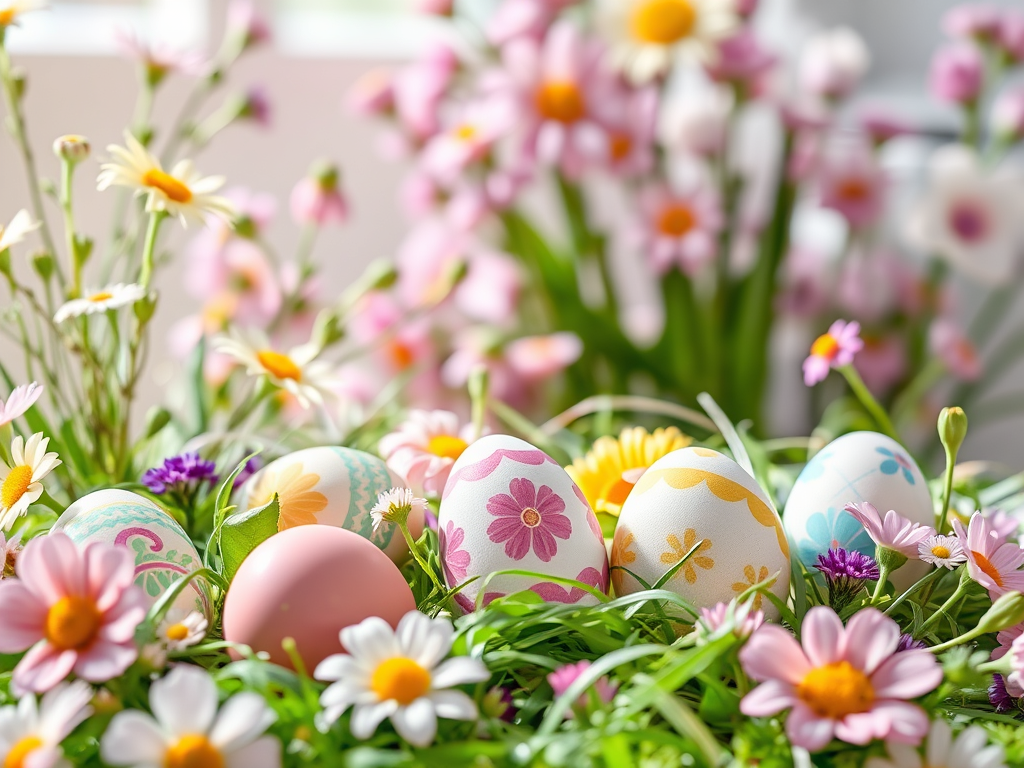
Eggs — The subject of economic dismay that’s led us into this year of low expectations and turning the American Dream into a nightmare for many.
My father used to chastise me because, as he said about my mother and me, “Whenever I walk into this house, you two are going at each other!” This, even before I was 13. But the night before Easter Sunday, something magical happened. Joy fired up a powerful resistance to any family issues. All of us kids joined Mom as we gathered around dozens of eggs. There was a renewal, a resurrection, a rebirth, if you will, of the delight human beings are meant to experience.
We stayed up past eight o’clock, selecting stencils and food colors for our boiled eggs and filling Easter baskets for ourselves and cousins. Those nights were special. The evening routine of dinner, dishes, homework, and perhaps a harsh “I told you to finish your homework!” was abandoned for an experience of limitless childish joy. We did not whine — “but it’s still light out” — when we heard neighborhood children playing kickball in the streets. What we cared about was decorating eggs. What we experienced was joy.
Obstinate Optimism as Resistance

The spirit of the times requires — demands — that we maintain joy in our resistance. We are living through overwhelming changes in politics and culture. Dreams for peaceful coexistence can only survive and manifest in optimism.
Children are dying from measles – a disease we had eliminated from our country. People are being kidnapped, placed in prisons and concentration camps, or starved mercilessly by authoritarian governments. There are dictatorships throughout this world, and we, in this country, are as politically divided as we’ve ever been — some say since the Civil War. “Divide and conquer” is as old as humanity itself, and we fight against this abomination. And still, people are bursting with obstinate optimism.
We have been through tragedies before, and we have come through them to celebrate the return of the Light. Optimism, Joy as Resistance, is the best of the human spirit. Claiming our joy is necessary nourishment if we are to survive — and thrive.

 Sala
Sala

 wordshavecolor.com
Philosophical Rant: Pity
I’ve been reflecting on the differences between pity, sympathy, empathy, and compassion for a long, long time. Today, I’m stepping aside from my kitchen and baked salmon to explore the murky waters of that soul sucking scoundrel: Pity.
This is what I know for sure: Pity comes with judgment. Pity ignores the right of a person to make the best choices for herself and presumes that a person is not able to do so. Pity is tainted with the poison of dehumanization. Some folks pity non-white groups or people with physical disabilities.
My mother just turned 94, and speaks the language of those without memory. Alzheimer’s. I respond to everything with a cheerful “Yes,” and a familiar sadness washes over me. Empathy, not pity, is what’s called for here. In all of the years I’ve known my mother, I have felt that behind her rigidity and unfriendliness is loneliness.
God, we must lose the pity.
Recently, a person I know—someone who has called me almost daily for more than a year and someone who I now understand offered contact from a place of pity—asked me to do a small writing project, a resume–for pay. Now, there are reasons that I declined the offer. One, was a sense that, for this person, “money equals power.” In accepting payment, I’d lose my right to establish boundaries around what I would or would not do. If I did the work for free, my skills would be devalued. And, finally, unlike a typical contract, the expectations were uncomfortably dodgy. I declined.
It’s been a difficult lesson to learn. I sensed that this person, rather than being a real friend, saw me as “needy,” a person in dire need of charity. And, perhaps in the beginning, when I was so blindsided by my condition, I was needy. Yet life offers myriad opportunities to learn from swimming in the muddy waters of pity—both self-pity and that which comes from others.
If you ask or comment, as others have, about how I’m recovering so well, the answer is always the same: I have allowed myself very, very little time for self-pity.
Now, what about sympathy?
Sympathy allows us to truly see pain, but we can remain distant. We may or may not take action, but generally when we do, the action is one that allows us to keep our distance and lets others maintain their dignity. Donating to a non-profit that serves the poor or disenfranchised, working for or in organizations that help others, these are examples of contributing to the greater good in a non–personal way. But, careful. Sympathy can be a slippery slope to pity.
Then there’s empathy. Ahh, sweet empathy. I learned empathy from my father. Empathy is the ability to feel or identify with another’s pain. Daddy would always say: “Before you judge another person, walk a mile in his shoes.” He didn’t mean for us to literally walk in another’s sorrow. He meant for us to understand that, as Phil Ochs sang, “there, but for fortune, go you or I.”
That walking puts us on the road to compassion.
Compassion is taking that empathetic feeling, that ability to feel another’s pain, and turning it into true, non-judgmental, loving action. Action coming from love is compassion. Compassion uplifts and heals. Compassion never dehumanizes. Ever.
What a day. I’ve had my rant. It’s time to enjoy some salmon.
1 Comment
Posted in Essay, Heart and Mind, Kindness, Philosophical rants, Stories about life, Values
Tagged Commentary, Compassion, creative nonfiction, Dignity, Empathy, Heart and Mind, Humanity, loving kindness, Opinions, Philosophical rants, Pity, Reflections, values and spirituality