
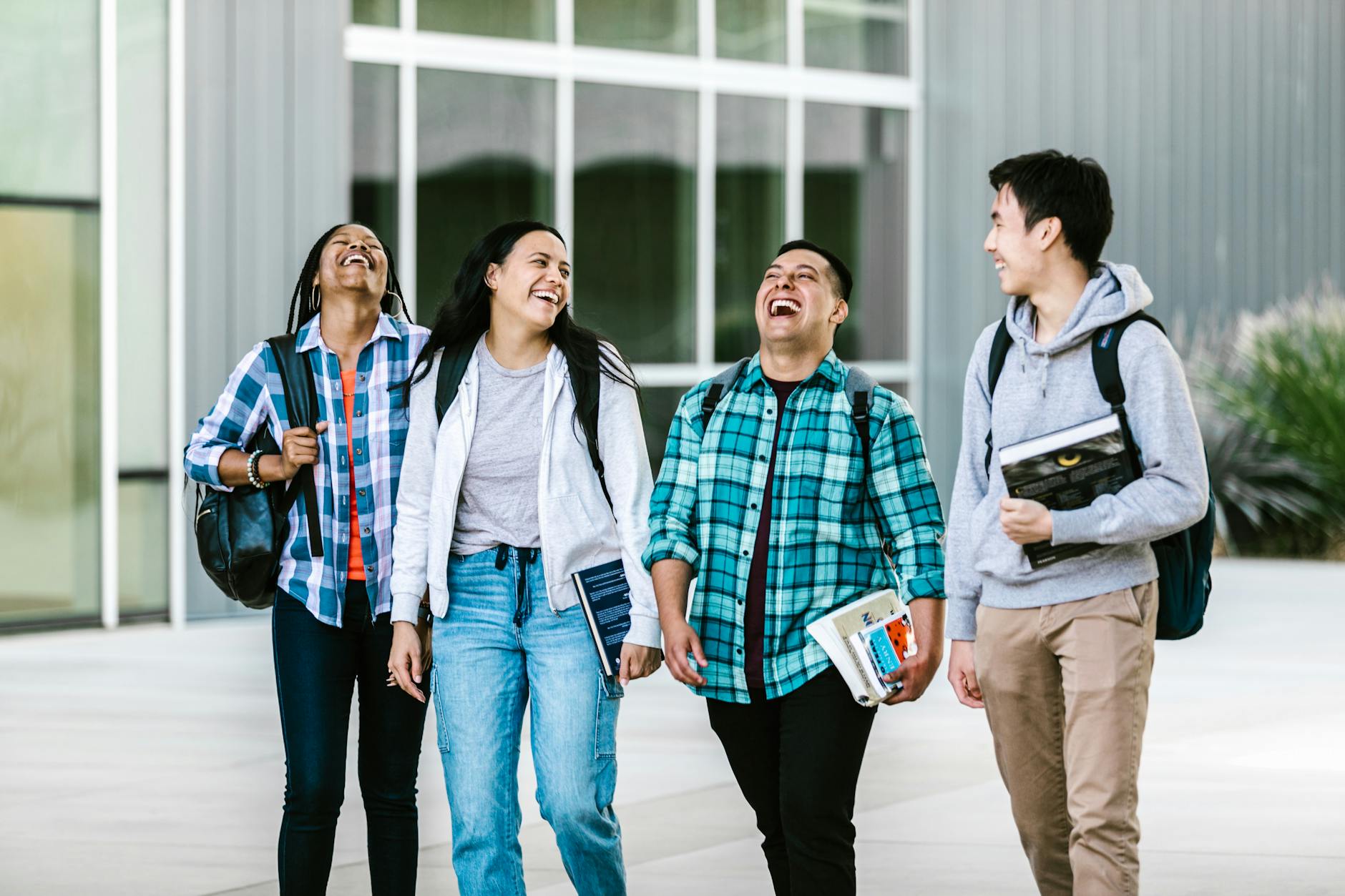
Yesterday I visited one of the colleges in the Philadelphia area. Most campuses are open to the public, and it seemed like a perfect Fall morning to find a bench and catch up on a knitting project. As I entered the parking lot, I slowed. The lot was nearly full. Wait, what?
It was move-in day.
Across the grounds, students and parents stood in lines of 20 or 30, anxious for introductions to people they were meeting for the first time. Boxes and furniture were hauled from cars and trucks and moved into dorms. Faculty members trotted in and out of buildings. Parents gingerly backed their vehicles into and out of parking spaces. “What an exciting day for them,” I thought. But not for me.
I spotted a space and rushed for it, pulled in. There were no signs forbidding parking. I bit my lip and sat for a moment, feeling a little guilty when a father, lugging a set of plastic containers, gave me an irritated glance. Heck.
I grabbed my knitting bag, exited the car, and walked towards an open bench just past the driveway. Whoa! Directly across from the bench was a line of animated students waiting for their campus welcome and tour. I stared, then turned back toward the car.
I was disappointed, but the truth is I was visiting their home. It was as if I had arrived uninvited to a generous feast of sweet treats, pizzas, and flowers. Resignation and courtesy were my only options.
I looked around again. The campus was renovated over the summer, and the bench I had always used was no longer there. However, about 75 feet away, there were two benches just across from the track. A couple of students (kids to me) occupied one of them. Lines? Nope. I use a cane and don’t like walking across grass, and I could feel a whine coming on. As I plopped down, a little tired from my trek, on the bench next to the students, they paused their conversation and greeted me.
I’ve begun a new morning habit of setting an intention for the day. My intention this morning was to listen. To birds. To cars. To the wind. So, that is what I did; I listened and learned that the young man and woman were seniors, excited about being on campus and catching up on summer news.
She: “Peter and Maggie had a baby.”
He: “What?! Wow! Did they finally get married?”
She: “Yup. Isn’t that a trip?”
Feigning attention to my needles to stretch out the time, I pulled threads, making six short rows into one.
She: “It’s so good to see you!”
He: “Can you believe it’s our last year?”
She: “No! (Pause) It’s going to go by too fast.”
My heart fluttered. Memories of my own college years — that went by too fast — surfaced. I never made friends like these two. I was often alone, the chronic introvert. After a semester, I left school and joined a theater company. The theater was where I met my buddies. The theater was where I belonged. In the theater, we were bold, young, and unafraid. I imagined these seniors to be the same.
He: “I can’t wait to see everybody again.”
She: “Do you think Maggie will bring her baby?”
I listened. Here’s the thing: I will never see my first theater mates again. Almost all of them have passed away. Drugs. Cancer. Old age.
The sun was now fully on my face, and perspiration dripped into the corners of my eyes.
“It’s been so lovely listening to you guys,” I said. “But the sun is roasting me.”
I stood as they laughed and waved. I looked back toward the bench I had started for initially. It was empty, and there were no lines. I headed for it, looking forward to being in the shade of that marvelously large tree.
Opposite that bench was another where three young women sat. (There are lots of benches on this campus.) Once again, I listened. They were juniors or sophomores, cheerleaders, practicing old and new chants for the year. As I approached, a young woman with glorious dreadlocks looked up and greeted me. She wasn’t just being polite. Her smile held her heart.
A helicopter flew overhead.
“I’ve never seen a pink helicopter!” I said.
“It was yellow, I think,” she smiled.
I smiled back.
Thinking about it now, I feel teary-eyed. Any one of the students I met would have offered me and my cane a seat on the bus. Kindness and respect. After about 30 minutes, I put my knitting away. The young women were leaving to meet their friends. The young man I had seen earlier was passing by and gave a wave, a big smile, and a nod of his head to this grey-haired knitter.
As he made his way to some event or other, the thought came to me: I don’t need to worry about our future. Young Folks, you are doing just fine.


 Sala
Sala

 wordshavecolor.com
Philosophical Rant: Pity
I’ve been reflecting on the differences between pity, sympathy, empathy, and compassion for a long, long time. Today, I’m stepping aside from my kitchen and baked salmon to explore the murky waters of that soul sucking scoundrel: Pity.
This is what I know for sure: Pity comes with judgment. Pity ignores the right of a person to make the best choices for herself and presumes that a person is not able to do so. Pity is tainted with the poison of dehumanization. Some folks pity non-white groups or people with physical disabilities.
My mother just turned 94, and speaks the language of those without memory. Alzheimer’s. I respond to everything with a cheerful “Yes,” and a familiar sadness washes over me. Empathy, not pity, is what’s called for here. In all of the years I’ve known my mother, I have felt that behind her rigidity and unfriendliness is loneliness.
God, we must lose the pity.
Recently, a person I know—someone who has called me almost daily for more than a year and someone who I now understand offered contact from a place of pity—asked me to do a small writing project, a resume–for pay. Now, there are reasons that I declined the offer. One, was a sense that, for this person, “money equals power.” In accepting payment, I’d lose my right to establish boundaries around what I would or would not do. If I did the work for free, my skills would be devalued. And, finally, unlike a typical contract, the expectations were uncomfortably dodgy. I declined.
It’s been a difficult lesson to learn. I sensed that this person, rather than being a real friend, saw me as “needy,” a person in dire need of charity. And, perhaps in the beginning, when I was so blindsided by my condition, I was needy. Yet life offers myriad opportunities to learn from swimming in the muddy waters of pity—both self-pity and that which comes from others.
If you ask or comment, as others have, about how I’m recovering so well, the answer is always the same: I have allowed myself very, very little time for self-pity.
Now, what about sympathy?
Sympathy allows us to truly see pain, but we can remain distant. We may or may not take action, but generally when we do, the action is one that allows us to keep our distance and lets others maintain their dignity. Donating to a non-profit that serves the poor or disenfranchised, working for or in organizations that help others, these are examples of contributing to the greater good in a non–personal way. But, careful. Sympathy can be a slippery slope to pity.
Then there’s empathy. Ahh, sweet empathy. I learned empathy from my father. Empathy is the ability to feel or identify with another’s pain. Daddy would always say: “Before you judge another person, walk a mile in his shoes.” He didn’t mean for us to literally walk in another’s sorrow. He meant for us to understand that, as Phil Ochs sang, “there, but for fortune, go you or I.”
That walking puts us on the road to compassion.
Compassion is taking that empathetic feeling, that ability to feel another’s pain, and turning it into true, non-judgmental, loving action. Action coming from love is compassion. Compassion uplifts and heals. Compassion never dehumanizes. Ever.
What a day. I’ve had my rant. It’s time to enjoy some salmon.
1 Comment
Posted in Essay, Heart and Mind, Kindness, Philosophical rants, Stories about life, Values
Tagged Commentary, Compassion, creative nonfiction, Dignity, Empathy, Heart and Mind, Humanity, loving kindness, Opinions, Philosophical rants, Pity, Reflections, values and spirituality