Category Archives: Writing. Loving.

On Experience

Experience:   fosters wisdom and paves the path to self-awareness.

There.  I said it, and that is probably why I am so committed to learning from my experiences, not from other people’s theories.  It doesn’t necessarily make for an easy way, but it makes for an interesting life.  And if I’ve learned anything about writing my experiences, it’s that no one can change what I know to be true of-about-for me.  A few have tried.  Save the planet, I say.  Stop wasting oxygen.  My experiences keep me grounded in my truth.  My experiences are the petri dish where I test out life’s theories.  And until tested, theories are all that exist.

Oh Lordy, what started this rant?

Well.  A few weeks ago, a friend and I were having dinner and talking about life.  You know.  Life.  I shared how many years ago I was up to my eyeballs in credit card debt.  Another friend at the time, who was a financial counselor, put me in touch with a debt consolidation agency that helped me pay off the debt in five years.  No small feat and a lot of beans and rice I can tell you.

Soooo…my friend and I were talking, and I said,  “I don’t know how I racked up so much debt.  I didn’t have a lot of fancy clothes or new furniture or a fancy car or any of that stuff.”

She listened to what I said for a while and got quiet. Then she asked what I used the card for.  I told her:  college tuition, books, travel, music.

Quietly, she said, “You have experiences. They’re so much more valuable than stuff.”

I thought for a moment.  “You’re right,” I said.  “I would not trade a one of my experiences for all the stuff in the world.”

Everything in these pages comes from one place:  My own experience.  I do not talk about what I do not know about.  I use my own stories to reflect on my life and the choices I’ve made.  I gather what pearls of wisdom I can from my own mistakes and successes.  And by my own standards, based on my own experience, I have more successes than failures.

Life is so full of riches, and experiences teach me what it means to continually go for authenticity. The more I stay in and with my own experience, the more authentic, the richer I become.

If I don’t know about it, I don’t talk about it.  For me, experience trumps theory every time.  If I have a political view, it’s based on experience.  Religious attitudes?  Experience.  Economics, relationships, or people?  You got it; experience.  I’m not saying that I don’t study.  I do.  Then I weigh what I’ve read-heard against what is real—for me.

Experience keeps me from taking someone else’s opinion of another person as my own.

Experience keeps me out of the cesspool of preachy, proselytizing fear mongering.  Because everyone’s experience is different—just look at how my siblings and I remember a single moment differently—owning my experience allows me to practice being non-judgmental.

I trust my experience much more than I trust another’s “ideas” about how the world operates.  And based on my experience, I try to remember:

Most people want to do the right thing. More people are committed to protecting the planet than harming it.  Youth is a state of mind and heart. Physical beauty manifests first in the spirit.

It is my experience that a sense of generosity, compassion, open-mindedness, and faith must come from one or both parents.

It is my experience that a mean young person without significant life experiences will become a mean and wisdom-less old person (hapless and hopeless at best).

It is my experience that mean, wisdom-less old people are not happy.

It is my experience, and my belief, that deep down, the heart, by nature, is forgiving.

It is my experience that knowing one’s own personal values is more important than anything else on the planet.  And that’s the work.

(Okay, and a bit preachy…)

Experience this beautiful day, wherever you are.

On Jealousy

Jealousy comes from a certain kind of poverty consciousness.  A jealous person is a hoarder, more concerned with taking than with giving.  And while I’ve planted several vices and faults over a nice swatch of karmic turf, I’m grateful to say that jealousy is not a seed that I have planted.

I do not want what belongs to someone else.  I don’t want what you have.  I don’t want what God gave to you for you.  It’s all that I can do to make space for my own psychic and material stuff.  Why would I want someone else’s?

Time has a way of erasing faces and sometimes names, even if one remembers the incident.  And so, I remember a lovely Sunday morning in a quiet café with a new “friend” that I was getting to know.

“I’m jealous of you,” the woman said.

We had been talking about nice things–music, the weather, etc.  But then, she put on this frowny face.  I want to head for a bomb shelter when I see a frowny face.

“I feel jealous of you. You always seem to get what you want.”

You know how in slapstick comedy, when somebody says something really dumb, the person who’s listening gags on their drink and spits it out?  Okay, so I didn’t spit out my tea.  All I could do was stare and know that this person would not be a friend.  Looking back, I wish I’d been present enough to say, “Do you think you’re woman enough to handle it?”

Now, see (as my mother would say), this is the problem with perception.  We see what someone else has, and even though we have enough, we think that we could use more.  We forget that the person we are envious or jealous of has paid a price for what they got.  But we get mad at them because God allowed them to have it.  Jealousy is stupid–and lives in a hoarding heart.

Like everyone, I’ve had moments when I wanted an easier time of it.  I’ve desired many things:  a problem-free (new?) car, a boyfriend that does the laundry and cooks dinner, more money, a massage once a week—a best seller.  But I will tell anyone in a heartbeat, “I do not want your stuff .”  Because that would mean I want someone else’s life, and really, at this point, I’m pretty content with my own.

Jealousy is a waste of vital energy.  First of all, it’s a tremendous expression of ingratitude.  It’s like saying, “God, you made a mistake with my life.  Can I have hers?”  Ew.

Second, it’s like putting yourself down.  It’s placing someone else above yourself, making their life experience more valuable than your own.  And third, it’s like asking God to give you somebody else’s sorrows in order to experience whatever is perceived as another’s joy.  Again, ew.

When I spend time by myself–writing, for instance–I am happy.  I am quiet.  I feel at ease.   When I am healing my creative self, aware of smiles,  colors, and sounds–I am happy.  When my heart is open,  words, whether hard or soft, flow with the ease of warm honey–I am happy.  It’s taken a long time, but I finally recognize this experience as spending time with my own soul.  It’s private.  It’s soft.  It’s sacred.  It’s healing.  And I wouldn’t trade it for anyone else’s experience.

No one can take those things from me, so being jealous is a waste of vital energy.  Do I get everything I think I want?  No.  But I get what is mine and try to share the best of it.  Hoarding is not my nature.

But hey, if anyone wants what I got, she will have to pay the karmic price.   And I don’t think she’s woman enough to handle it.

On typos and trying to be perfect. GRRRRRR

On Bread, Laundry and Morning Routines has been reposted.

Grrr.

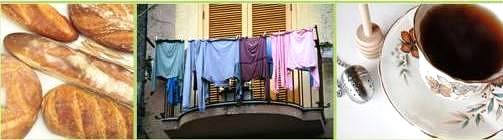
On Bread, Laundry, and Morning Routines

I don’t like being away from the blog for too long.  But, I guess it’s good to shake things up every once in a while; break the routine, learn something new or meet new people. It protects one (i.e., me) from narrow-mindedness.  Perhaps, you’ve noticed; I do not like narrow-mindedness.  Narrow-mindedness is anchored in fear.

So, about shaking things up.  Nine years. That’s how long it’s been since I’ve set foot into a public laundry. It’s not been a conscious thing.  It’s just that most rentals now have on-site laundries as a convenience.  They’re safe, you recognize most of your neighbors, and you can count on them (the laundries…) being clean.  The down side is that you may have to wait for machines or pull someone’s laundry out because he or she left the building.

So, the other day, when I ran into one of my neighbors as she returned from the laundromat a few blocks away, I started thinking…

My mornings are pretty routine.  I’m a woman who likes to watch the sun rise.  I like to have tea and write in my journal.  I like my mornings slow, lazy, and quiet–just the way God made ’em.  The world will bring itself to my psychic door soon enough.  Mornings—particularly weekend mornings—are when I can bake bread at 5 or 6 AM.  Because I want to.

Baking bread is like a meditation:  still and reflective.  I have lots of time to be with my own thoughts.  First, I mix flour, water and yeast.  Then let it rise.  Then, add oil and salt and more flour.  Then let it rise.  Finally, I knead and knead some more, divide the dough into loaves, let it rise again and bake.  By 8 am I have four nice loaves of bread.  The traffic is quiet, the Haverford geese honk overhead, and I can indulge myself in journaling about my “stuff.” You know what “stuff” is, right?

Well, last weekend, I changed my routine.  I packed a plastic IKEA bag full of shirts, sheets, and undies, bought a breakfast bagel sandwich at the bagel place, and headed for the local laundry.  I arrived about fifteen minutes after it had opened.  That would be 7:15.  Lugging my laundry, soap powder, bagel, and a book, I opened the door to find…Men?  Men.  There amid the cacophony of whirling washers and humming dryers was a room of men.

Now–as a child, whenever Mom’s machine broke (which with five kids seemed like all the time), we would go to the neighborhood laundry.  There were never any men there, only mothers towing infants and older children picking on their siblings.  Most of the time, it seemed that a mother’s singular focus was to keep the laundry in the machines and the children out.  Those laundromats were filled with yelling, laughing, and crying children and very harried mothers.  Men?  Never.

Who were these guys?  There was an elderly man with really thick glasses, his cane propped against a bench.  There was an obese fellow with a cap pulled tightly over his head.  His vibe was one that dared anyone to say “good morning.”  I sat on the bench across the room.  Another chunky guy chewed gum, popped it loudly, walked around, sat down, and walked around again.  They all stared at the ceiling.  I could not figure out what was so interesting with that darned ceiling.

Two Mexican men talked and laughed until one packed his laundry and moved on.  The other went outside to make a phone call.  I buried myself in my book, munched my bagel sandwich, and remembered a vacation in Tijuana that left me joyous.  I had made my way on public transportation (with limited Spanish) to meet my friends, bought colorful clothes and fabric, drank in a bar where the guys laughed at my name (means living room in Spanish, I learned… “ha, ha, very funny,” I said.) and sauntered in the sun.

I let the sounds wash over me.  Note to self: take Spanish lessons.

In an odd way, the rhythms were the same as baking bread:  put clothes in a machine, sit to read, wait 15-20 minutes, and check its progress.  The Haverford geese honked overhead.  Traffic was quiet.

At 8 o’clock, the door opened and a voice asked sweetly, “Does anyone have change for a twenty?”

“Finally,” I thought.  The men stared.  “No,” I answered.  She left.

But, I had succeeded.  I’d changed up my day.  The sky didn’t fall.  And I’d learned something I never knew before.  Men can, in fact, get up and out in the morning and do laundry.

It is good to shake things up every once in a while.

On Broccoli and Expectations

Common sense.

My grandparents were farmers who, when we visited, involved us in the process of planting and harvesting. They were practical people, with a solid understanding of nature and the folly of rigid expectations.  They planted, made sure they had done their best work, and accepted whatever results nature provided.  Their common sense fed scores of relatives for decades.

Fast forward to their granddaughter—that would be me—as I sat in my own vegetable garden in Oakland, California, dreamily pulling weeds.  With each clump of dandelion or grass, I felt like I was letting go of some unresolved issue. I like to think of it as my Zen moment of gardening.  Inhale, pull a clump, and exhale; inhale, pull a clump and exhale.  By the end of an evening of weeding, I would be—excuse the pun—grounded.  But I didn’t have my grandparents’ wisdom:  whatever grows in the garden, after I have given it my all, is perfectly what is meant to be.  When I think about it, that perspective is a metaphor for living.  But back to vegetables.

In my neighborhood, there were a lot of folks who had gardens overflowing with vegetables and fruit.  One of my best friend’s garden was a cornucopia of kale, peas, asparagus, potatoes (red, white, and blue), squash, green peppers, tomatoes, and corn.  She and her husband had spent years putting in the time and hard work to make their garden organic.  Blackberries and raspberries circled their entire yard.  And, oh yes, the apples really did hang low on the tree.

A few years before learning from my friend about gardening, I had decided to grow some vegetables.  In addition to the peas, tomatoes and lettuce, I thought I’d try some broccoli.  Broccoli, in my mind anyway, is a vegetable of perfection. It’s sweeter than leafy green vegetables and is easy to adapt for recipes.  Little bites of the crown can be dipped in a variety of sauces. The whole stalk can be creamed for broccoli and cheddar cheese soup.  Then there are the salads and–my all time favorite–tempura.

I hoed, raked, and tilled.  I mulched and fertilized.  The vegetables grew strong and basically healthy, and the broccoli was dark green with stalks an inch thick.  I purchased lots of ladybugs to eat the aphids in the garden.  I planted garlic and onions (didn’t have a clue what I was doing).  It rained, and I checked for bugs.  Obsessively.

I found holes on the leaves, signs of critters that ate their veggies.  But I had declared a no-worm manifesto, and I was determined to win.  You know where this is going, right?

One cool evening, I went to the garden and cut some stalks for dinner.  The veggies were beautiful.  Green, shiny and strong.  I checked, washed, and placed the broccoli in a steamer.   About camouflage…

When the time came to serve—I had invited friends over—I opened the pot and screamed. There, fully steamed and swollen like a green hot dog on the top of my beautiful broccoli, was a humongous green worm.  My friends laughed and encouraged me to toss the worm and eat the broccoli.  I couldn’t, but I was told by those who did, that the vegetable was perfection.

Plant, make sure I’ve done my best, and accept the results of whatever nature provides.  Common sense for a great and anxiety free life.

Happy Monday!

Words on Struggle

I just got bored with all her nagging and complaints.  Her job was too hard, her children were screwing up, she was underpaid (oh yeah, 70k…that’s a lotta tofu), and blah, blah, blah.  Whatever.

She didn’t know from struggle.

The word is weighted with political histories tied to tyranny, genocide, refugee camps, and life-exhausting battles.  The word also brings back memories of my mother’s childhood home and of her growing up with her parents in the backwoods of South Carolina with no running water and no indoor toilet.  The electricity on the small farm was their nod to 20th century comfort.

I remember watching one of the first “reality” shows several years ago.  You may remember some of them.  They would take a family and place them in a reconstructed historic situation such as pioneer living on a midwestern prairie.  Far away from their modern-day conveniences, they would have to align themselves physically, emotionally, and mentally with tasks like drawing water from a well, using an outhouse, or brushing their teeth with baking soda.  I remember that in one of these segments, a teenage girl complained about the taste of baking soda and how she missed her toothpaste.  She didn’t know from struggle.

It’s not that I lack compassion for the difficulty of daily living, but it’s been hard for me (even as I look for work) to equate the daily grind with real down and dirty struggle.

I have tried many times to replace the word “struggle” as it relates to day-to-day experiences:  family relationships, friendships, soul-killing jobs, or high gasoline prices.  I like terms like “overcoming obstacles,” or “eliminating barriers.”  These words blunt the prickly sword of “struggle.”  But like the tale of Sisyphus rolling that dang boulder up the hill only to have the thing roll down again, Struggle will not be redefined.  Here She comes at you with the addictions,  national political battles, and teenage killings.  And it’s all a part of the day-to-day.

My father used to tell me over and over again, “Don’t judge another until you’ve walked in his shoes.”  Yes.

If we breathe, struggle is required.  Without struggle, we cannot grow.  Struggle adds value to life.  And while I am truly, truly loathe to admit it, every obstacle is a struggle for someone—even if it’s only about the taste of baking soda.

The folks in other parts of the world who struggle with violent oppression or have lived in refugee camps for a quarter of a century are indeed struggling, some with little hope for change.  The rest of us are struggling with our “stuff,” the things that threaten to suffocate that authentic “voice” within us, the intuition that guides us to a high-quality life for ourselves and all those around us.

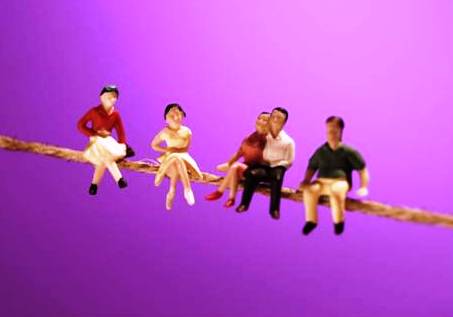
All struggles, in the heart, are equal.  I guess, I began this post too harshly.   I suppose–in the heart–recovering from addiction is as much a part of the tightrope as being in a job that one hates.  The difference, however, is that, unlike folks in a refugee camp, most of us can see a way to the other side.  We roll the boulder to the top and watch it roll down the other side of the hill.  Every challenge brings us closer to being the person we know we can be.

Words On Art, Pizza, and a Joyful Life

People like to use the term “fire in the belly” to define that insatiable passion in pursuit of a dream.  I like to think of the term in its relationship to the pursuit of pure joy.

Artists are messengers of pure joy.  They inspire folks to view the world in radically different ways.  They encourage us to be curious and to take risks.   They encourage us to be joyful.  As in…”make a joyful noise unto the Lord..”  Not threatening.  Not fearful.  Joyful.

Even when an artist’s work is something I’m not particularly fond of, I find that I am turned away from that experience only to be propelled toward a more joyful one. For this reason alone, if I had a million or a billion or a trillion dollars, I would give it to artists.

I recently heard a story about how Erma Bombeck said she would greet God if she met him face to face after death.  The story goes (and I am paraphrasing here) that she imagined God asking her what she had brought back for Him.  She said she would tell Him she had nothing to give; that she had used every gift He had given her, and there was nothing in her pockets to return.

I could only sit in amazed silence.  To live like that, one must live joyfully.

The other day, my sister-in-law, nieces, a couple of other girls, and my cousins were over for a pizza making party.  The children are all talented girls, five to eleven years old and sassy with creativity.  Their interests are diverse.  One loves music, one loves to ice skate, and one–I’m betting on it–will be a famous television chef.

The girls immersed themselves in the project immediately, and my small kitchen crackled with joy as each girl rolled out her dough in her own way and used toppings to suit her imagination.  Every pie was a work of art.  I was inspired by their boldness and generosity.   They even made “take outs” for their siblings who were not there to cook with us.

There were no rules, just a lazy afternoon,  ingredients, and joy in the process.  I had done the prep work the day before.  I had made yeasted dough from scratch and filled bowls and containers with toppings that I thought they would enjoy.  To be honest, I had a pretty joyful experience prepping.  I home roasted and sliced red bell peppers, sliced and sautéed mushrooms, chopped roma tomatoes, and sliced black olives.  I diced pepperoni slices into quarter chunks and made a fruit salad.  As I washed and chopped  strawberries,  pears, and oranges, then sliced bananas and added  blueberries and raspberries, I was in the zone.  I could have purchased any number of the ingredients I used–the mushrooms, the roasted red peppers, and sliced olives–but I was painting my picture of children joyously making pizza from scratch.  I couldn’t have stopped prepping if I wanted to.  I was quite happy.

In 1968, I was in San Francisco for the first time.  It was a dynamic time, filled with the presence of flower children and the so-called love generation.  I remember being amazed that I could walk the entire city from one end to another in a day.  There was no BART (Bay Area Rapid Transit), no subways.  It was quite a different city then.

One day while walking–and brooding on how difficult life was, a pastime I thought necessary if I wanted to live as an artist–a beautiful man came up to me.  He was African and so beautiful that I will never forget his face.  In those days, I had no suspicion of strangers.

“Why do you look so sad?”  he asked.

I was taken aback, but before I could open my mouth to respond, he was almost singing.  “You should be happy!  Be Happy!”   He patted me on the shoulder and cheerfully walked off.

It seems that this has been a spiritual theme–a command from the Universe, if you will–wherever I go.  Live joyfully. Empty the pockets. That’s the ticket I’m supposed to buy.

Creativity is mysterious medicine, generating in us the desire to live with a fire in the belly for joy.  We’re inspired by interpretations of life–stories, choreography, theater, music, photographs, paintings, and poetry — that reveal the stages and emotional paths bringing us to the joy that we yearn to experience.

Artists inspire us to get up and do something.  Dance something. Write something.  Sing something.  Cook something new and fabulous—maybe a pizza.

Yes indeed.  It is a very good Friday.

Sassy


Sassy.

I love s words.  Ssssssssssss.  Especially this one.

May all young girls grow up to be sassy women.  Don’t take no stuff.  May they not let anyone put them down or define them in words that aren’t their own words.  I don’t care who they might be.  Father.  Husband.  Mother.  Sister.  Boss. Minister or priest.  Girlfriends.

Sassy.  Sometimes it takes decades to get to that place of courage.  But get there, prayerfully, we will.  Easter is coming.  It’s a time of rebirth.  Let us as people, and especially as women, be reborn to the magnificence of the light within us.

I’ve always loved Easter because of the powerful theme of rebirth.  It means we have the chance to begin anew.  We can armor ourselves (I know…it’s an aggressive word) in the truth of rebirth.  We can honor ourselves with rebirth.  Rebirth is our protection and our weapon because it holds the magic and power of our personal strength.

Dang.  What, you may be asking, set her off this time?

If you have happened across this blog for any length of time, you know that I can get pretty passionate about things that inspire self-respect and inner strength. Today, my passion lies in the insistence that young girls grow up confident in their ability to hold their own in all things.  Being sassy is not an easy path.

Sassy.  I define myself for myself.  No one else defines me.  No matter what words they use.  No matter who they are.

Not too long ago, I was sitting in a group of women. We were a multi-cultural group of varying ages.  A young woman and mother stated that she was feeling pushed to go into a career that she didn’t like because of the money she would make.  She wanted an artistic career.  She wanted to explore her options.  All of a sudden, some of the women — women who had crushed their own dreams and desires — were all over this girl, blabbering all the things we have heard all of our lives.  Be practical.  There’s no money in the arts.  Make a living.  And..did I already say this? — be practical.   I saw the light of doubt flicker in her eyes, and I thought of all the times I chose practicality over my heart.

Well.  Folks who know me know that when it comes to women’s dreams, I’m going to go on the aggressive.  And I was all over these folks like white on rice as I defended her right to decide for herself how she would make a living, and explained lovingly —  to her directly — that only she could decide, but that she had the right to her dream.  She had family support.  Why not?

The women reminded me of too many misery filled women of my generation who made the wrong choices, and now want others to swim in the waters they’re drowning in.  In the end, my message is: Young women, define your selves, and, if you are aware, do not make choices out of fear.

Women.  We, too often, say yes when we mean no.  We become afraid of being alone and think that alone means lonely.  Women.  We, too often, play coy and lead people to the belief that they have to take care of us and that we are willing to go along when — really — we are not willing to go along.  Women.  We may tell someone that she looks just great when she has spinach in her teeth.  Where do we learn these passive aggressive behaviors?  Sad to say, but it’s often from other women.  Our inability to stand in the truth of our own strength leaves us feeling like limp celery in the important areas of our lives.  We just won’t call back rather than saying “don’t talk to me that way.”

A friend showed me a trick the other day . Cut off the bottom of a piece of limp celery, and stick that thing in a glass of water.  It firms up again.  Rebirth.

I know.  Men have issues, too.  But in so many ways, society has given them a foot ahead of the starting line.  No one — no exceptions — can define a person better than that person herself.  We are as we see ourselves to be.

Be Sassy.  Tell the truth.  Be sexy.  Be creative.  Be talented.  Be all that we can be.  God put that energy inside of us.  S/he placed those desires within. S/he doesn’t intend for the fire to be put out.

Use the s word.  Sassy.  Sassy begins with an S.  Rebirth begins with an R.  S follows R in the dictionary.  Be Reborn.  Be Sassy.  Have a glorious rebirth and a magnificent spring!

Service

“Thank you, God, for allowing me to serve.”

It wasn’t so much the words that were strange.  It was that it was four in the morning, and these were the first words in my day, floating up from my subconscious dreamy state.  I suppose I could call it a prayer.

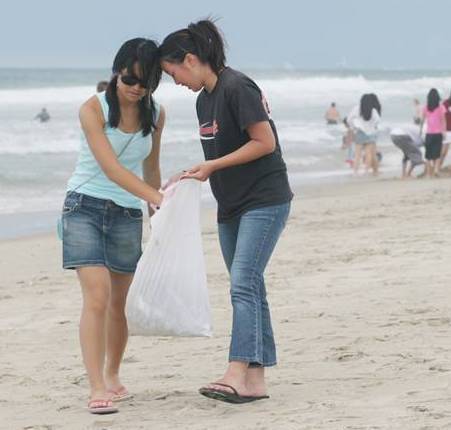
I’m no stranger to service.  I got my father’s DNA.  His life, from community councils to volunteer fire departments to the National Guard, was a perfect model of service.  Since high school when I was a “candy striper” in a local hospital, I’ve volunteered for neighborhood cleanups, helped teenage moms, taught elderly people to read, and participated in scores of projects throughout my adulthood.  But this prayer was a surprise.  Some subconscious part of me was so moved that it was expressing gratitude.

The evening before, my trio had performed.  As I looked out into the audience I saw that people were having a real good time.  This was not a drunken bar audience.  A couple of people told me later that they had been moved to tears.  Others laughed and clapped.  Happiness reigned.  Once again I realized the power—and, for me, the purpose—of performance art.  One of my brothers calls it the “human to human” connection.  It’s also, I think, the magic of service.  Happiness reigns.

What if it’s true?  What if our real purpose for being born is to serve?  What if—whether we believe it or not, whether it fits our spiritual and political beliefs or not—we are here only to take care of each other, to nurture each other, to make the world a better place moment by moment?

What does it mean to serve?  Dr. Martin Luther King, Jr. said about service:

“Everybody can be great… because anybody can serve.  You don’t have to have a college degree to serve.  You don’t have to make your subject and verb agree to serve.  You only need a heart full of grace.  A soul generated by love.”

I was driving a shuttle between a hotel and a retreat site where I spent a lot of my time.  This was my service, and my task was simple:  pick people up at the hotel and take them to the retreat site.  Folks were arriving from all over the world.  Some spoke English well, while others struggled to make themselves understood.  Some seemed perfectly at ease, and others seemed hesitant; they had come very far for a new experience, but weren’t sure what to expect.

Everyone was connected to his or her own story.  I was focused on my task, ensuring the comfort and safety of passengers, but I had stopped smiling.  I felt disconnected and sad.  I felt like I was using up precious air, taking up valuable space on earth.  Looking back, I can see that I felt unworthy of the task of greeting so many people from so far away.  I had always loved volunteering, but I felt my anger and impatience growing with the chattering adults and noisy children.

At some point, a beautiful woman from Hawaii climbed into the van with her two children.  She sat beside me in the front and began to talk and ask questions about the retreat site.  She’d brought the Hawaiian sun with her smile, and her laugh literally filled the van.  Throughout the ride she talked about her life, her children, and why she was so happy to be at the retreat.  Her joy was contagious.  I looked around and saw that other folks were drawn in and were feeling at ease.

When we arrived at the retreat, she said goodbye and lifted her children from the van.  She started down the sidewalk, but suddenly stopped and came back to the van.  Looking me in the eye, she said, “I’m so glad you’re here.”  She smiled and was off.

I began to cry.  Hers was the heart full of grace.  Hers was the true service, and her kindness brought me back to the reason I was driving that van in the first darn place.  To serve.

The task doesn’t matter.  It can be driving, performing, painting a school wall, mowing a lawn, or reading to an elderly person in a nursing home.  Tasks are endless.  What matters is how I serve.  True service is a matter of the heart.  True service leaves love behind when the server herself has left the scene.

Pie

This world is full of pie (as opposed to what some other folks would say the world is full of, and it’s not a pleasant word).  The world is saturated with a dizzying rainbow of crusty confections with meat, nuts, vegetables, and fruit. Who could turn down a slice of color in the form of cherry, blueberry, lemon meringue, or lime pie with a dollop of rich vanilla ice cream on top?  Admit it.  You love pie.

There have been moments when I allow myself the fantasy of peace through people taking time out of their busy days to join a friend and make a pie.  What a lovely thought.  I imagine a world where people settle conflicts by getting together to bake pies.  How can a person fire a weapon when her hands are covered with dough, his face is dripping with peach juice, and there are peach pits in the middle of their tongues?  Peace In Eating.  Pie.

As a young girl, I learned to bake good pies after discovering that I was horrible at baking cakes.  Those three-layered or square-shaped dough concoctions were too unpredictable; like people, you couldn’t control them.  It didn’t matter if they were pound or angel or chocolate layered, my cakes inevitably fell in the middle or broke in half as I iced them.  Worse yet, I would go to read a book and smell burned cake, a pitiful result because the cake would be inedible and Mom would be furious.  My cakes and biscuits met the same fate.  The biscuits were embarrassingly hard little pieces of rock that could kill a chicken with one throw. It was sad.  After all, I was born to a legacy of cooks who could probably make rock soup taste like a five-star menu item.

But pie was different.  I don’t know if it was the concentration and rhythm of fluting the crust, the sensuality of juicy fruit in my hands, or the smell of cinnamon, nutmeg and other haunting spices.  There was some mystery about pie that calmed me down, made me feel, um, competent.  Maybe it was because in learning to bake pie, I learned focus and patience.  I learned how to follow directions.  I learned to measure, to take my time.  Of course, I haven’t always fallen back on the things I learned.  My life might be very different if I had.

Mom was specific about measurements.  Too much flour?  Put it back.  Too much shortening?  Take it out.  Work with the dough until the flour and shortening looked like uniform grains of sand.  Add water.

“No, not that much!”

Take it out quickly before you have to throw the whole lot away.  Learn how to salvage the good, to manage mistakes before they become disasters (relationships).  The ingredients (like relationships) were as precious as gold. Nothing could be wasted.  But taking the patience to add water, drop by drop, until the dough was ready to knead was another lesson. It takes time to do something really well.  Of course, I haven’t always use this lesson either.  I’ve wanted things to be resolved, fixed, changed, or transformed NOW.  Remembering patience, moment to moment, is a skill that must be practiced again and again–like baking pie.

Depending on the fruit–pears, apples, or peaches–I would peel the skins slowly, watching the skins form those little Shirley Temple ringlets that became the main ingredient for homemade jelly.  Peach pie was my favorite.  With the juice flowing between my fingers, I used precious moments to suck on the pits. Making a pie was focused work.  Sucking on peach pits was my reward.

Today, I still love to bake pies and, somewhere along the years, I have learned to bake decent cakes.  Cakes require the same focus and patience.  I’ve added a variation to my baking.  I have learned to bake vegan, and I do not add dairy or eggs to my cakes.  I no longer use shortening in my pies, and I’ve added fruits that we didn’t use when I was growing up.  Mango gives me larger and juicier seeds to suck on.  But the lessons remain.  There is still a mystery in baking. Time stands still.  I can live in the moment.  I can learn patience.

The other day a friend and I got into a fight.  I was very upset.  I felt like I wasn’t being heard, and my friend felt attacked.  It was ugly.  After spreading fury through my apartment, I asked myself the usual question.  What could I have done differently?  I talked to a couple of close friends and my sister.  After all the guidance (and evidence of my impatience) was gathered, I sat down to write about it.  I came up with the understanding that I was wrong.  I apologized.

Now, I am on my way to the kitchen to bake a vegetable pot pie.  Have a marvelous week.  Words, like pies, have delicious color.