Category Archives: Writing from the heart

On devotion

It’s always tricky to attempt to write about something as lofty as devotion. Words of faith and truth and high ideals have an energy that, if not approached in just the right way, can backfire miserably. But I like to think that since this blog is basically experiential, not scholarly, I can attempt to express my take on any word or words.

On devotion. I remember praying to have the experience of devotion. I felt as though I had no commitment to anything or anyone. And I can tell you, that was a very low moment. I recognized that folks were devoted to their work, families,  communities, politics, and addictions. Where, I wondered, does my devotion lie?

Recently, a friend’s father died. I was reading the obituary, and the words were so powerful that I almost cried. He was 99, and the sentence that moved me stated “he is survived by his devoted wife of 70 years…” Seventy years!?!  Most of us can’t figure out how to be devoted to a candy bar for three minutes, let alone to a person for more than five. I can count on one hand the number of couples I know who’ve been devoted to each other for more than 20 years. Do we even know what devotion means anymore?

I was blessed to grow up with noteworthy examples of devotion: devotion to God and church; devotion to work; devotion to relationships; devotion to a better life. It was a challenging time in black history, and for some families even personal relationships were extremely rocky. But I saw something in them that the obituary triggered in my memory:  in that world, people didn’t change partners like socks because they were devoted to something–bigger. Devotion is linked to thriving. (So says me, but argue if you want to…)

About two years ago, I went to a couple of house blessings where a Brahmin priest was offering prayers of protection and prosperity for the families who lived in the homes. These were families who I would describe as very devoted to God. When I say devoted to God, I mean that kind of focus where a person feels that everything they do and everyone they meet is a result of the love of that Source – – whatever you want to call it.

Now, there were a couple of things about these blessings that caught my attention. The first was the respectful and loving way that the families welcomed the visiting priest and his wife. The second, and I remember being fixated by it,  was what I interpreted as the devotion of the priest’s wife to her husband while she assisted him in the ceremonies. I couldn’t stop watching her.

What was that look on her face? Now, there is one thing I know for sure–and I want to be clear about this. Devotion is not mental slavery. Devotion is not blind allegiance. Devotion is not accepting abuse or humiliation. Devotion is not swimming in self-hatred to idolize another.  Clear?  Okay.

Pure devotion — however off-the-mark we observe it to be — is linked to the heart. So, I’m back to my question. Where does my devotion lie?

I am devoted to nature. I’m devoted to blue skies, bright sun, and ocean breezes. I’m devoted to people who work the land and provide the food that allows me to offer meals to friends and family.

I am devoted to democracy.

I want to think that I’m devoted to prayer and God and the world that this great Source created.  Not too long ago, I met a woman who talked about her devotion to her spiritual path. Her path is different from mine. But when I looked at her face, I really got her love for her God. And I guess that’s the key. Devotion is linked to love. So says me; argue if you want to…

And that, my friends, is my word for today. Devotion.

On saying grace and cooking

I admit it. I shamelessly admit that I’m a person for whom being in my kitchen is an anchor to the heart. I don’t care how scrappy a kitchen it might be, how modest; if I can cook for myself, I am in paradise.

Today, I went to the Farmer’s Market. I bought perfectly green zucchinis, shitake mushrooms, and leeks. Then I went to the natural foods store and bought sweet potatoes, garlic and ginger. I bought cucumbers and peaches. The cucumbers were local and not smeared with wax or petroleum or whatever they put on the big agriculture produce. Ahhh. What am I going to do with all these the peaches? What with work and rehearsal and acupuncture and physical therapy and…I don’t have time for a pie.

I’m thinking…maybe a cucumber and peach salad. What spices?  Maybe a pinch of salt and black pepper. Cumin?  I’ll let you know how it turns out.

It’s 92 degrees and humid, but I turned on the air conditioner and the oven anyway. I chopped the sweet potatoes, tossed them in spices and olive oil, and baked them. I turned on the television for my favorite cooking shows (hint: do NOT come between me and my cooking shows). I pitted cherries, sliced a lemon and put them aside. Raw cherries make my throat itch, so I put them on the stove to cook and added sugar and a little water. When they were soft, I tossed the cherries with the sliced lemon. When they were cool, I covered them with vanilla ice cream.

Dear Lord (I always seem to be saying this), I have been too busy. I’ve forgotten what it’s like to be still and give thanks for the skill of cooking. I’ve let too many moments go by without offering a prayer for the food I eat. I have forgotten how easy it is to forget — to make time to be close to home.

I sliced zucchini and shiitake mushrooms; I minced ginger and garlic. I added chopped leeks and leftover greens. Throwin’ a little water into the pot, I let the vegetables steam. And while they are steaming, I remember “saying grace.”

“God is great and God is good; and we thank God for our food. By His hands we all are fed; give us Lord our daily bread.”

That was the prayer we said as children until we were old enough to sit quietly through the grown-up prayers. That’s how we began our meals, every meal, everyday, 365 days a year, every year of my life that I lived in my parents’ home.

The stillness in that moment before meals is a potent memory.

As a child, I didn’t particularly like using the time to say grace. Depending on the person praying, it could be three to ten minutes before the food hit our tongues. I’d watch as the steam floating up from the stewed tomatoes became lighter. But the invisible Grace did not care about the tomatoes.

Despite my childish anxiety about food, the act of saying grace had great power.  Power was in the humility dripping from the voices of those giving thanks. Power was in the protection released into the air; a grace.

It has been said that taking the time to pray, to express gratitude, acknowledge each other, or just to sit in silence before eating helps the digestion. I didn’t know that as a child. My thoughts were on the seductive smell of sausages and pancakes. Or the golden river of butter running through the crevices and valleys of fluffy mashed potatoes and homemade buttermilk biscuits.

But I also knew, even as my mind willed the prayers to cease, that there was magic in the air. Those times round the table are the times I remember as the best part of being home; times that I will always hold close to the heart.

My potatoes are done, the shitake-zuchinni vegetables are steamed.  I’ve poured olive oil and Bragg’s aminos over them. I plate it all up with some “vegan” chicken salad and, sigh, I shamelessly indulge in the pleasure of cooking and saying grace.
On herbs, tenacity, and carpal tunnel

To use an old colloquialism, “I come by it honest.”  Tenacity, that is. Much to my own amazement, I never give up. This has advantages and definite disadvantages.

I could never have guessed how physically challenging blogging would be. It’s a test of will and, literally, physical strength. Too many things pull at my time: work, a band, family affairs, and a book (look, it sounds good to say it, all right?).

Sometimes, I have these doubts. But words and stories are like the vitamins and herbs that I take every day. It’s part of the fabric of who I am. I am tenacious, and those who’ve known me for years know I will not give up either herbs or words.

The past six weeks have been particularly exhausting. I met a new acquaintance. Her name is Carpal Tunnel, and I don’t like her very much. I’d rather fight with a boyfriend, have a stove that over bakes my bread, or a puppy that doesn’t make it outside on time. Physical discomfort is not something that I handle very well. But I am tenacious. I continue to work and I continue to sing. I continue to have faith.

An amazing, saving grace, like acupuncture or physical therapy, is voice activated software. This fantastic invention is my latest enjoyment. I get to tell my computer what to do and, pretty much, it does it. Oh, if only people were so accommodating…

About this carpal tunnel… I always imagine that doctors, after my visits, tell their staff “Do not accept any new patients who use complementary medicine.”

Doctors, after all, do what doctors do best. They try to make things better, and in the process may prescribe and suggest things that I see as extreme —  things that involve cutting and sewing up.  Forgive my cynicism.

I’m not a knee-jerk “throw the doctor under the bus” kind of person. Allopathic physicians are useful, and in cases of extreme pain and discomfort—like when I had my first sinusitis episode and I thought my face was exploding—I’ll fall to my knees and beg for drugs — which I did. Antibiotics did the trick, and my face didn’t explode. And sad to say, in the past year, I’ve also started blood pressure medication. Sometimes, compromise of my stubborn principles is best. But generally speaking, pharmaceuticals are my last resort.  I think it’s something about the way I was raised. I know what works for me and I stick to it. I am tenacious. I come by it honest. Like a dog on a bone, I will hang on to what I want. And what I want is to heal in ways that are natural and emotionally supporting.

A few winters ago, I started getting nosebleeds. This was a new thing for me. The dry winter weather combined with the dry heat in my apartment, and it really dried the heck out of my sinuses. Then, it was endless. I got nosebleeds during the spring allergy season. Then I seemed to get nosebleeds because my nose just wanted to frickin’ bleed. I have been using herbs, natural medicines and holistic body therapies for a long, long, long time. I don’t watch infomercials about natural medicine because I think most of those people are quacks. I’ve been fortunate to have been a patient of a couple of world-renowned natural healing practitioners. And so, I have just a little bit of an idea of how to get information. I did my research and decided to use a certain supplement that has been recommended for allergies and sinuses. It worked. The nosebleeds stopped, and I continue to take at least one tablet a day, and I have not had a nosebleed for over a month (please don’t ask for advice…it’s illegal).

I don’t recommend self-medication to most people, and truthfully the use of herbs without guidance and research can be more dangerous than an over-the-counter prescription. But having researched and used herbs and natural medicines as my first response for over 30 years, I’ve learned a thing or two.

Now, I want to use herbs and complementary medicine to send this carpal tunnel packing.

When I was a child, there were many times that my mom used herbs as a first response. She was raised on a farm without all the bells and whistles of modern medicine, and her parents used herbs with regularity. Our colds were treated with lemon, sage, and honey tea. And, on occasion — I guess ‘cause we didn’t look like little alcoholics lolling about in bed craving the taste — she would add a spoonful of whiskey to the hot beverage. It was all very safe, and no one would ever overdose on lemon, sage, and honey.

Over the years my family, like many others from the country, opted for modern medicine and the old ways were, if not forgotten, left by the wayside. But we benefited from her knowledge, and I have saved myself hundreds, no, probably thousands of dollars using herbs, acupuncture, vitamin therapies, body work therapies, juicing, and so many modalities that have become a regular part of my health regime. Now, I am beginning, with my voice activated software, a new phase. But I am tenacious. Many of my friends have said so.

And with tenacity, I’ll keep you posted!

On change… and gratitude


March 2009 found me fearful of the coming spring.  On March 4th, I’d had a horrific nightmare from which I woke up shivering.  The dream had a threatening quality to it — like death.  And although I kept telling myself not to worry, worry was exactly my emotional state.  I suppose I could call it a psychic experience, that presence in the air, that disquiet that says one is about to experience a major change.  I felt that the threat was real, and as it turned out, it was.

I’d been struggling with the idea of writing about food, how I learned to cook, and the place food holds in my life’s pantry of broken romances, half-finished musical pieces, and unresolved family issues. Then I received the phone call.  My youngest brother had died.  It was March 5th.

My brother’s death was a tragedy, not because he was a great writer whose dreams were not completely fulfilled, although that was a part of it.  His death was a tragedy because of the fractured way we sometimes communicate in our family, and the way we resist change.  We have never really been strong, in my view, with folks being different, with folks choosing different paths, with others being happy outside the status quo.  In other words, in my view, I am part of a people who, on several occasions, have not embraced change gracefully, and I have to admit, this was a change I was not ready to embrace — gracefully.

Change. I’ve moved from coast to coast—twice.  I’ve traveled by bus across the country.  I’ve met folks in Appalachia, Utah, the Pacific Northwest, Chicago, the Southeast, New York, California, and more.  I’ve demonstrated against the Klan, sang at the funeral of a friend’s husband, worked with a teenager who mutilated herself, and lived with a man who did not have a clue about the woman he thought he wanted to marry.  All of this change, and still, I fight Change like a boxer.  Why?

Perhaps, it’s because I’m so resistant to change that God seems to give me so much of it.  After all, the drama, trauma, and psycho – physical manipulation of living is transformative.  And as another brother likes to say “consider the alternative.”

One thing that has not changed, and never will for me, is my belief in the common heart of every human being.  With all of the political wrangling, fear mongering, and religious battering, it’s easy to become cynical and reject the sweet flavors of life.  It’s easy to become terrorized by change.  It is easy to reject the heart, the emotion, the muscle of good love, and the tenderness of life when one is resisting change.  But then comes death, and change opens the door to a floodgate of feelings, and change will, no, must be accepted.

Change nudges me to gratitude.

Change, operating in the amorphous sphere called “out of my control,” can boot me into that cesspool of “settling for.”  Don’t move.  Don’t act. Just sit and wait, and nothing will change.  But really, things don’t work that way.

To refuse change is to refuse transformation, and to refuse transformation is to not know gratitude.

My mother once called me a gypsy. The need to see more, meet more folks, taste new foods, and walk barefoot in the freezing Pacific keeps me on the move.  The need to live fully generates lots of change.  And sometimes, I wonder if I’m doing the right thing.  But the one thing I know, and I know, and I know, and I know is that without change, there is no space for gratitude.  And to experience gratitude, I will have to live with change.

More change.

I was spellbound and moved in a way that I have rarely experienced since.  I watched as an enormous black ball of hair emerged from my sister’s body. I kept asking, “Where is the baby?”  And then, there she was.  My sister’s daughter, my niece.

The ball of hair still exists, hanging to her waist, but she’s a high-powered young professional now; doing well, living well, and flourishing.  Change.


On Emotion – Part 2

One of my favorite guys, (I call him Billy Shakes), wrote in Hamlet:

To be, or not to be, that is the question:
Whether ’tis nobler in the mind to suffer
The slings and arrows of outrageous fortune,
Or to take arms against a sea of troubles
And by opposing end them…

This morning, I’m taking liberty with Shakespeare’s words:

To feel, or not to feel, that is the question:
Whether ’tis nobler in the mind to suffer
The slings and arrows of outrageous fortune,
Or to acknowledge a sea of repressed emotions
And by embracing them heal them.

Love, they say, makes you do the unthinkable. This complex blend of joy, surrender, acceptance, risk, adventure and courage is a fire under our butts to make us live fully.

For love of freedom, their families, and a chance to thrive, my parents, and hundreds of thousands of other folks’ parents, came north during the Great Migration of African-Americans in the mid twentieth century. They were looking to survive, thrive, and make a difference in their lives.  All the words of the poets, sociologists, rappers, and humanitarians—for centuries—will never convey the emotion involved with that movement.

For some, it worked out very well. For others—not so much.

I don’t know that my mother ever really knew, or acknowledged, what her real feelings were. Rage masked the pain of sacrifice.  She’d left behind her beloved parents, a job as a working teacher—a career that is so much a part of her identity that she remembers this if nothing else these days—in order to move to an area of the country she didn’t know and raise, in poverty, five children that were not in her life plans. Over the years, she swallowed her truth and regurgitated rage.  I watched, listened, fought back, and learned.

Unexpressed truth is like an ever-present itch. The only salve is to recognize true feelings, learn to express them appropriately, and make choices that allow one to live an emotionally healthy life. The process, for sure, can be a long, slow, and psychically painful one. And not everyone is up for the task.

Today, when I see my mother drop back in time and wander in that place where she ran on a farm, sang with the birds, ate freshly picked peaches, and idolized her father, my own emotion is sadness.

“Here, doggie,” she says with leftover food. “Give this to the dogs,” she says in a child-like voice.

There are no dogs here today, but I won’t argue. I say “okay” and tuck the food, when she’s not looking, into the garbage. She lives, now—so much of the time—in a place where her emotions are softer–and free.

I am fortunate.  My choices in life have given me the opportunity to learn how to feel—and express my emotions creatively. I sing, I write, I journal. I chant, and when I’m disciplined, meditate. I make an effort to say what I am feeling in a kind, respectful, and truthful way. When what I have to say is not received and the conversation floats to anger, the person ends up on a page. Yep. I will not repress my emotions.

It was once taught, even in my nuclear and extended family, that children should be seen and not heard. I’m happy to see that my siblings have chosen to raise children who laugh, get angry, express sadness, and show their feelings openly. The old rules about emotional response are as dead as pulled weeds. My nieces and nephews speak their minds, invent their stories, write, sing, dance, and ice skate with passion and freedom.

At the end of the day, being honestly connected to our feelings is our saving grace and a benefit to our community. Men in touch with and able to express their true feelings in a healthy way do not go ballistic in the work place, shooting up friends and co-workers. Women who feel safe in sharing their range of emotions in a healthy way do not murder their children, their husbands, or themselves.

Emotions count. The spectacular spectrum of energies that pass through our bodies every day in the form of joy, love, sorrow, anger, fear, and more are here for a reason. Emotions are the underpinning to creativity:  songs, stories, theater, sports marathons, raising healthy children…We sing, speak, cook, run, and dance our emotions.

Emotions are the gift and evidence of being alive, a human being—not a robot.

On Emotion – Part 1

Tender.  Liquid.  Fruity.  Hot.

As I sat to write this week’s post, I was angry.  Hot.  My father would use the word “hot” when he referred to the heat of anger.  You see, I had just been told by a friend that some thoughts I expressed were “emotional.”  I explained that my thoughts about the thing itself had not been emotional, but since the thoughts had been labeled “emotional,” well, yes, emotional was now what I was feeling because I felt I needed to defend myself.  I was hot.  Angry.  Yes, boys and girls, anger is most certainly an emotion.

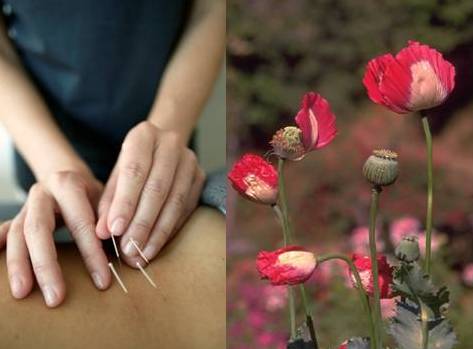
So, lucky for me, after this little exchange, I was scheduled for an acupuncture treatment.  Acupuncture is great for balancing the emotions.  With needles in my face to calm my sinuses, and another needle in the middle of my forehead to calm me down, I experienced a river of emotions–all good, all placed within me by God. Every emotion is a beautiful reminder that I am a human being not a robot, and that feeling what I feel is to feel the creative, artistic energy of God.  I am a work of art.

As I drifted into a soft sleep, I felt a liquid-like sadness.  I was sad because I was tired of defending my emotions.  Sad because people are so afraid to feel.  I felt sad because throughout history, ignorant people have lobbed all kinds of aggressions at people to shut down the right to feel–especially, it seems, women.  Remember lobotomies, treatments for “hysteria,” sanatoriums, all the various kinds of nonsense to keep women from expressing what they feel?

Men do have feelings.  My acupuncturist–a man–said so.  They just fear (ummm…an emotion) their feelings.  Fellas, unexpressed anger can lead to chronic sadness.  Chronic sadness can lead to depression.  Depression, a confluence of unexpressed emotions, can lead to addictions.  Addictions repress the emotions.  Repressing emotions leads to…you get the vicious circle.

Looking at the thinner-than-hair needles in my arms and legs I thought about what my mother would think of acupuncture, and I began to laugh.  I felt myself relaxing into joy, and I felt the energy as it started in my belly and bubbled up like fruity champagne to my throat.  My face relaxed into a broad smile, an expression of–heh, heh–emotion.

It’s this chronic repression of feelings that results in—primarily men—blowing up work places and co-workers, flying small planes into IRS buildings, and all other sorts of passive aggressive expression.  You see, you cannot hide emotions.  Emotions will have their say.

In my semi-sleep state, I heard my acupuncturist talking to someone.  He asked “Are you tender here?”

“Tender” is one of my all time, super favorite words.  No other sound expresses the softness,  surrender, and release of love.  The supreme emotion.

Now some would say that this post is emotional.  Yes. It is.  But, that’s the price of being a human and not a robot.

Stay in the company of lovers.

Those other kinds of people, they each

Want to show you something.

A crow will lead you to an empty barn,

A parrot to sugar.  (Open Secret: Versions of Rumi by John Moyne and Coleman Barks)

Every peak moment has been flooded with emotion, and when I’m really lucky, that emotion has been love.

On Experience

Experience:   fosters wisdom and paves the path to self-awareness.

There.  I said it, and that is probably why I am so committed to learning from my experiences, not from other people’s theories.  It doesn’t necessarily make for an easy way, but it makes for an interesting life.  And if I’ve learned anything about writing my experiences, it’s that no one can change what I know to be true of-about-for me.  A few have tried.  Save the planet, I say.  Stop wasting oxygen.  My experiences keep me grounded in my truth.  My experiences are the petri dish where I test out life’s theories.  And until tested, theories are all that exist.

Oh Lordy, what started this rant?

Well.  A few weeks ago, a friend and I were having dinner and talking about life.  You know.  Life.  I shared how many years ago I was up to my eyeballs in credit card debt.  Another friend at the time, who was a financial counselor, put me in touch with a debt consolidation agency that helped me pay off the debt in five years.  No small feat and a lot of beans and rice I can tell you.

Soooo…my friend and I were talking, and I said,  “I don’t know how I racked up so much debt.  I didn’t have a lot of fancy clothes or new furniture or a fancy car or any of that stuff.”

She listened to what I said for a while and got quiet. Then she asked what I used the card for.  I told her:  college tuition, books, travel, music.

Quietly, she said, “You have experiences. They’re so much more valuable than stuff.”

I thought for a moment.  “You’re right,” I said.  “I would not trade a one of my experiences for all the stuff in the world.”

Everything in these pages comes from one place:  My own experience.  I do not talk about what I do not know about.  I use my own stories to reflect on my life and the choices I’ve made.  I gather what pearls of wisdom I can from my own mistakes and successes.  And by my own standards, based on my own experience, I have more successes than failures.

Life is so full of riches, and experiences teach me what it means to continually go for authenticity. The more I stay in and with my own experience, the more authentic, the richer I become.

If I don’t know about it, I don’t talk about it.  For me, experience trumps theory every time.  If I have a political view, it’s based on experience.  Religious attitudes?  Experience.  Economics, relationships, or people?  You got it; experience.  I’m not saying that I don’t study.  I do.  Then I weigh what I’ve read-heard against what is real—for me.

Experience keeps me from taking someone else’s opinion of another person as my own.

Experience keeps me out of the cesspool of preachy, proselytizing fear mongering.  Because everyone’s experience is different—just look at how my siblings and I remember a single moment differently—owning my experience allows me to practice being non-judgmental.

I trust my experience much more than I trust another’s “ideas” about how the world operates.  And based on my experience, I try to remember:

Most people want to do the right thing. More people are committed to protecting the planet than harming it.  Youth is a state of mind and heart. Physical beauty manifests first in the spirit.

It is my experience that a sense of generosity, compassion, open-mindedness, and faith must come from one or both parents.

It is my experience that a mean young person without significant life experiences will become a mean and wisdom-less old person (hapless and hopeless at best).

It is my experience that mean, wisdom-less old people are not happy.

It is my experience, and my belief, that deep down, the heart, by nature, is forgiving.

It is my experience that knowing one’s own personal values is more important than anything else on the planet.  And that’s the work.

(Okay, and a bit preachy…)

Experience this beautiful day, wherever you are.

On Jealousy

Jealousy comes from a certain kind of poverty consciousness.  A jealous person is a hoarder, more concerned with taking than with giving.  And while I’ve planted several vices and faults over a nice swatch of karmic turf, I’m grateful to say that jealousy is not a seed that I have planted.

I do not want what belongs to someone else.  I don’t want what you have.  I don’t want what God gave to you for you.  It’s all that I can do to make space for my own psychic and material stuff.  Why would I want someone else’s?

Time has a way of erasing faces and sometimes names, even if one remembers the incident.  And so, I remember a lovely Sunday morning in a quiet café with a new “friend” that I was getting to know.

“I’m jealous of you,” the woman said.

We had been talking about nice things–music, the weather, etc.  But then, she put on this frowny face.  I want to head for a bomb shelter when I see a frowny face.

“I feel jealous of you. You always seem to get what you want.”

You know how in slapstick comedy, when somebody says something really dumb, the person who’s listening gags on their drink and spits it out?  Okay, so I didn’t spit out my tea.  All I could do was stare and know that this person would not be a friend.  Looking back, I wish I’d been present enough to say, “Do you think you’re woman enough to handle it?”

Now, see (as my mother would say), this is the problem with perception.  We see what someone else has, and even though we have enough, we think that we could use more.  We forget that the person we are envious or jealous of has paid a price for what they got.  But we get mad at them because God allowed them to have it.  Jealousy is stupid–and lives in a hoarding heart.

Like everyone, I’ve had moments when I wanted an easier time of it.  I’ve desired many things:  a problem-free (new?) car, a boyfriend that does the laundry and cooks dinner, more money, a massage once a week—a best seller.  But I will tell anyone in a heartbeat, “I do not want your stuff .”  Because that would mean I want someone else’s life, and really, at this point, I’m pretty content with my own.

Jealousy is a waste of vital energy.  First of all, it’s a tremendous expression of ingratitude.  It’s like saying, “God, you made a mistake with my life.  Can I have hers?”  Ew.

Second, it’s like putting yourself down.  It’s placing someone else above yourself, making their life experience more valuable than your own.  And third, it’s like asking God to give you somebody else’s sorrows in order to experience whatever is perceived as another’s joy.  Again, ew.

When I spend time by myself–writing, for instance–I am happy.  I am quiet.  I feel at ease.   When I am healing my creative self, aware of smiles,  colors, and sounds–I am happy.  When my heart is open,  words, whether hard or soft, flow with the ease of warm honey–I am happy.  It’s taken a long time, but I finally recognize this experience as spending time with my own soul.  It’s private.  It’s soft.  It’s sacred.  It’s healing.  And I wouldn’t trade it for anyone else’s experience.

No one can take those things from me, so being jealous is a waste of vital energy.  Do I get everything I think I want?  No.  But I get what is mine and try to share the best of it.  Hoarding is not my nature.

But hey, if anyone wants what I got, she will have to pay the karmic price.   And I don’t think she’s woman enough to handle it.

On typos and trying to be perfect. GRRRRRR

On Bread, Laundry and Morning Routines has been reposted.

Grrr.

On Bread, Laundry, and Morning Routines

I don’t like being away from the blog for too long.  But, I guess it’s good to shake things up every once in a while; break the routine, learn something new or meet new people. It protects one (i.e., me) from narrow-mindedness.  Perhaps, you’ve noticed; I do not like narrow-mindedness.  Narrow-mindedness is anchored in fear.

So, about shaking things up.  Nine years. That’s how long it’s been since I’ve set foot into a public laundry. It’s not been a conscious thing.  It’s just that most rentals now have on-site laundries as a convenience.  They’re safe, you recognize most of your neighbors, and you can count on them (the laundries…) being clean.  The down side is that you may have to wait for machines or pull someone’s laundry out because he or she left the building.

So, the other day, when I ran into one of my neighbors as she returned from the laundromat a few blocks away, I started thinking…

My mornings are pretty routine.  I’m a woman who likes to watch the sun rise.  I like to have tea and write in my journal.  I like my mornings slow, lazy, and quiet–just the way God made ’em.  The world will bring itself to my psychic door soon enough.  Mornings—particularly weekend mornings—are when I can bake bread at 5 or 6 AM.  Because I want to.

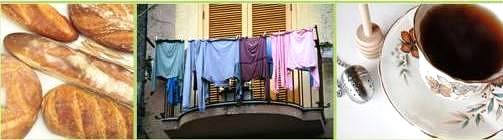
Baking bread is like a meditation:  still and reflective.  I have lots of time to be with my own thoughts.  First, I mix flour, water and yeast.  Then let it rise.  Then, add oil and salt and more flour.  Then let it rise.  Finally, I knead and knead some more, divide the dough into loaves, let it rise again and bake.  By 8 am I have four nice loaves of bread.  The traffic is quiet, the Haverford geese honk overhead, and I can indulge myself in journaling about my “stuff.” You know what “stuff” is, right?

Well, last weekend, I changed my routine.  I packed a plastic IKEA bag full of shirts, sheets, and undies, bought a breakfast bagel sandwich at the bagel place, and headed for the local laundry.  I arrived about fifteen minutes after it had opened.  That would be 7:15.  Lugging my laundry, soap powder, bagel, and a book, I opened the door to find…Men?  Men.  There amid the cacophony of whirling washers and humming dryers was a room of men.

Now–as a child, whenever Mom’s machine broke (which with five kids seemed like all the time), we would go to the neighborhood laundry.  There were never any men there, only mothers towing infants and older children picking on their siblings.  Most of the time, it seemed that a mother’s singular focus was to keep the laundry in the machines and the children out.  Those laundromats were filled with yelling, laughing, and crying children and very harried mothers.  Men?  Never.

Who were these guys?  There was an elderly man with really thick glasses, his cane propped against a bench.  There was an obese fellow with a cap pulled tightly over his head.  His vibe was one that dared anyone to say “good morning.”  I sat on the bench across the room.  Another chunky guy chewed gum, popped it loudly, walked around, sat down, and walked around again.  They all stared at the ceiling.  I could not figure out what was so interesting with that darned ceiling.

Two Mexican men talked and laughed until one packed his laundry and moved on.  The other went outside to make a phone call.  I buried myself in my book, munched my bagel sandwich, and remembered a vacation in Tijuana that left me joyous.  I had made my way on public transportation (with limited Spanish) to meet my friends, bought colorful clothes and fabric, drank in a bar where the guys laughed at my name (means living room in Spanish, I learned… “ha, ha, very funny,” I said.) and sauntered in the sun.

I let the sounds wash over me.  Note to self: take Spanish lessons.

In an odd way, the rhythms were the same as baking bread:  put clothes in a machine, sit to read, wait 15-20 minutes, and check its progress.  The Haverford geese honked overhead.  Traffic was quiet.

At 8 o’clock, the door opened and a voice asked sweetly, “Does anyone have change for a twenty?”

“Finally,” I thought.  The men stared.  “No,” I answered.  She left.

But, I had succeeded.  I’d changed up my day.  The sky didn’t fall.  And I’d learned something I never knew before.  Men can, in fact, get up and out in the morning and do laundry.

It is good to shake things up every once in a while.