Tag Archives: essay

On… The sweetness of a name

This blog is quivery and yellow–  like pineapple Jell-O.  It shimmies and shakes as I struggle through what has become an extraordinary array of challenges.

From carpal tunnel to feet that require the use of a cane or walker, I have been traveling the road to patience and health. It hasn’t been easy, but I have the support of friends and a basically happy outlook. I am also inclined to whine a bit.

With that said, I recognize the need to keep jabbering away. Silence is not acceptable for a blog. This week in particular was an ecstatic one for me as my choice for the American presidency won the race. I am thrilled that President Obama won his second term. And now, we can get to work, the real work, of equal opportunity for all.

Now for this week’s word: names.

I, for one, am intimately connected with the experience of names, having spent years accepting or rejecting several of my own. I was my father’s firstborn, and as such, my birth name reflected his joy and prayers. My birth name meant “gracious gift of God,” and both the name and its meaning lifted me up in good and trying times. I never abandoned the name — not really. Its meaning allowed me to, at least inside my head, recognize myself as a beloved daughter of God, a belief that has revealed itself to me in good times and been hidden away in times of stress or fear.

Given that, in so many cultures, the child’s name describes a dominant personality trait, and with cousins that had nicknames like Cunning or Bossy, I figured I lucked out.

Still, over the years, I have tried on new names like a judge at a dessert tasting contest. How I started the journey is unclear, but there was this point in my development where I felt that my name was restrictive, a sentence to an impenetrable goody-two-shoes life. By the time I moved into a small apartment (and I mean small!) in San Francisco in 1969, I had decided to try out the name of Susan.

Right.

“Susan” was the name of business and surety and normalcy. But anyone who knows me will tell you that I am not a Susan, and that shirt would not fit. So, I abandoned Susan when I returned to the East Coast, started working in theater, and eventually met a troop of African-American actors where we all took African names. The name Sala came out of that experience. My father said “you will always be what I named you.” This was significant because there were times when I felt he did not like me. But his statement said that, to him, I would always be a gracious gift of God.

What was I looking for? What identity did I feel was missing? In India, I asked a meditation master to give me a new name. She told me to keep my own name. This began the inner work of trying to know who I am beyond the labels I use to describe myself: a woman, African-American, creative. I was the pound cake waiting to be drenched in the liquid lemony frosting of my own nature. After several years, I received a name from the meditation master. And, in the end, I discovered that all the names I lived with had essentially the same meaning. And the river of God ran through every single one of them.

Sala meant gentle or peace. Gloria Jean, my birth name, meant gracious gift of God, and the blessing I received from my teacher was the name of Gopi, which meant that I was to be a lover of God in all his forms. I had been bathed in the lemony frosting of my nature for my whole life, but couldn’t taste its sweetness.

Finally, I am enjoying the taste of my own nature. There’s more to come.  Yum.

On Pie

There were a couple of comments about the sweet potato pie. The exact recipe? By now, I have forgotten. What I remember is the creamy, comforting richness.

Disclaimer: you try this at your own risk.

Mom would cook the sweet potatoes, add a pinch of salt, then mash them until not a lump could be found. She added the other ingredients one at a time. When I was a child, we did not have electric mixers. We used those hand held rotary beaters to create those stiff peaks from egg whites and cream.We developed strong arms from using those beaters.

So, we’d beat the whole eggs. Was it two or three? We’d add them to the potatoes; then, we’d add about a stick of butter. Mind you, there were a lot of sweet potatoes. Mix ’til smooth. Now comes the cream. I call it cream because that was when real milk came with cream settled on the top. Shake the bottle (yes, milk came in bottles). It was better than half and half.

Whatever happened to milk bottles?  True, they were heavy; but you could see the cream gathered on top of the milk like a thick icing. And there was no concern about the landfill. Bottles went back to the dairy and were sterilized and refilled.

The milk/cream was added and then the brown sugar and — corn syrup? To tell you the truth, I can’t remember. But, I’ll tell you this: it was sweet.

By now, our mouths were drooling over the pudding like consistency. Cinnamon. Nutmeg. Vanilla. Am I missing something?

We children were such pigs. We’d stick our fingers in the bowls and get chased away.  “Get your dirty hands out of here!” It didn’t matter what kind of pie. Peach. Blueberry. Apple. Pear. Hovering like humming birds and annoying as ants, we’d taste and get chased away.

Now when it comes to the crust, you’re on your own. That’s because when I was growing up, we used lard. For me, that’s not an option anymore. So once you have made your crust — and it will probably  be two or three — fill the pie plates with yummy stuff.

And that’s it. A chilly autumn evening or bright summer afternoon becomes more than alive…

All times are better with pie. On days like today, as we anticipate hurricane Sandy, and I begin to understand the importance of patience in the healing process,  pie is a gift and a sweet comfort.  Baking pie takes patience; savoring pie takes time.
On Autumnal abundance

Autumn is here with its chilly, damp fingers. It comes with a mixture of memories, some good, some bad, and some with rarely a charge at all. It’s raining, and temperatures have dropped, but the reflections I experience are as satisfying and filling as a bowl of hot carrot-ginger soup. Oh, the feelings that autumn colors bring!

I once worked with a frail young woman who feared autumn. She physically trembled as she talked of how the fall reminded her of death. I listened to her speak and watched her for a few moments before I told her my view. Autumn is a reminder of the abundance of life. And yet, I can see her point of view because earthly things come with earthly fears.

Autumn, for me, is a reminder of things that cannot be taken away; kind of like the theme from the Titanic: the things in our hearts always go on.

So what are the things that can’t be taken away? I have some ideas (surprised?).

Spiritual strength. Ah, the goal. Learning to become a spiritual warrior. It’s oh so not the sinkhole of zealotry and dogmatism. Spiritual warriors drive thriving. Where does the mistake take place? How do our honest journeys become paths divested of purity?

At a party, I once pulled a fortune from a jar that contained the word “Coromantee.” I decided to look it up recently because the word on the fortune was combined with the word “warrior.”  I have since learned that the Coromantees from Ghana were warrior tribespeople sold into slavery. They did not go gently.  They were so fierce that it is said an Act was proposed to try to prevent slave traders from shipping them to the West. I’ve  held that word in my heart for many years as my marching orders. Spiritual warriors cannot be enslaved; one will never control a spiritual warrior’s mind.

This morning, I’m also thinking about Victor Frankel’s Man’s Search for Meaning. Once one becomes a spiritual warrior, there is no one — and this is an absolute, NO one — who can take that strength away.

The first taste of sweet potato pie. Whether or not you believe it, this is one of those luscious memories that can never be taken away. And although I’ve tried to replicate that pie in so many vegan ways, I have not found anything to replace that first taste. Sunday after church, after the roast beef, after the collard greens, after the rice, is pie. Not bean. Not pumpkin. Smooth, rich sweet potato.

Education. Complain as bitterly as we might about the loans, the two or three jobs, the exhaustion that comes with writing papers at 3 AM; there is nothing that beats the joy, pride, and security of knowing that no one can take away what we’ve earned and learned. Ever.

Love and our relationship to the Divine. Embrace or deny it, we are wedded to the Great Mystery. Nope. Can’t be taken away.

One’s relationship to one’s ancestors. Conscious or unconscious, acknowledged or not, we owe a debt to those who came before us.

Autumn is a time when we remember abundance. And I could probably fill pages with other examples of abundance — none of which are monetary. I know. It’s boring to talk about leaves in shades of red and gold, of orange and yellow fruit and vegetables; of dark evenings at five o’clock. But it’s exactly this magic in nature that brings an awareness of abundance. As the rains soften the leaves so that they willingly drop from the trees, and as I watch the leaves fall, I am willing and happy to concede that abundance lies in things that cannot be taken away.

What about your autumnal abundance?

On kindness and coastal healing

So now it’s done. I’ve had the surgeries on both hands, and I’m tired. I go back and forth with the focus and energy it takes to heal. I’ve ranted and raved like Job: “What’s the lesson here? You say there’s a reason for all things. Can I have a clue?”

When I moved back to the East and to the Philadelphia area specifically, I felt I was doing the right thing. After all, New York is the publishing capital of the world, and my mother was ill. In 2001, all the right reasons seemed to be in place. I spent two years in an ashram in upstate New York surrounded by love.  But when I moved to the Philadelphia area in 2003, love was replaced by another four letter word — the worst of all four letter words — hate. I hated it here.

All of the reasons and memories of why I had fled the East Coast and anything remotely connected to it (including the southeast) came flooding back. I only saw the busyness and inflexibility of the culture. I did not feel the warmth in human spirit that seemed to flourish in the rains of the Northwest and the sun of California. Oh. And did I mention the cold and snow? I do not like cold and snow and could not imagine ever finding friends here.

I pegged everyone (especially you former manager from Hades), as a scavenger for money, sex, and devious ways to perpetuate racism, sexism, class prejudice and all the other prejudices one could think of.  I called a monk (priest) and cried. This place was a new low.

It takes time to heal. The severity of my carpal tunnel and the energy to deal with insurance and other issues threatens to take my full attention.  One of the most frustrating experiences has been the delay in posting to my blog as often as I would like. And I had other expectations: I’d be slicing carrots a couple of days after surgery, driving to Trader Joe’s, boiling pots of water for tea or veggies, and back at rehearsal. (I’m coming guys.) But the body has its own ideas.

It also takes time to heal old wounds, and I have plenty of emotional baggage when it comes to the eastern seaboard. But all these considerations have been offset in recent days by the old four letter word — love.

Love brought me home from surgery and stayed for four days cooking meals, washing dishes and sharing hours of conversation. Love referred me to resources that I need.

Love came by to chop the carrots, make the tea, drive me to appointments, and keep my apartment clean. Love stood next to me as I vomited pain medication and recovered from anesthesia. Love went shopping for me, and called me (with different voices) about 10 times a day. Love pulled me out of the apartment to go watch a school football game and sit in the sun rather than stay inside and feel sorry for myself. Love warmed my heart and healed a place that was becoming as chilly as the Pennsylvania winters.

Love, in the form of so many folks, surprised me and talked me through my fear. I didn’t have to do it alone, and that was one of the biggest fears I had when I moved to this place.

Great souls; great hearts. Grace has a way of reminding me that the kindness of others can melt a frozen heart, even here, where I thought no hearts remained. Perhaps that’s the lesson after all.

On touch — and other sense matters

Is it hot? Is it cold? Is it sharp? Is it dull? These are the simple questions.

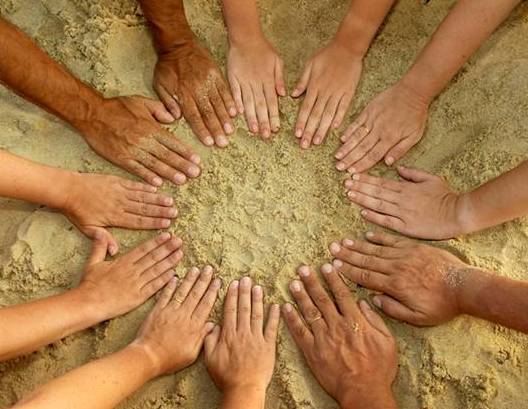
I was not fully conscious of how finely sensitive my finger tips are — until my sense of touch was compromised by carpal tunnel. And although surgery for CTS is common, I’ve been a holdout. That’s changed. I’m going to have surgery. Because in the process of holding out, I learned what it means to have everything I touch feel like a bowl of sand.

The texture of bread dough? Sand. The round, firm skin of a grape? Sand. The silky smooth flesh of salmon? Sand.  As I comb and brush my hair — that’s right — sand. Paper?  I won’t say it again.

There is the sad fact that I have lost bragging rights to my asbestos hands. I could pick up a veggie burger from a pan and it would not burn my fingers. This is not the case right now, and I don’t like the experience. Touch is an iridescent spoke on the wheel of my world. Touch is why I love to cook. Touch is why I love to hug and cuddle. Touch makes me happy.

A friend of mine charged me with being “touchy-feely.” I embrace that label with love. When I think of my childhood, I go back to the place where I was not raised. I go back to the summers I spent with grandparents in South Carolina. It was there where I connected with the silk of corn, the taste of well water, and the sunny warmth of fresh-cut watermelon on my tongue. It was there where I experienced soundless nights and pink cloud mornings. If I could live to be a thousand years old, I would forever embrace the sense experiences I received from my grandparents’ lands.

When I remember touch in the city, it is not a soft memory — except in the context of food. With food, touch drives memory: squeezing an orange, fluting a pie crust, slicing a melon, or rubbing a roast. When I think of touch in the city, I think of standing in summer rain to cool off from the heat of a small apartment that seven people called home. When I think of touch in the city, it comes with art—the thin press of violin strings, the satiny fit of a leotard.

And when I think of sand, in its own nature, I think of the sea. There is no sea in my kitchen; no sea in my hair.

Yesterday, for the sake of feeling the smoothness of dough, I made a pizza. I like the touch of food:  (haven’t you noticed?) kneading dough, slicing carrots, tearing lettuce, dicing onions or potatoes. But yesterday, I had a spiritual bonding with my food processor as it made the dough, and when I poured it out onto parchment to give it a brief knead…it felt like sand.

I know that this is temporary. But it’s given me pause to reflect on the importance of touch and how much I love the purity of the senses.

I guess there is truth in the saying after all. “In everything is a gift.”

On devotion

It’s always tricky to attempt to write about something as lofty as devotion. Words of faith and truth and high ideals have an energy that, if not approached in just the right way, can backfire miserably. But I like to think that since this blog is basically experiential, not scholarly, I can attempt to express my take on any word or words.

On devotion. I remember praying to have the experience of devotion. I felt as though I had no commitment to anything or anyone. And I can tell you, that was a very low moment. I recognized that folks were devoted to their work, families,  communities, politics, and addictions. Where, I wondered, does my devotion lie?

Recently, a friend’s father died. I was reading the obituary, and the words were so powerful that I almost cried. He was 99, and the sentence that moved me stated “he is survived by his devoted wife of 70 years…” Seventy years!?!  Most of us can’t figure out how to be devoted to a candy bar for three minutes, let alone to a person for more than five. I can count on one hand the number of couples I know who’ve been devoted to each other for more than 20 years. Do we even know what devotion means anymore?

I was blessed to grow up with noteworthy examples of devotion: devotion to God and church; devotion to work; devotion to relationships; devotion to a better life. It was a challenging time in black history, and for some families even personal relationships were extremely rocky. But I saw something in them that the obituary triggered in my memory:  in that world, people didn’t change partners like socks because they were devoted to something–bigger. Devotion is linked to thriving. (So says me, but argue if you want to…)

About two years ago, I went to a couple of house blessings where a Brahmin priest was offering prayers of protection and prosperity for the families who lived in the homes. These were families who I would describe as very devoted to God. When I say devoted to God, I mean that kind of focus where a person feels that everything they do and everyone they meet is a result of the love of that Source – – whatever you want to call it.

Now, there were a couple of things about these blessings that caught my attention. The first was the respectful and loving way that the families welcomed the visiting priest and his wife. The second, and I remember being fixated by it,  was what I interpreted as the devotion of the priest’s wife to her husband while she assisted him in the ceremonies. I couldn’t stop watching her.

What was that look on her face? Now, there is one thing I know for sure–and I want to be clear about this. Devotion is not mental slavery. Devotion is not blind allegiance. Devotion is not accepting abuse or humiliation. Devotion is not swimming in self-hatred to idolize another.  Clear?  Okay.

Pure devotion — however off-the-mark we observe it to be — is linked to the heart. So, I’m back to my question. Where does my devotion lie?

I am devoted to nature. I’m devoted to blue skies, bright sun, and ocean breezes. I’m devoted to people who work the land and provide the food that allows me to offer meals to friends and family.

I am devoted to democracy.

I want to think that I’m devoted to prayer and God and the world that this great Source created.  Not too long ago, I met a woman who talked about her devotion to her spiritual path. Her path is different from mine. But when I looked at her face, I really got her love for her God. And I guess that’s the key. Devotion is linked to love. So says me; argue if you want to…

And that, my friends, is my word for today. Devotion.

On Emotion – Part 1

Tender.  Liquid.  Fruity.  Hot.

As I sat to write this week’s post, I was angry.  Hot.  My father would use the word “hot” when he referred to the heat of anger.  You see, I had just been told by a friend that some thoughts I expressed were “emotional.”  I explained that my thoughts about the thing itself had not been emotional, but since the thoughts had been labeled “emotional,” well, yes, emotional was now what I was feeling because I felt I needed to defend myself.  I was hot.  Angry.  Yes, boys and girls, anger is most certainly an emotion.

So, lucky for me, after this little exchange, I was scheduled for an acupuncture treatment.  Acupuncture is great for balancing the emotions.  With needles in my face to calm my sinuses, and another needle in the middle of my forehead to calm me down, I experienced a river of emotions–all good, all placed within me by God. Every emotion is a beautiful reminder that I am a human being not a robot, and that feeling what I feel is to feel the creative, artistic energy of God.  I am a work of art.

As I drifted into a soft sleep, I felt a liquid-like sadness.  I was sad because I was tired of defending my emotions.  Sad because people are so afraid to feel.  I felt sad because throughout history, ignorant people have lobbed all kinds of aggressions at people to shut down the right to feel–especially, it seems, women.  Remember lobotomies, treatments for “hysteria,” sanatoriums, all the various kinds of nonsense to keep women from expressing what they feel?

Men do have feelings.  My acupuncturist–a man–said so.  They just fear (ummm…an emotion) their feelings.  Fellas, unexpressed anger can lead to chronic sadness.  Chronic sadness can lead to depression.  Depression, a confluence of unexpressed emotions, can lead to addictions.  Addictions repress the emotions.  Repressing emotions leads to…you get the vicious circle.

Looking at the thinner-than-hair needles in my arms and legs I thought about what my mother would think of acupuncture, and I began to laugh.  I felt myself relaxing into joy, and I felt the energy as it started in my belly and bubbled up like fruity champagne to my throat.  My face relaxed into a broad smile, an expression of–heh, heh–emotion.

It’s this chronic repression of feelings that results in—primarily men—blowing up work places and co-workers, flying small planes into IRS buildings, and all other sorts of passive aggressive expression.  You see, you cannot hide emotions.  Emotions will have their say.

In my semi-sleep state, I heard my acupuncturist talking to someone.  He asked “Are you tender here?”

“Tender” is one of my all time, super favorite words.  No other sound expresses the softness,  surrender, and release of love.  The supreme emotion.

Now some would say that this post is emotional.  Yes. It is.  But, that’s the price of being a human and not a robot.

Stay in the company of lovers.

Those other kinds of people, they each

Want to show you something.

A crow will lead you to an empty barn,

A parrot to sugar.  (Open Secret: Versions of Rumi by John Moyne and Coleman Barks)

Every peak moment has been flooded with emotion, and when I’m really lucky, that emotion has been love.