
Hi there. I’ve been away for a while. It scares me because part of me is not clear how two months went by without writing a thing on these pages. Part of me wants to say that it has been my participation in other writing projects, but the other part of me knows better.
Prior to my diagnosis of GBS/CIDP, I was infatuated with my own cooking ability. Now that sounds egotistical, but the truth is: I would kiss myself in the kitchen. Now that I’m getting my strength back and can do some shopping, chopping, and sautéing (thanks to my food processor and Blendtec super machine), life is, I must say, very, very good. Take today, for instance. Do you smell that? It’s chicken livers and onions smothered in gravy. This former vegan is a happy eater.
There’s a lot of healing, and not just physical, that comes with preparing my own food. There’s no mystery to this. Folks have been writing about it for centuries and continue to write about it today. Food is healing, but cooking it yourself is quantum healing.
So about the title. I’ve never liked okra. By the way, that means never. Growing up with Southern food, okra was a major ingredient. There was stewed tomatoes and okra over rice dinner. And gumbo. There was also just plain old fried okra. If there is one vegetable guaranteed to get my gag reflex going, it’s okra. So imagine my surprise — really, I’m not kidding — when I was at the farmers market last week and I found myself reaching for okra. I’d heard that it has lots of anti-inflammatory qualities and vitamins and such, so I fell for it.
Before I go further, I want to point out that I figured out that my temporary separation from the blog was a good thing. I was swimming in the muck of what was wrong with this world. It doesn’t take much to hear it, see it, feel it. It’s all around us. Yet, once I started diving into writing about issues, something amazing happened. I stopped writing. I was depressed.
I know about issues. Look at me. I live in the United States. I know issues aplenty. But my reason for writing had fallen into a sewer of social and political angst. Preachiness, judgment, and— well, you know.
This morning, when I realized why I subconsciously took two months off, I took a photograph of my chicken livers. Damn, that felt good.

Back to okra. Two childhood foods stand out in my mind: my love for liver and onions and my distaste for okra. So, after I purchased the okra from the farmer, I needed to do something with it. I was moaning to an 80-year-old woman I know about my waste of money when she suggested that I fry them. I remembered frying okra at my mother’s suggestion 20 years ago. That was the last time I cooked okra.
Nevertheless, I gave it a whirl using a mixture of seasoned flour and Italian bread crumbs. Nothing fancy. Just the seasonings, the ghee that I fried them in, and the beautiful cucumber tomato salad on the side.
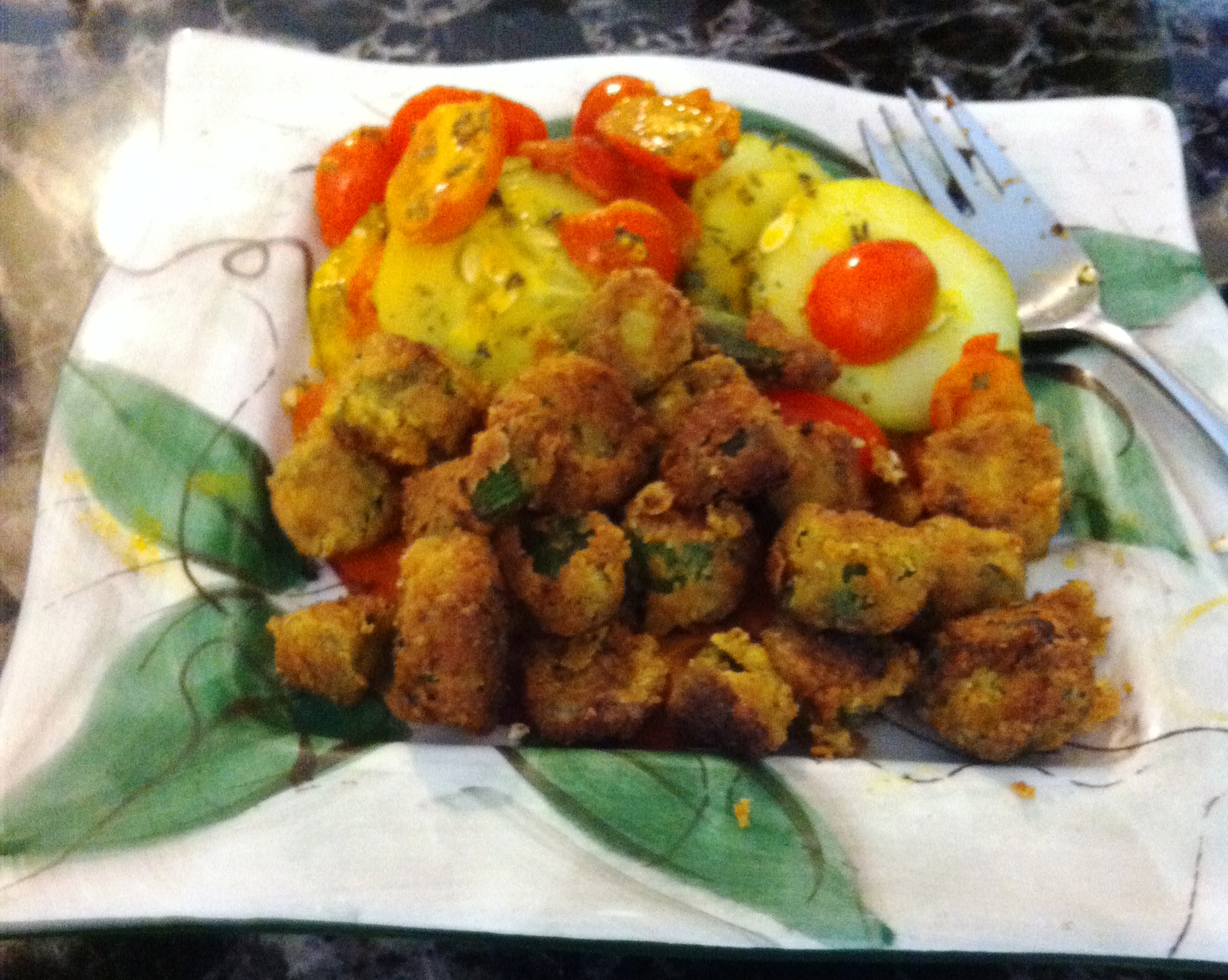
I’m no food stylist, and the pictures sure aren’t pretty, but I’ll tell you one thing: I’m out of my funk.
Welcome home, Sala.


 Sala
Sala

 wordshavecolor.com
Soup and Empathy
It’s official.
Summer’s over. The reds, peaches, and blues of summer fruit are making way for the greens, burnt oranges, and purples of winter’s warming vegetables. Beautiful, isn’t it? Soup. Yum.
In my healing process, I’ve become more committed than ever to eating according to season. The soup pictured above was so easy to make, filled with the brilliance of the changing season. Sitting in my flannel nightgown and looking out at the nature trail, I feel secure.
The United States Department of Agriculture has a term for people and communities without access to affordable, nutritious food. food insecurity. Let that sink in for a moment. Food. Insecurity. The USDA attributes this to lack of money. Really, it’s more than that.
Five years ago I was visiting relatives in Delaware. We stopped at a large chain grocery for supplies and, as we were leaving, I saw an employee tossing bags of unsold bagels into a trash bin. I was, to say the least, interested.
“Are you giving that to a homeless shelter? A women’s halfway house? An orphanage?”
“It’s against the law. Liability.”
What? Someone might choke on a free bagel?
In some of our poorest communities, liquor stores—with a high-priced fare of wilted greens, squishy tomatoes, old, brown meats and yellowed chickens—are often the only access to food. In those same communities, some grocery chains have refused to open businesses claiming unprofitability. Now, I find that, in some places, giving unsold food to the hungry is against the law. Liability they say.
My father taught me empathy. We were a large family with limited income, and my parents were no strangers to nights sucked into the black hole of insecurity. But we were lucky. There was always food on the table thanks to relatives who farmed and owned produce stores. My father had a garden in the back yard. For us, the bear of hunger was never a guest at our table.
A deeply religious man who had served in the Pacific Theater during World War II, and suffered emotionally because of that experience, Daddy knew the meaning of empathy. In spite of his personal demons and contradictions, he cared for others and passed along the wisdom that has stayed with me all these years.
“Never judge another man unless you’ve walked a mile in his shoes.”
I learned, at the table, that the rigorous road to freedom is paved with empathy and compassion. It is impossible to think of my father without those words whipping around in my mind like a line full of laundry in an autumn wind.
One sunny, summer afternoon in Berkeley, California, I was exiting the subway. A man, woman, and child were sitting in the entrance. The man asked for money. I told him that all I had was the lunch I was carrying. It was simple fare: a sandwich I’d made, some fruit, maybe some chips and a soda. I don’t remember it all. I asked if he would like it.
Yes, he said. I will never forget his eyes. His wife cried as he accepted the bag. I am moved to tears whenever I think of the incident. Since that experience, I have been generous with my lunch bags.
Every major spiritual path invites us to live empathetic lives and to take empathy to the next level: compassionate action. We’re invited to change things, to make things better. The palette of life offers a rainbow of opportunities for compassionate action: serving at a soup kitchen, making and delivering meals, passing a lunch along to someone, creating and sustaining community vegetable gardens, mentoring young people to become urban farmers, or teaching children what it means to select good food and eat well. From the White House to celebrity chefs, it’s happening.
I’ve said what I have to say this morning. Now, let’s eat. And share a meal with someone.
3 Comments
Posted in African American, Commentary, Creative Non-Fiction, Essay, Family memories, Food, Stories about life, Values, Writing from the heart
Tagged Commentary, community action, creative nonfiction, Empathy, feeding each other, food for all, Life Stories, loving kindness, values and spirituality, world view